With the global community watching developments on nuclear issues with bated breath, Iranian President Masoud Pezeshkian announced that he has ordered Foreign Minister Abbas Araghchi to begin immediate negotiations with the United States, which, according to informed sources, could take place as early as Friday in Turkey. “I asked my foreign minister, provided there is an appropriate atmosphere without threats or unreasonable demands, to conduct fair negotiations (…) within the framework of our national interests,” Pezeshkian emphasized on X.
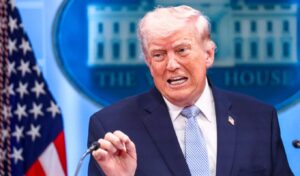
For his part, U.S. President Donald Trump said yesterday, Monday, that he was convinced there is a possibility the United States could reach an agreement with Iran, after many days of the two countries exchanging threats. A source in an Arab country briefed on the matter told AFP that these talks, which will take place – as the source emphasized – thanks to mediation by Egypt, Qatar, Oman and Turkey, will be conducted in Turkey on February 6.
The American news website Axios and the Iranian news agency Tasnim reported that Araghchi will represent Tehran, while the American side will be represented in the talks by Steve Witkoff, Trump’s envoy. Since early January, pressure on Tehran has increased following the bloody crackdown on anti-government demonstrations.
Nuclear talks: Potential US-Iran discussions
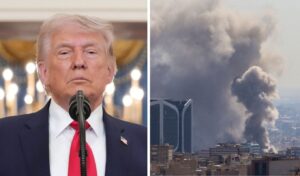
After threatening military intervention in Iran and sending dozens of American ships to the Gulf, Trump said on Sunday that he hopes to “reach an agreement” with Iran.
“Regional countries are acting as mediators for the exchange of messages,” Iranian Foreign Ministry spokesman Esmail Baghaei noted yesterday, Monday. “We have exchanged various views and are currently reviewing and finalizing the details of each stage of the diplomatic process, which we hope will yield results in the coming days. This concerns the method and framework” of the talks, he added.
Consultations have been held with Egypt, Saudi Arabia, Turkey and Jordan.
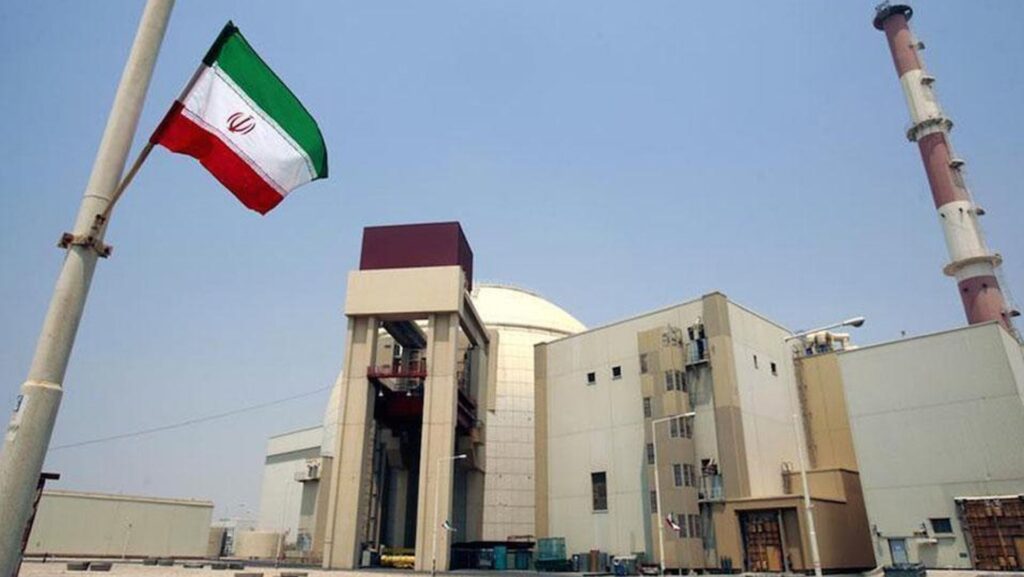
Western countries accuse Iran of seeking to acquire nuclear weapons, which Tehran denies. Negotiations between the US and Iran were conducted in spring 2025, before the 12-day war that Israel launched in June, but had stumbled over the issue of uranium enrichment.
The US demands that Iran completely stop enrichment, which Tehran refuses to do, saying it has the right to possess nuclear energy for peaceful purposes, based on the Nuclear Non-Proliferation Treaty (NPT), which it has signed.
“President Trump says ‘no nuclear weapons’ and we absolutely agree with that (…) Of course, in return we expect the lifting of sanctions. This agreement is therefore feasible. We are not talking about impossible things,” Araghchi insisted on Sunday in an interview with the American television network CNN.
However, Tehran excludes discussing its defense and ballistic capabilities.
Iran had concluded an agreement in 2015 that strictly framed its nuclear activities, but the US withdrew from it in 2018 during Trump’s first presidential term.