Iran is sending signals of possible de-escalation to Washington, with a senior Iranian security official stating that a framework for negotiations with the United States is currently being developed. The statement comes during a period of heightened tensions, military threats and sanctions that are amplifying uncertainty in the Middle East. Ali Larijani, in a post on platform X, argued that “contrary to the atmosphere created by the artificial media war, the formation of a structure for negotiations is in progress.” While he provided no details about the content or timeline of these contacts, his statement is interpreted as an attempt to send a message of calm to the international community.
Iran: Trump’s role
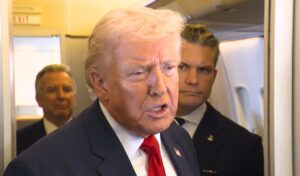
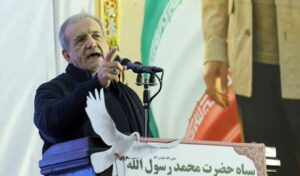
Meanwhile, American President Donald Trump is reportedly considering a broad spectrum of options against Iran, from limited military strikes to extreme scenarios of complete regime change. Publicly, Trump follows a tactic of alternating threats and invitations for talks, keeping all possibilities open. Domestically in Iran, President Masoud Pezeshkian has accused the US, Israel and European countries of exploiting the country’s deep economic crisis and inciting social unrest. The recent protests, which lasted approximately two weeks, were directly linked to inflation and skyrocketing cost of living and were violently suppressed by authorities.
Iran: Casualty estimates
Estimates for the death toll differ significantly. Human rights organizations speak of thousands of victims, while the Iranian government presents lower numbers, emphasizing that a large portion of the casualties were members of security forces. Despite conflicting messages, a diplomatic solution remains uncertain. The Trump administration seeks a much stricter agreement on Iran’s nuclear program, demanding complete termination of uranium enrichment and restrictions on the missile program. Tehran consistently rejects these demands, insisting it will not negotiate under a regime of threats.