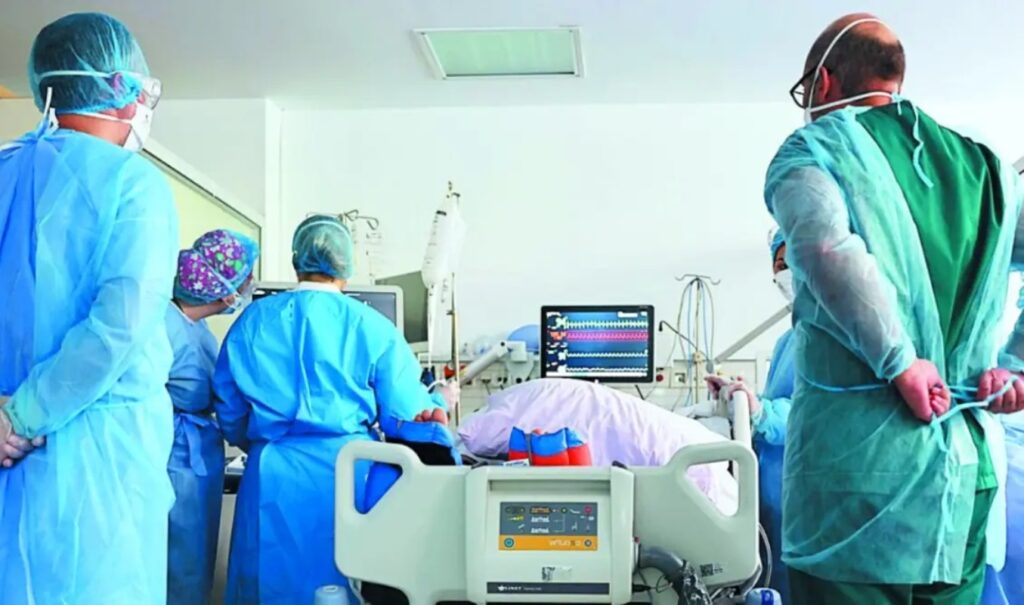
A groundbreaking medical achievement was recorded by surgeons at Northwestern University, as they managed to keep a 33-year-old man alive without lungs for 48 consecutive hours, until a double transplant that saved his life became possible. The patient had fallen seriously ill from influenza, which developed into acute respiratory distress syndrome, known as ARDS, an extremely life-threatening condition. He subsequently developed bacterial pneumonia, while his health condition deteriorated rapidly, with his lungs, heart, and kidneys heading toward failure.
Medical miracle: When ECMO wasn’t enough
In such cases, extracorporeal oxygenation systems like ECMO are typically used, which can partially replace heart and lung function. However, in the 33-year-old’s case, time was minimal and maintaining the damaged lungs was considered dangerous, as it could infect future transplants. The doctors then made an extremely bold decision. They completely removed the patient’s lungs and proceeded to implement a system that had never been used in this way before.
Medical breakthrough: How TAL works
The Total Artificial Lung system was designed to completely take over all lung functions and maintain stable heart function, even under sepsis conditions. Blood was drained from the right side of the heart, channeled to an external pump and oxygenator, and then returned oxygenated directly to the left atrium. Within hours of TAL placement, the patient’s condition began to stabilize. Two days later, a successful double lung transplant was performed. The patient was extubated seven days later and was discharged after eight weeks. Two years later, the transplants are functioning normally.