Australia is facing a severe heatwave in recent days, which has sparked wildfires, created problems in the energy grid and left thousands of homes without power. This particular heatwave represents the worst recorded in the region since “Black Saturday” in 2009, when fires claimed 173 lives, and it is not expected to subside before the weekend, according to authorities. “We are now on the fifth day of a serious to severe heatwave here in Victoria and we are starting to see some of that impact,” said Victoria’s Emergency Management Commissioner Tim Wiebusch.
Read: Australia: 12-year-old boy dies after shark attack in Sydney – Succumbed to his injuries (Video)
Australia: Climate change and very unusual temperatures behind the heatwave
David Crock, a meteorologist from Australia’s Bureau of Meteorology, said the heatwave is due to climate change and characterized the temperatures as “very unusual.” “The severity of this heatwave compares to the heatwave in January 2009 and also that of January 1939,” Crock said. “The data shows long-term increases in the frequency and intensity of heatwaves, particularly after 2000 due to climate change.” Crock said a series of temperature records were broken in Victoria. “About 20 stations, mainly in western Victoria recorded records either historic or for the month of January,” he said. In towns in the Mallee region, temperatures reached 48.9 degrees Celsius, the highest temperature ever recorded in the state.
The heatwave in Victoria subsided slightly in recent hours, while the northern areas in the western part of New South Wales state and the southwestern part of Queensland recorded temperatures above 48 degrees Celsius late in the afternoon (local time). About 11,000 properties have been left without power in Victoria, compared to 105,000 a day earlier. Firefighters were trying to extinguish six major fires, three of which are out of control.
A fire at Carlisle River in the Otway region has burned over 110,000 acres and destroyed at least 16 buildings. “This Carlisle River fire is far from over,” said Chris Hardman, chief fire officer of Victoria’s Forest Fire Management Service. Many communities in the state continue to recover from major grassland fires earlier this month, which were also caused by a severe heatwave. More than 400 homes and 4 million acres of land have been lost so far.
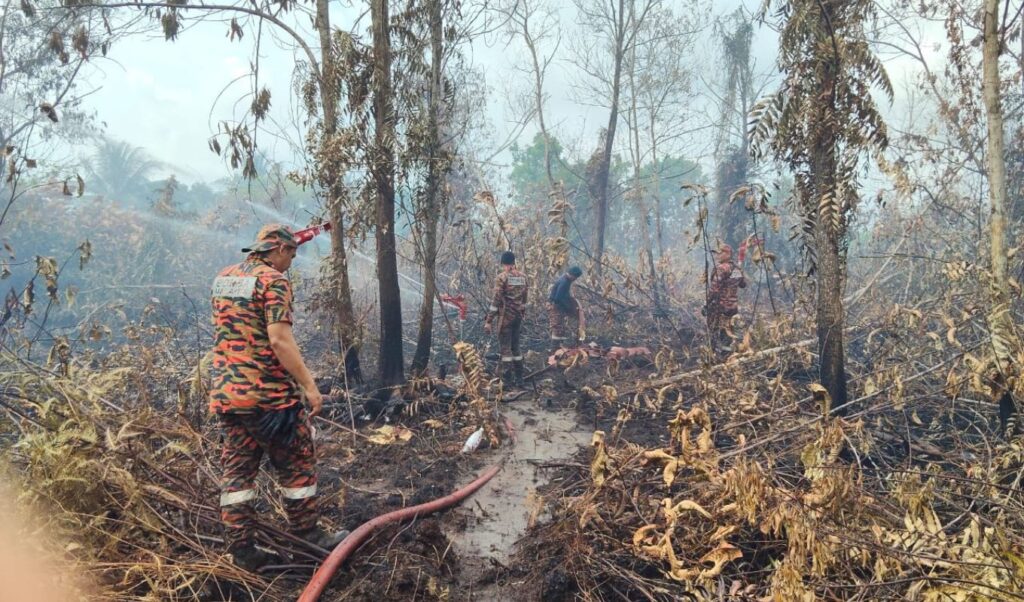
[IN PICS] Firefighters have contained more than half of a large peat fire in Pengerang here with operations ongoing for nearly a week after flames broke out on Jan 23.
Courtesy of Fire & Rescue Dept
Read more: https://t.co/NJ1O38kRjw pic.twitter.com/eEOl5onnDA
— New Straits Times (@NST_Online) January 28, 2026
Australia’s record heatwave as seen from space 🌡️
Thermal data acquired by the @copernicus_eu Sentinel‑3 Sea and Land Surface Temperature Radiometer highlight the severity of the ongoing heatwave across Australia, with extreme land surface temperatures (LST) detected over large… pic.twitter.com/HRuKX66yUA— ESA Earth Observation (@ESA_EO) January 28, 2026
HEATWAVE FOR FIFTH STRAIGHT DAY
Watch: A record-breaking heatwave baked Australia’s southeast for a fifth straight day on Wednesday, fanning bushfires and straining the power grid, leaving thousands of properties without electricity.
Courtesy: Australian Broadcasting… pic.twitter.com/hMTeyBhzO1
— GMA Integrated News (@gmanews) January 28, 2026