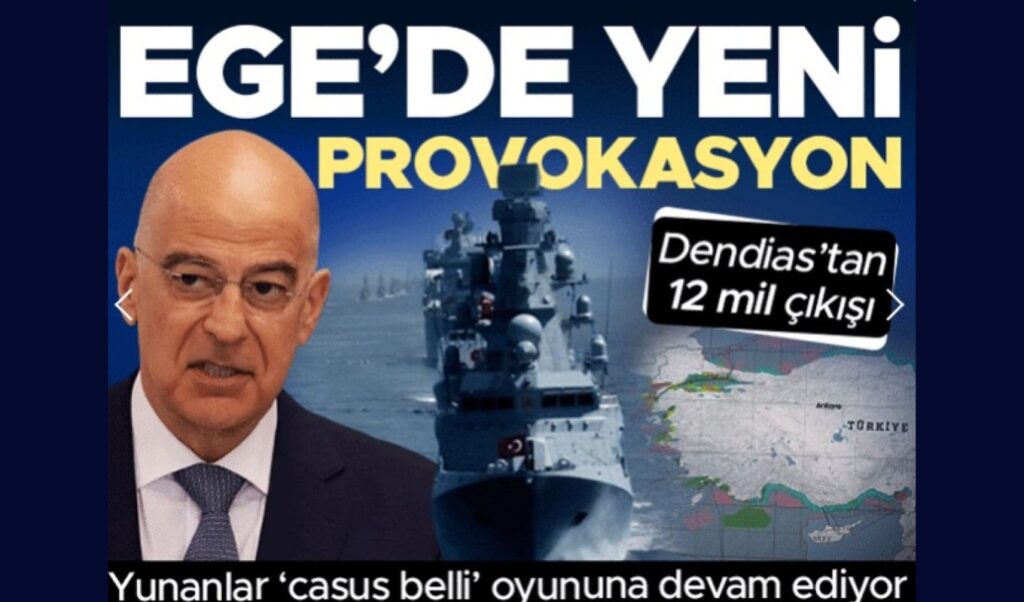
Yesterday’s interview with Nikos Dendias drew the attention of Turkey, in which he characterized the extension of Greece’s territorial waters as a “unilateral and sovereign right,” while making it clear that dialogue between Athens and Ankara cannot exist as long as Turkey maintains its casus belli. Indeed, following the interview with the Greek Defense Minister, the newspaper Hurriyet speaks of “renewed provocations in the Aegean by Athens,” as “Dendias makes statements on the 12-mile issue.”
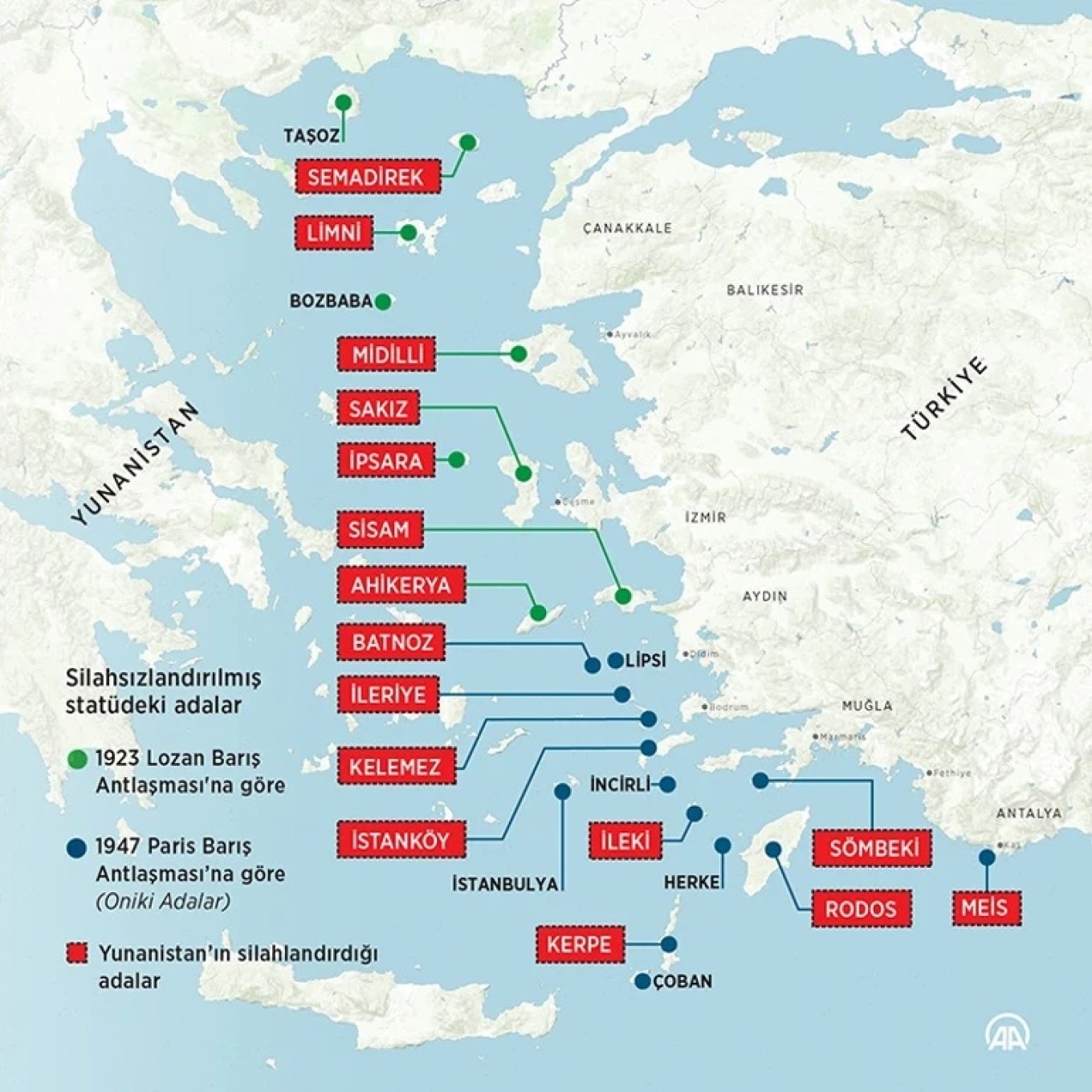
In the same report, Hurriyet includes a map of the Aegean from the Anadolu agency showing the islands that have been definitively secured to Greece through the Treaties of Lausanne (1923) and Paris (1947), which Turkey demands remain demilitarized.
According to the relevant report, Nikos Dendias “brought back to the forefront, during the interview, the issue of maritime border readjustment in the Aegean, implying that Athens intends to make moves in this direction in the future. As he stated, the extension of territorial waters constitutes a right deriving from international law and can be exercised unilaterally. The Defense Minister characterized the extension of territorial waters as a ‘right’ that will be exercised at a time that serves the country’s national interests, while criticizing Turkey for its insistence on protecting its own territorial waters in the Aegean and, as he argued, attempting to prevent the application of international law. Although he declared himself in favor of dialogue with Ankara, he stressed that this specific issue cannot be subject to negotiation.”
Turkish reactions to Dendias interview – Hurriyet: The Greek side chooses a calm stance in its responses
“Referring to Turkey’s position that the extension of Greek territorial waters to 12 nautical miles constitutes a cause for war, Nikos Dendias argued that Ankara’s defense of its own claims in the Aegean is presented by the Greek side as a ‘war threat’ against Greece. Any military reaction to a Greek move to extend maritime borders, he added, would constitute an act of aggression,” the Hurriyet report further notes, adding: “Responding to criticisms from Ankara about the existence of a ‘personal agenda’ against Turkey, the Greek minister said he does not take such claims seriously. As he noted, the Greek side chooses a calm stance in its responses, pointing out, however, that ‘Greece is not weak.'”
Returning to the maritime borders issue, the newspaper emphasizes: “Nikos Dendias made special reference to the 12 nautical miles issue. He reminded that Greece has already proceeded with a corresponding extension in the Ionian Sea, stressing that the country maintains its full right to do the same in the Aegean. ‘When we will do it depends on weighing national interests,’ he characteristically stated. The Defense Minister repeated that, according to the Greek position, international law provides this right to Greece, arguing that Athens does not ‘claim’ or ‘request’ it, but cannot remain indifferent to violations of international law. Referring again to Turkey, he argued that it attempts to impose its positions through the threat of force, adding that ‘Greece also has power.'”
At the same time, the Turkish newspaper recalls previous statements by Prime Minister Kyriakos Mitsotakis, who, according to Hurriyet “has accused Turkey of war threats, regarding the reminder of the casus belli in case of extension of Greek territorial waters. Kyriakos Mitsotakis has characterized this specific stance as ‘aggressive,’ conveying in his speeches at the United Nations the message that Turkey is the side adopting threatening behavior. Repeating this position, Nikos Dendias stated in his interview that the casus belli issue cannot form the basis of discussion, emphasizing that ‘we cannot accept war as the axis of dialogue.'”