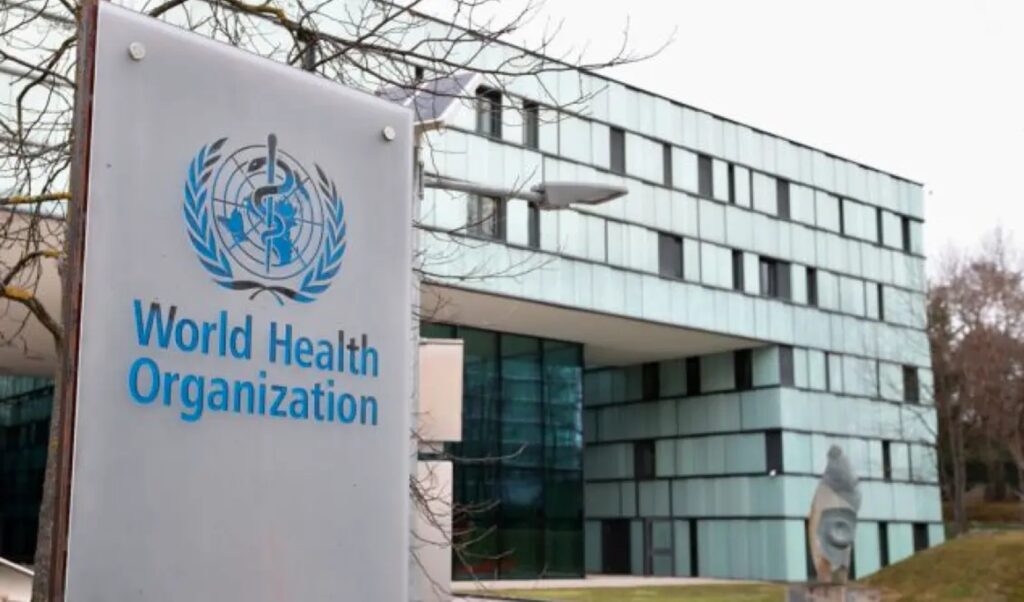
Like a bombshell exploding in Geneva and internationally, the decision by new US President Donald Trump to sign the executive order for his country’s withdrawal from the World Health Organization (WHO) shocked the world in early January 2025. According to US law, the withdrawal is scheduled for late January 2026.
Definitive US-WHO divorce: Final withdrawal by late January or shortly after
The main US argument is that China’s contribution to WHO cannot be less than 10% of the American contribution. The decision creates serious concerns about WHO’s sustainability, as the US is one of its main funders, covering 18% of the Organization’s annual budget.
The Trump administration wants WHO to be led by an American director-general and inspector general, according to Larry Gostin, professor of global health law who directs Georgetown University’s O’Neill Institute, as reported by Politico.
Concerns from the Greek delegation in Geneva
Revealing the explosive climate of anxiety that had prevailed at WHO headquarters in Geneva regarding Trump’s decision was an urgent memo sent on January 23, 2025, by Greece’s Permanent Mission to the UN and other International Organizations from Geneva to Prime Minister Kyriakos Mitsotakis’s diplomatic office and the political leaderships of the Health and Foreign Affairs ministries. This urgent memo from the Permanent Mission, which parapolitika.gr had access to from the beginning, stated characteristically: “Although the US withdrawal from WHO was not surprising, the announcement of the decision nevertheless caused tremors in Geneva’s ecosystem. While diplomatic formalities were maintained in WHO’s attached announcement (expression of regret, reference to 75 years of US contribution, emphasis on joint efforts for WHO transformation, hope for decision reversal, and expectation for continued cooperation for global health and prosperity), discussions began about what lies ahead, particularly regarding funding.”
Indeed, according to official WHO funding figures, the US contributed approximately $988 million between January and November 2024, an amount corresponding to about 14% of WHO’s total annual budget of $6.9 billion. Moreover, a document presented at a WHO budget meeting in January 2025, which the Associated Press had seen, stated that US funding provides the backbone for many of WHO’s large-scale emergency operations. This funding aims to combat and eliminate diseases globally. For example, US funding covers 95% of WHO’s tuberculosis action funding in Europe, as well as 60% of the Organization’s tuberculosis response efforts funding in Africa and the Western Pacific. As a result of US withdrawal, WHO responses in the Middle East, Ukraine, and Sudan are at risk, along with the Organization’s international programs for eliminating polio and HIV/AIDS.
WHO plays a significant role in supporting national health systems and their resilience, preventing and addressing infectious diseases, and managing health crises, among others. In this context, Greece’s cooperation with WHO, especially with its regional office in Athens with which we collaborate on numerous programs, becomes even more important to ensure their continuity. US withdrawal could impact the broader Balkans region, as stable funding and technical support from the Organization are critical for strengthening their national systems. Specifically, serious impacts are anticipated for HIV/AIDS, hepatitis, and sexually transmitted diseases, where US participation accounts for 75% of total related funding.
False hopes and inaction
Since then, false hopes and international expectations of an artful “Trump bluff” were cultivated, with some saying the US President aimed to achieve a significant reduction in his country’s annual funding contribution to WHO’s coffers, with a corresponding increase in funding from China.
The now visible prospect of US withdrawal from the Organization by late January 2026 or even slightly later is explosively worrying and dangerous, especially in an era that, with epidemics and the reemergence of ‘forgotten diseases,’ requires drastic increases rather than reductions in funding for WHO’s related actions.
Certainly, President Trump believes WHO has become subordinate to China, and nothing indicates any forthcoming revision of the executive order for US withdrawal from WHO. The Organization is accused by the transatlantic partner of doing nothing for a year to achieve the drastic increase in annual funding that China provides to WHO. China is very intensely accused by the Trump administration of the excessive economic cost caused by the international campaign and global alert to end the new coronavirus pandemic, which, beyond conspiracy theories, has the “hard” reality that it started and was triggered internationally by China itself.
Expression of regret, without initiatives
Finally, it’s worth recalling that WHO had expressed its regret with particular emphasis in January 2025 regarding US President Donald Trump’s expressed intention to withdraw the country from the Organization’s ranks.
Specifically, WHO’s response announcement was limited to wishful thinking, without hinting at major initiatives to prevent this catastrophic possibility of US exit from WHO. WHO then wrote in its response: “The World Health Organization regrets the announcement that the United States of America intends to withdraw from the Organization. WHO plays a critical role in protecting the health and safety of the world’s people, including Americans, by addressing the root causes of disease, building stronger health systems, and detecting, preventing and responding to health emergencies, including disease outbreaks, often in dangerous places where others cannot reach.
The United States was a founding member of WHO in 1948 and has since participated in shaping and managing WHO’s work, together with 193 other member states, including through their active participation in the World Health Assembly and Executive Board. For over seven decades, WHO and the US have saved countless lives and protected Americans and all people from health threats. Together we ended smallpox and together brought polio to the brink of eradication. American institutions have contributed to and benefited from participation in WHO.
With US and other member state participation, WHO has implemented over the past 7 years the largest series of reforms in its history, to transform our accountability, cost-effectiveness and impact in countries. This work continues.”
According to Reuters, finally, WHO stated that the US has not yet paid the fees owed for 2024 and 2025, totaling approximately $260 million. Member states have scheduled to discuss US withdrawal and how it should be addressed during WHO’s executive board meeting next February, the international news agency reported.