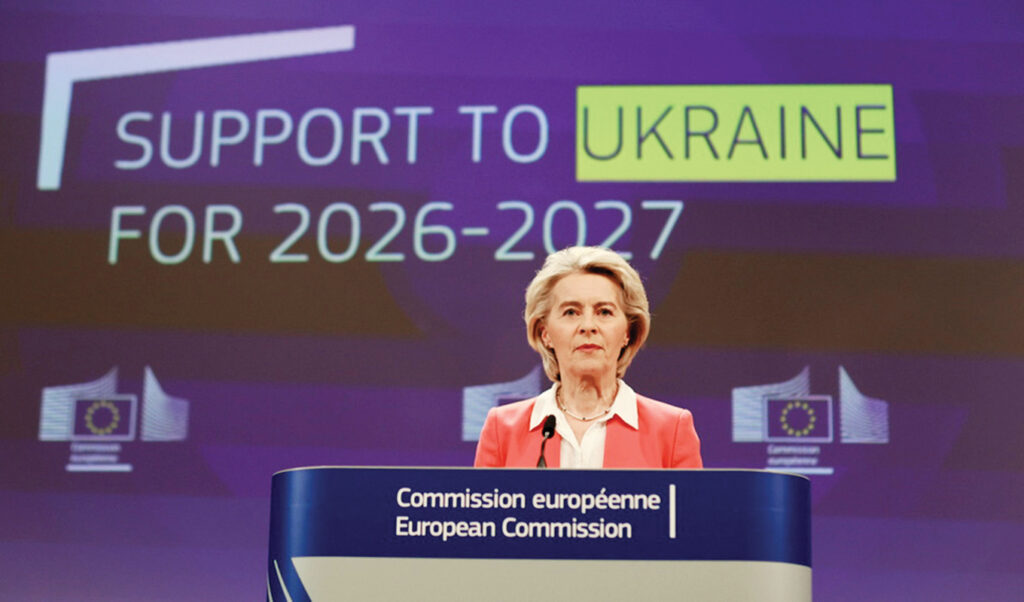
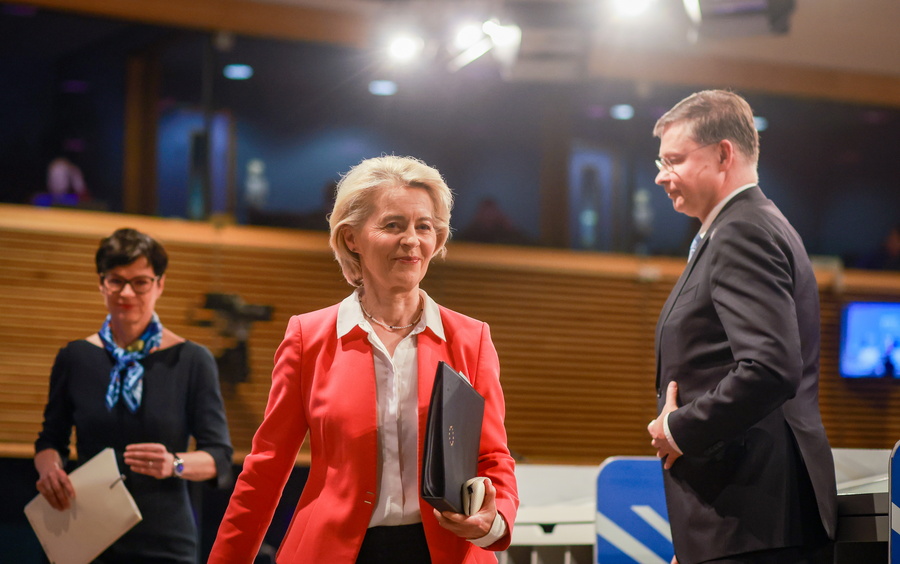
Europe continues to make clear its support for Ukraine, both through negotiations and reinforcement, as Ursula von der Leyen once again demonstrated in Brussels, Belgium. The President of the European Commission presented a proposal for a Support Loan worth €90 billion for 2026 and 2027, emphasizing that Ukraine needs to be in a “position of strength.” The plan, which was approved and will be implemented, involves three legislative proposals from the Commission, with the European Union set to support the initiative.
Read more: Commission: €90 billion support package loan for Ukraine approved
Ukraine has been supported consistently by Europe throughout these 47 months of war with Russia. According to data, all European Union member states have assisted the Ukrainians, as both individual countries and the European Union as an organization have supported Ukrainians with €193.3 billion, while from frozen Russian assets they have provided €3.7 billion.
Ukraine: What the proposals contain
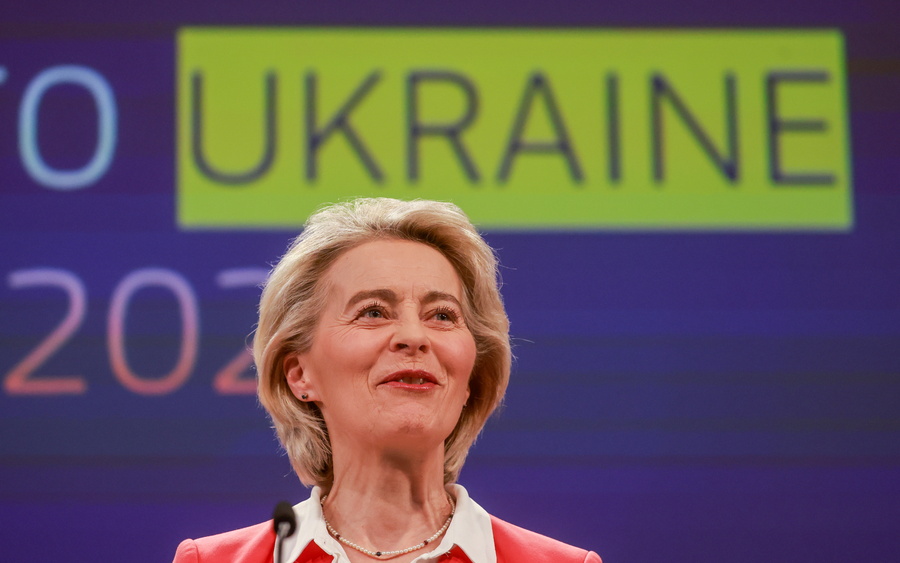
Ursula von der Leyen prefaced the proposal for the Support Loan, saying that “(with this) we ensure that Ukraine can both strengthen its defense on the battlefield and enhance its defensive capabilities – that is, its military needs – and maintain the operation of the state and essential services.” She was categorical, furthermore, that the proposal confirms Europe’s unwavering commitment to Ukraine’s security, defense, and future prosperity. Von der Leyen also claimed, at the dawn of the fourth anniversary of the invasion, that “today Russia shows no sign of retreat or remorse, nor any intention of pursuing peace.”
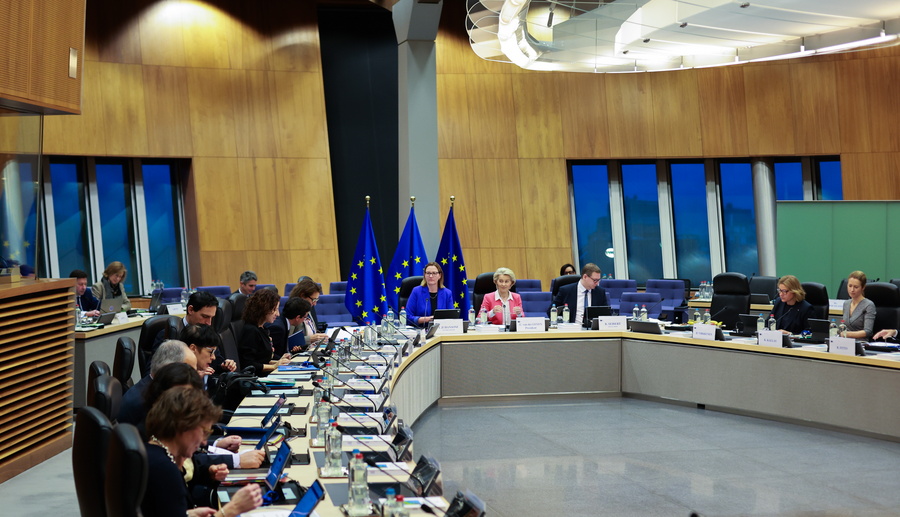
Specifically, the European Commission presented on Wednesday, January 14, a package of three legislative proposals to secure the support loan worth €90 billion to Ukraine for 2026 and 2027, with support from the EU budget, according to decisions made by the European Council in December. All three were approved. The legislative package consists of: first, a new proposal for establishing a support loan for Ukraine worth €90 billion; second, a proposal to modify the Ukraine Facility – the EU’s macroeconomic assistance package worth €50 billion for 2024-2027; third, a proposal to modify the Multiannual Financial Framework (MFF) regulation to enable coverage of the loan to Ukraine from the EU budget “margin.”
Enhanced cooperation
The agreement was reached within the framework of “enhanced cooperation” among 24 member states, excluding Hungary, Slovakia and the Czech Republic which refused to participate in the initiative. These three countries have agreed not to oppose the modification of the Multiannual Financial Framework.
Meanwhile, as decided by the European Council in December, the EU retains its right to use immobilized Russian assets for loan repayment, as Ukraine is expected to repay the loan only after Russia pays war reparations. In case of payment default, the EU budget will function as a safety net.
The “Support Loan” of €90 billion to Ukraine for 2026 and 2027 will be structured as follows: approximately two-thirds, worth €60 billion, will be allocated for military aid, and the remaining one-third, corresponding to €30 billion, will be provided as general fiscal support.
Regarding the allocation of approximately €60 billion for Ukraine’s military aid, von der Leyen clarified that the mechanism will function somewhat like “SAFE,” prioritizing the strengthening of European defense industry. “The funds will be used to purchase equipment mainly from Ukraine, from the EU, and from our EEA/EFTA partners,” she noted, however pointing out that if necessary equipment is not timely available in this area, procurement from countries outside the EU and EEA/EFTA will be possible. Regarding fiscal support worth €30 billion, the Commission President emphasized that “it will help Ukraine proceed with its reforms, modernize the country, and bring it closer to EU accession.”
The goal is to reach agreement among EU institutions during the first half of the year, so that first payments to Kyiv can be made in early spring.
It should be noted that the €90 billion support package covers two-thirds of Ukraine’s total financing needs for the next two years, according to International Monetary Fund estimates. Therefore, continued and coordinated support from international partners remains essential, including timely implementation of G7 commitments for 2026 and beyond, particularly within the framework of the G7-led ERA loan initiative.