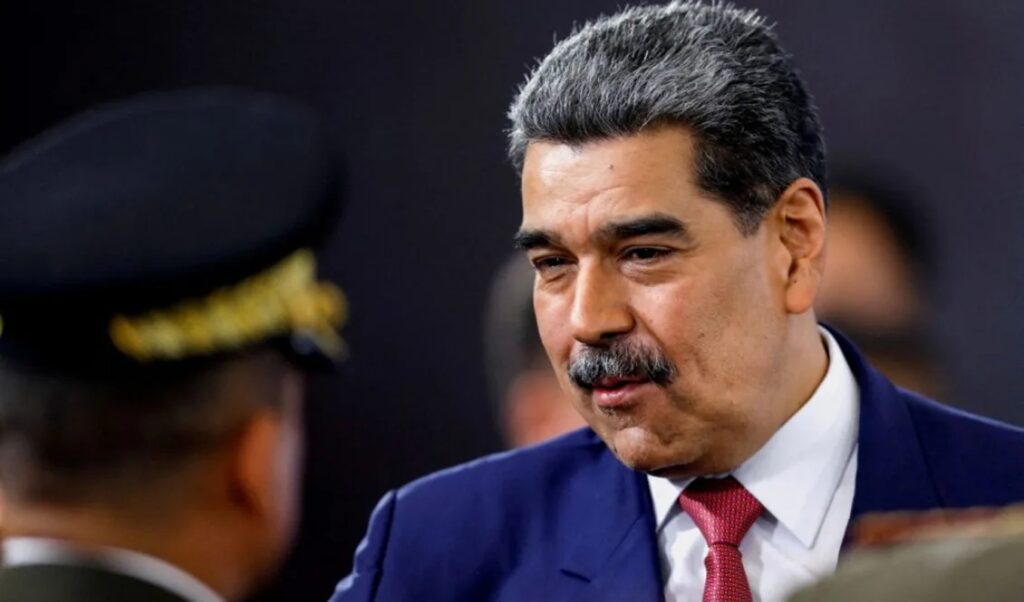
The arrest of Maduro in Venezuela by American special forces raised legitimacy questions about US intervention in a third country. Ronald Glas -senior director of international development programs in democracy, rule of law, governance and human rights sectors, former USAID program director in Latin America (Colombia, Honduras, Dominican Republic, Costa Rica), South Asia (Afghanistan), Russia and Azerbaijan- shares his assessment of Venezuela’s future.
– What does Maduro’s arrest actually change?
– Maduro’s arrest is not an ordinary leadership removal; it is the decapitation of a criminal governance structure that had replaced the Venezuelan state. Power under Maduro was exercised through fear, patronage, and illegal networks – not through institutions. What’s different this time is the credibility of US law enforcement. Recent US actions have proven that warnings tend to be implemented. This constrains elite decision-making: former regime actors face stark choices -fight early, defect, or flee- instead of waiting for Washington intervention. This doesn’t eliminate instability, but reduces the time frame for prolonged elite waiting.
– What is the greatest strategic risk in the power transition?
– The main risk is not chaos, but relapse – the reconstitution of criminal governance under a different form. Venezuela must not exchange one criminal equilibrium for another. That’s why stabilization must be approached as a security operation, aimed at governance, not as a political trophy. Transitions fail when symbolism trumps sequencing.
– How should institutional reconstruction be achieved?
– Venezuela requires precision. Applying the 80/20 principle is essential: a relatively small group consisting of senior political officials, security force commanders, judicial actors and financial operators caused most of the repression and theft. Removing and neutralizing this corrupt core will lead to disproportionate institutional recovery. First the security sector must be reconstructed, then the judicial system rebuilt, focusing on a limited number of high-credibility cases. Political normalization must come last.
– On what legal basis was Maduro arrested and why doesn’t national sovereignty protect him?
– The legal basis rests on established US extraterritorial jurisdiction and specific criminal prosecutions for narcoterrorism, drug trafficking, and money laundering. Head of state immunity does not extend to criminal activities. The Maduro regime abolished elections, weaponized courts, and incorporated transnational crime into the state itself. By doing so, it lost the normative protections of sovereignty. This is law enforcement against an alleged criminal, not regime change by preference.
– How long should the US remain involved and in what role?
– The US role must be limited, conditional, and based on specific criteria. The goal is not occupation, but prevention of relapse. Guardianship must be limited to security, borders, critical infrastructure, economic oversight, and justice. Duration must be based on conditions, not calendar. Historical failures in Iraq and Afghanistan demonstrate the danger of premature political handover to compromised elites.
The goal is not occupation, but prevention of relapse. Guardianship must be limited to security, borders, critical infrastructure, economic oversight and justice
– What role should oil and international companies play?
– Oil is both Venezuela’s greatest asset and its greatest danger. Under Maduro it was a corruption mechanism, while during transition it should become a means of stabilization. Market access and licensing must be gradual and dependent on audited accounts, public reporting, and governance criteria. Oil governance reform must be the price of market access, not its byproduct. Oil without institutions is poison.
– Could Maduro’s arrest cause regional instability?
– The dissolution of a narco-state creates competition for routes, money, and protection. Spillover risks will be felt most acutely in Colombia and Ecuador, with pressures extending toward Mexico. The solution is not retreat, but containment. If transition is credible and based on benchmarks, spillover is manageable. If it’s rushed or politicized, uncertainty becomes oxygen for traffickers.
– How will external actors react?
– Iran, Russia and Cuba will condemn this action to defend the impunity doctrine that protects their own models. Their influence will be political, not decisive. China and other transactional actors will maintain public restraint while privately protecting their economic exposure. Over time, results will matter more than rhetoric: if stabilization reduces criminal flows and restores basic functions, initial criticism will weaken.
Published in Parapolitika