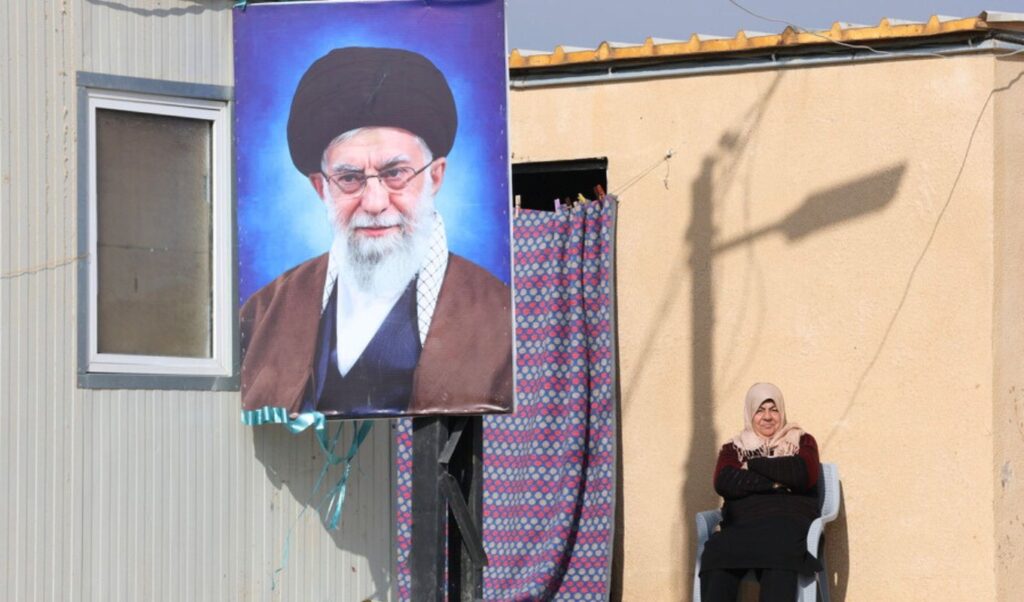
The unrest that has been shaking Iran for weeks has opened questions about succession in the country’s leadership. While the death toll remains unknown and mobilizations intensify, various names of potential successors to Supreme Leader Ali Khamenei are circulating in the streets of Tehran and other cities. The uncertainty about Iran’s future is enormous, as no individual has an organized plan with widespread acceptance. The situation in the country is becoming increasingly unstable. Despite the intensity of popular uprisings and the erosion suffered by the theocratic regime, there is no clear alternative leadership or unified political force that commands the people’s trust. This makes the succession issue in Iran particularly complex and unpredictable.
Read: Chaos in Iran: Shocking images in hospitals with “stacked corpses” – US “ready to help” (Video)
What determines the next day in Iran
According to international analysts, the course of events will depend less on specific individuals and more on critical factors. The possibility of security forces splitting is a decisive element, as is the opposition’s ability to transform popular outrage into a cohesive political proposal with a vision for the future. The scenarios being examined include exiled political figures, organized resistance groups, and even the possibility of military structures taking control. Each option carries different prospects for the country and different risks.
Maryam Rajavi and the MEK organization
Maryam Rajavi, head of the National Council of Resistance of Iran, leads one of the oldest and most organized opposition structures, the Mujahedin-e Khalq. This organization has gained public support from significant Western politicians, including Mike Pence and Mike Pompeo, promoting a vision of transition to a democratic, secular system.
Rajavi argues that the current uprising has spread to approximately 190 Iranian cities, causing serious weakening of the regime. The MEK’s “Resistance Units,” in cooperation with ordinary citizens, have managed to temporarily control parts of urban areas, which she characterizes as a rehearsal for final liberation.
In her recent statements, Rajavi emphasizes that despite Khamenei’s assurances that he will not retreat, popular will is proving stronger than the Revolutionary Guards and the repressive apparatus. She acknowledges the heavy price of the mobilizations, with young people sacrificing their lives for a struggle aimed at dignity, gender equality, and separation of state from religion. However, many analysts question MEK’s actual influence inside Iran. The organization’s history and ideology continue to cause division and strong reactions among Iranians.
Reza Pahlavi and the monarchy scenario
Another potential successor being intensely discussed is Reza Pahlavi, eldest son of the last Shah and former heir to the throne. Nearly five decades after the 1979 revolution, his name is dynamically reappearing on the scene as he tries to present himself as a voice of popular discontent. Pahlavi, who resides in the United States, recently called for mass mobilizations, general strikes in critical economic sectors, and escalation of protests aimed at seizing urban centers. Slogans supporting his return and even restoration of the monarchy were heard at demonstrations in many Iranian cities, revealing the depth of the crisis.
Although he declares that he does not seek restoration of the monarchy but democratic transformation through constitutional process, he remains a divisive personality. Analysts point out that it is unclear whether his increased popularity reflects genuine support or simply the desperation of a society that sees no other options. The absence of a specific governance plan reinforces skepticism even among those who support him.
Military structures and internal control
A third succession scenario in Iran concerns the possibility of control being assumed by parts of the state apparatus. The Revolutionary Guards, Basij militia, or even regular army units could take over in case of political leadership collapse. Experts warn that such a scenario could lead to personnel changes without substantial regime change. Real power would remain in the hands of armed elites, limiting the chances of genuine democratic transformation and maintaining the state’s oppressive structure.
Internal opposition and political prisoners
Despite intense international interest in imprisoned activists and dissidents in Iran, the reality is harsh. Long-term repression has almost eliminated the possibility of strong political leaders emerging from within the country. Most activists have been imprisoned or executed in recent decades, without broader organizational support.
The absence of a clear successor to Ali Khamenei with a ready plan and broad acceptance makes the situation extremely fluid. The final outcome will depend on the evolution of demonstrations, the possibility of rifts in security forces, and the opposition’s ability to transform social anger into a viable political proposal. Iran’s future remains uncertain, with many scenarios open and none obvious.