Often defying expectations, with the card of upheaval falling on the table and crucial changes composing a new landscape of normalcy on the global political scene, 2025 has come to an end. Until the last day, the element of the unpredictable seemed to prevail over the expected, and together with the expiration of this year and the arrival of 2026, an assessment of the most significant events becomes inevitable. From the inauguration of Donald Trump for his second term, at the beginning of 2025, to the election of a new Pope and agreements for Ukraine and Gaza, everything has its own significance and comes to establish a new order of things. The change in American leadership brought new realities, alliances that until recently seemed unnatural, as well as anxiety in Europe, and often among investors, for policies with questionable outcomes. At the same time, the wars in Ukraine and Gaza took a different turn, with the planet hoping that crisis de-escalation is approaching, while new conditions of political life were formed in countries that have their own special place on the map.
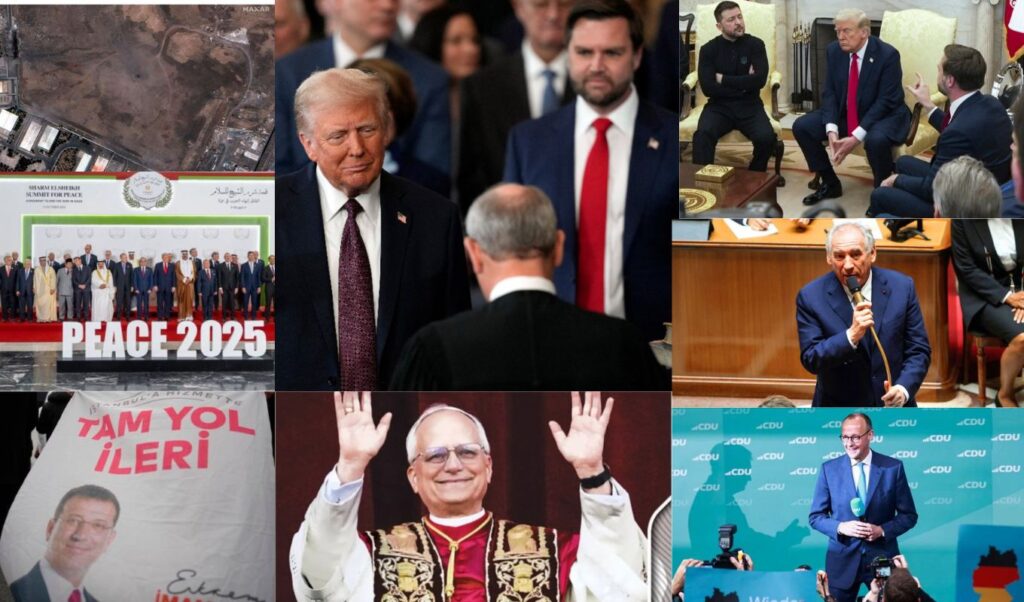
From the events that marked 2025, parapolitika.gr singles out 10 based on the chain reactions that became apparent across the globe, while examining the dynamics of each development around the world. By continent, however, rapid developments were recorded that signaled a new order of things and will surely leave their own mark on history. The 10 most significant events, as compiled by parapolitika.gr, are presented in order of importance.
2025: The 10 events that marked the year
Trump’s inauguration
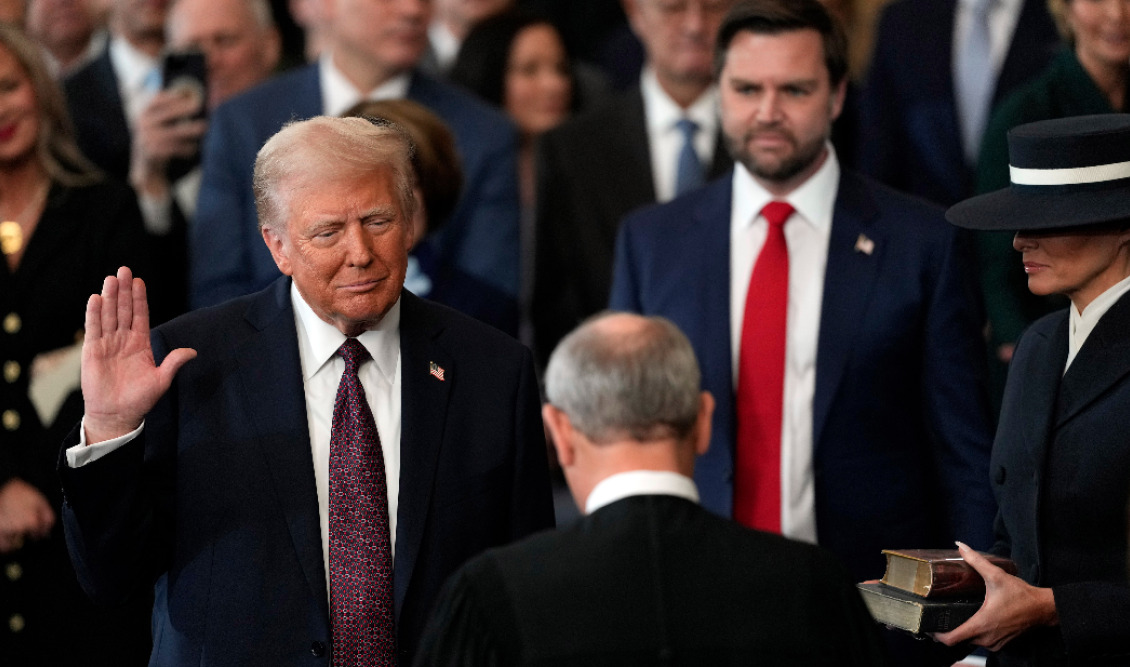
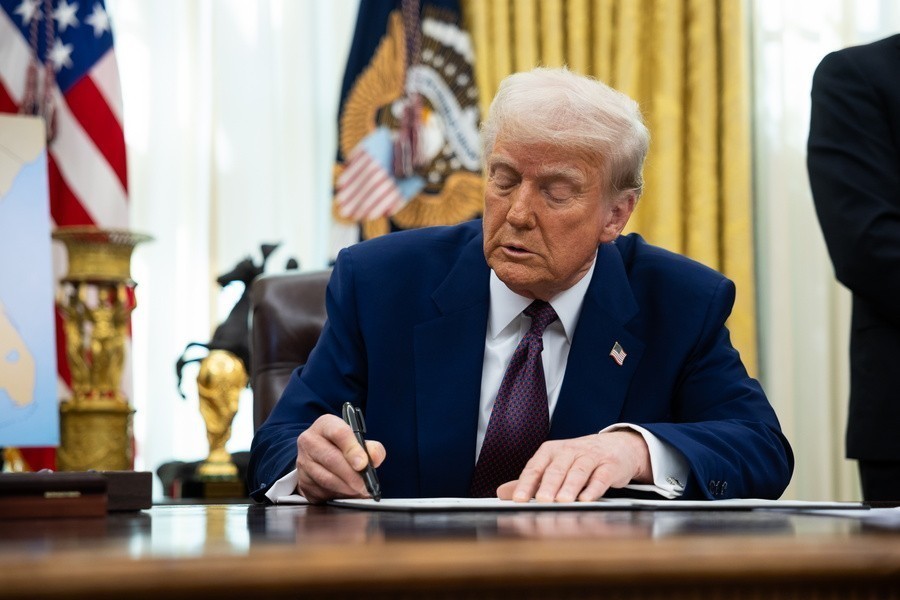
Donald Trump took the oath on January 20, 2025. This automatically marked the beginning of the second and new term of the 47th President of the United States, which coincided with Martin Luther King Jr. Day, honoring the emblematic civil rights leader who was assassinated in 1968. With memories still fresh from the Capitol riots, the Republican leader read, four years later, from the same spot, the following phrases: “I do solemnly swear (or affirm) that I will faithfully execute the Office of President of the United States, and will to the best of my ability, preserve, protect and defend the Constitution of the United States.”
The new Pope
“Viva papa” shouted thousands of faithful on May 8, 2025, with obvious enthusiasm from St. Peter’s Square, bursting into tears of joy and emotion after white smoke emerged from the Sistine Chapel. In the shortest election process since 1900, with the anxiety that prevailed for hours giving way to a sense of relief and after three black smokes, the fourth vote was crowned with success. The new Pope, 69-year-old Robert Prevost, was elected Pontiff of the Roman Catholic Church, the first from American territory. The legacy he inherited from Pope Francis has its own weighty significance, as he assumed a symbolic role amid growing dissatisfaction with the Vatican following sexual scandals.

The tumultuous Trump & Zelensky meeting
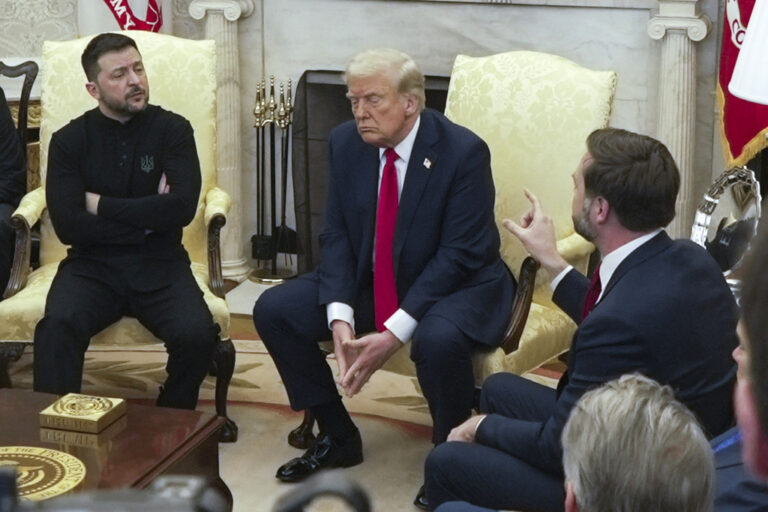
The calendar read February 28, 2025, shortly after Trump’s inauguration for his second term and with the Ukrainian issue remaining a challenge and key priority of the agenda. The meeting with his Ukrainian counterpart Volodymyr Zelensky took an unusual turn as an unprecedented moment of tension was recorded between the two leaders. Everything started when Vance told Zelensky that the war should end through diplomacy, only to receive the response from the Ukrainian president: “What diplomacy?”. The American president and Vice President accused Zelensky of ingratitude and the meeting ended in failure. Volodymyr Zelensky left early and Donald Trump posted on his Truth Social that he “is not ready for Peace.”
The Ukraine agreement
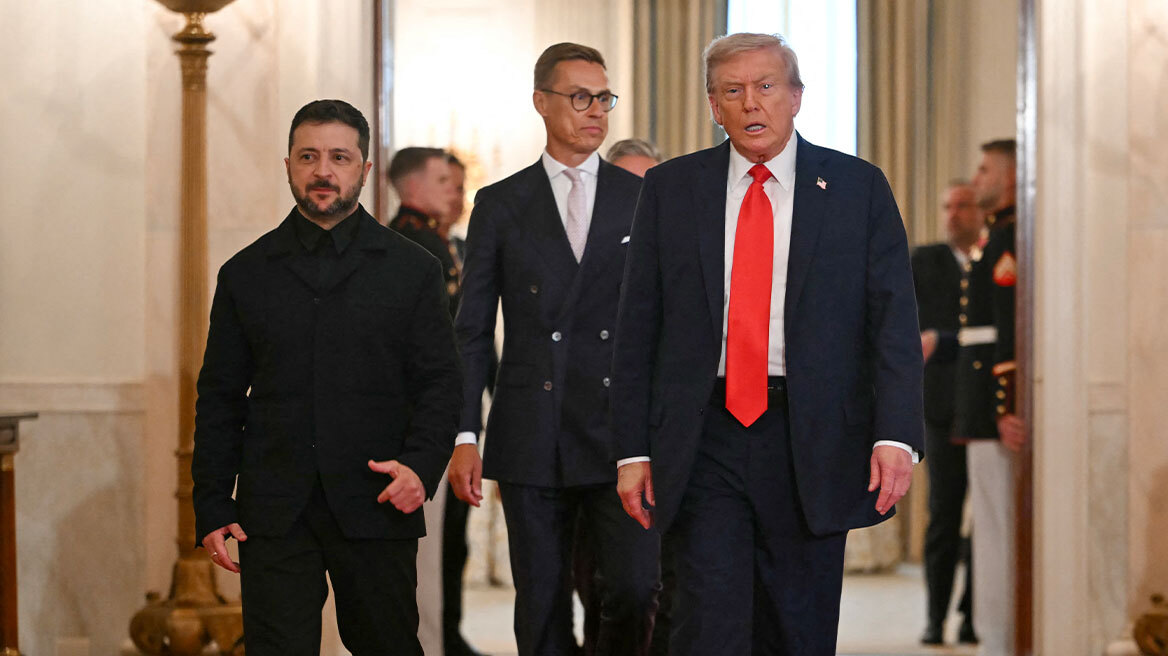
In November 2025, shortly before the year expired, American and Ukrainian officials came closer than ever to a peace agreement with Donald Trump presenting a plan with 28 proposals, some of which were subsequently modified with European contribution. The issue of whether or not to annex Ukraine’s eastern territories to Russia undermines the climate just before the official completion of four years of war. The Geneva talks after the presentation of the Trump plan – which was not final – formalized in a way the entry of Europeans into the process. The revised plan that was drafted was considered more favorable for Ukraine. Security guarantees in peacetime as well as the presence of soldiers in the territories with changing caps and more Ukrainians being able to remain at the borders, were among the American proposals that were modified at European initiative.
The Gaza agreement
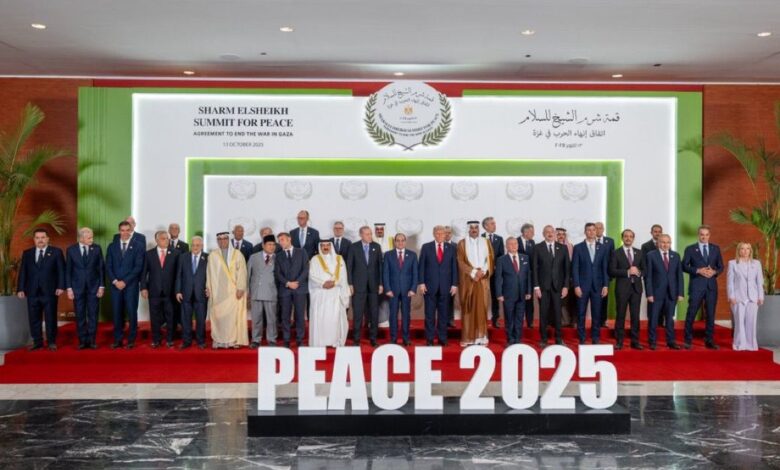
On the other major front, that of the Middle East with the war in Gaza and termination also being a challenge for Trump, the signing of an agreement in October was considered one of the most important moments in global politics. For the first time – during the two-year war – a peace plan was presented that was more likely to be implemented by the involved parties and was the product of consensus between the US and Gulf countries in a diplomatic conjunction of unprecedented importance. The Peace Summit in Sharm el-Sheikh, which entered modern global history, was where the Gaza ceasefire agreement was signed. On October 13, the agreement based on Trump’s 20-point plan was announced, with the American president emphasizing that finally “we have peace in the Middle East, it took 3,000 years to achieve something like this, we avoided World War III.”
US attack on Iran
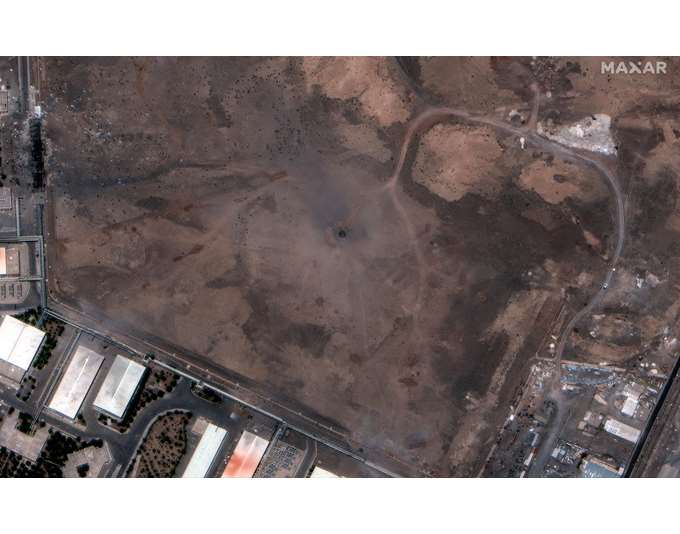
Ready to explode, the situation in the Middle East reminded on June 22, 2025, with extreme escalation and repeated missile strikes demonstrating a new hell of war. American President Donald Trump pressed the “button” and American involvement in Israel’s conflict with Iran fundamentally shook the geopolitical environment. US bombers moved over Iranian skies, which was a point of surprise. Trump advanced the war involvement plan, with the bombing of Iran’s nuclear facilities, saying he destroyed them completely, something Tehran denied. The chain reactions had created fears then of closing the Strait of Hormuz.
Liberation Day and tariffs
It was Wednesday, April 2, 2025, the day Trump called “Liberation Day” announcing he would impose reciprocal dollar-for-dollar tariffs on nations that impose tariffs on American products. His tariff policy was judged harsh, opening a peculiar trade war with China on which the harshest punishment was imposed, creating fears of serious economic impacts on the global environment. Given that the US and China together represent a significant share of the global economy, about 43% this year according to the International Monetary Fund, if they engaged in a full-scale trade war this would slow their growth or even push both countries into recession.
German elections
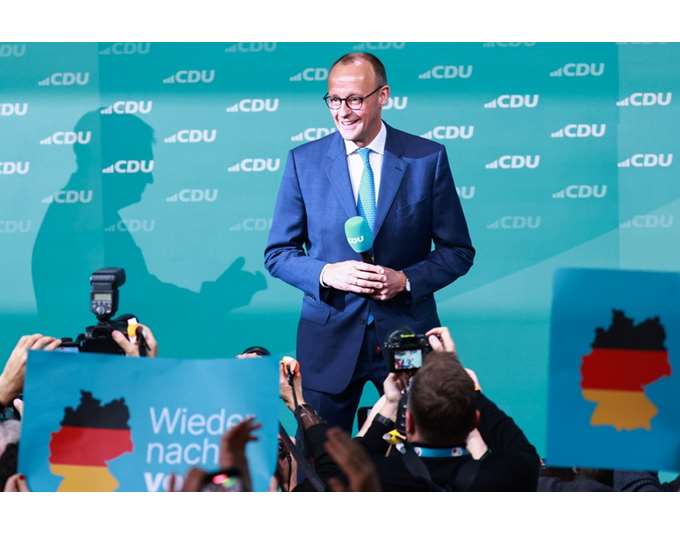
Within Europe and after nightmarish forecasts and with Olaf Scholz’s previous chancellorship having lost its momentum, the elections in Germany, the eurozone’s engine, in February 2025 were among the critical thrillers in the EU. Finally, the election of Christian Democrat Friedrich Merz provided relief to Union member states. The pyrrhic victory of the Christian Democratic Party leader, who passed below the psychological threshold of 30%, gathering close to 29%, was recorded on February 23, 2025 and testified to the perspective of Germans who oriented toward a choice based on certainty. Alternative for Germany, however, proved to be the big winner of the elections, with its percentages of about 20% appearing almost double from the previous contest.
Bayrou’s downfall
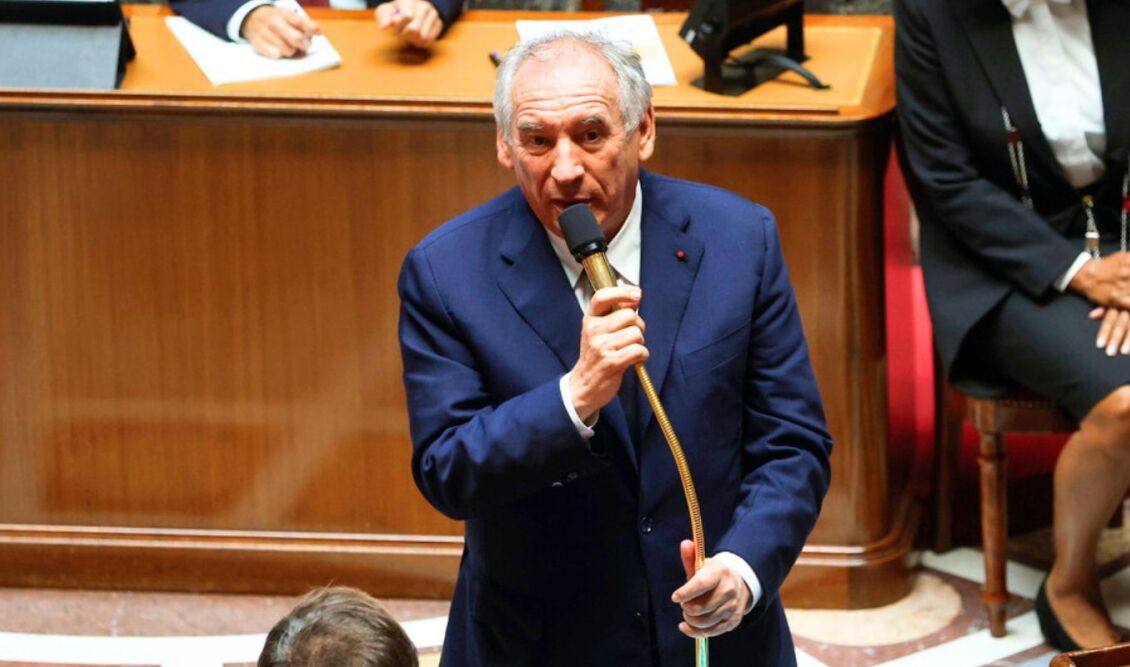
In France, the political crisis of September 8, 2025 came to add another headache for Emmanuel Macron’s government with the wave of questioning against him swelling so much that it reminded of the widespread reactions of May 1968. France officially found itself in political turmoil, with the top political process ending expectedly but ingloriously for French Prime Minister François Bayrou, who lost the confidence vote and therefore his office, with 364 negative votes versus 194 positive ones. The negative climate from the majority of opposition parliamentary seats culminated and automatically revealed a deficit of understanding and trust. The Bayrou government, which from its first steps encountered disapproval, stirring a wave of anger in French streets, showed how fragile it was.
Imamoglu’s imprisonment
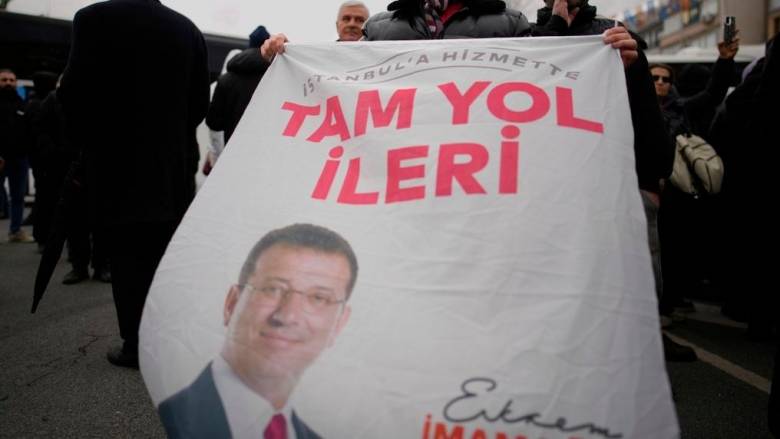
Of historical significance and food for thought regarding Ankara’s democratic slide and respect for rule of law principles, the Erdogan regime’s decision to imprison its main opponent, Ekrem Imamoglu. His imprisonment opened Pandora’s box for a series of prosecutions of Republican Party officials. Turkey resembled a boiling cauldron with social unrest being, if nothing else, obvious. Crowds poured into the streets demanding justice after the decision to imprison Ekrem Imamoglu, with scenes reminiscent of the explosion of social anger in 2013 at Taksim Square. The Turkish president’s move at that particular moment had its own significance.