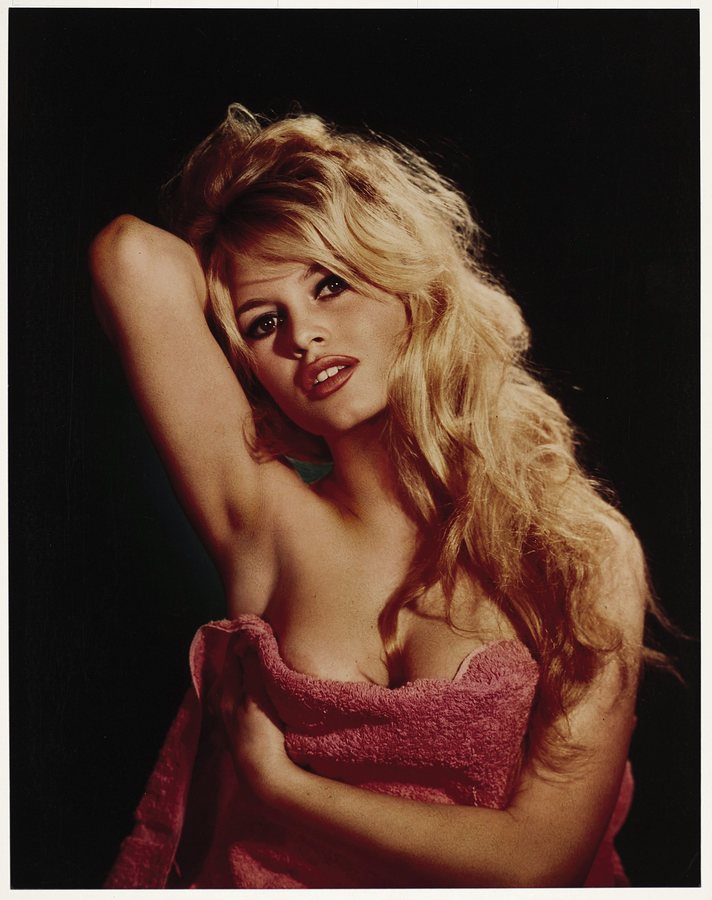
She became internationally famous dancing barefoot mambo in the film “And God Created Woman,” with her tousled hair and intense energy radiating a sexuality that magnetized and which mainstream cinema had rarely seen before. A global icon was born: Brigitte Bardot. At just 21 years old, she scandalized censors and enchanted audiences. Her liberated performance in the 1956 film, directed by her husband Roger Vadim, marked a decisive break from the modest heroines of the previous era.
Read: Brigitte Bardot dies at 91: The “BB” became a “legend” and global sex symbol (Video)
Brigitte Bardot, who is often referred to in France simply as “B.B.” and whose later years were characterized by animal rights campaigns and far-right political sympathies, died at the age of 91, her foundation announced today. The cause was not immediately known.
Brigitte Bardot “follows her inclinations”
Born in Paris on September 28, 1934, Bardot grew up in an upper-middle-class family. She described herself as a shy, awkward child who “wore glasses and had long straight hair.” At 15, however, she graced the cover of Elle magazine, starting a modeling career that soon led to cinema. Bardot’s character in “And God Created Woman” was the embodiment of liberated femininity. The controversy, however, fueled her appeal. Bardot became a symbol of France in the 1950s and 1960s.
Her appeal extended far beyond French cinema. At 15, Bob Dylan reportedly wrote his first song about her, “Song for Brigitte” which was never released, while Andy Warhol painted her portrait. Bardot’s ability to overturn traditional gender roles made her not only a sex symbol, but also a pop culture icon and a reference point for changing social attitudes.
In 1959, Simone de Beauvoir wrote an article for Esquire magazine, in which she praised Bardot’s intense sense of freedom. “B.B. doesn’t try to scandalize,” the feminist philosopher wrote. “She follows her inclinations. She eats when hungry and makes love with the same unaffected simplicity.
“Moral lapses can be corrected, but how could B.B. be cured of this dazzling virtue – authenticity? It is her very essence.” De Beauvoir concluded: “I hope she matures, but not that she changes”.
“They have disappointed me many times”
Despite her influence, Bardot felt that celebrity life isolated her. She often spoke about being a prisoner of her own fame, unable to enjoy life’s simple pleasures. “No one can imagine how horrible it was, such an ordeal,” she reflected decades later. “I couldn’t continue living like that”.
Her personal life was marked by four marriages, highly publicized relationships and documented battles with depression. On her 26th birthday, she was found unconscious in a house on the French Riviera after a suicide attempt. Rumors of another suicide attempt circulated years later, when she mysteriously canceled a party for her 49th birthday and subsequently appeared in hospital.
Alongside acting, Bardot had a successful music career. Her collaborations with singer-songwriter Serge Gainsbourg, including “Je t’aime … moi non plus,” led to recognition but also caused controversy. In the late 1960s, she modeled for a bust of Marianne, the allegorical female figure who personifies the French Republic and its values.
But Bardot found little satisfaction in the praise she received. “I was very happy, very rich, very beautiful, very flattered, very famous and very unhappy,” she told Paris Match magazine around her 50th birthday. “I have been disappointed many times. I had really terrible disappointments in my life. That’s why I chose to withdraw, to live alone”.

“The film world is rotten – This is the only fight I want to give”
Bardot made the last of her 42 films in 1973. Disillusioned with the industry, she declared the film world “rotten” and abandoned public life. “I will have devoted 20 years of my life to cinema, that’s enough,” she said in a television interview at the time.
She settled in the French resort of Saint-Tropez, where she found solace among animals and the Mediterranean landscape.
There, she began a passionate defense of animal welfare. “This is the only fight I want to give, the only direction I want to give to my life,” Bardot said in 2013. Her devotion to animals became legendary. In 1986, she founded the Brigitte Bardot Foundation for Animal Welfare and Protection, auctioning personal memorabilia the following year to raise money for her cause.
Bardot supported prominent activists, such as anti-whaling activist Paul Watson, and fought vigorously against animal abuse, occasionally threatening to leave France over animal welfare disputes. When actor Gérard Depardieu accepted Russian citizenship after a public dispute with French authorities in 2013, Bardot threatened to follow his example if France euthanized two sick circus elephants.
For much of her later years, Bardot lived alone in Saint-Tropez, in the company of numerous cats, dogs and horses. This passion, as she often hinted, was the antidote to her disappointing relationships. “I gave my beauty and my youth to men,” she once said. “I will give my wisdom and experience to animals”.


Brigitte Bardot: “Feminism is not my forte, I like men”
As her activism grew, so did reactions to her political statements. Bardot’s public comments on immigration, Islam and homosexuality led to a series of convictions for inciting racial hatred. Between 1997 and 2008, she was fined six times by French courts for her comments, particularly those targeting France’s Muslim community.
In one case, a Paris court fined her 15,000 euros for describing Muslims as “this population that destroys us, destroys our country by imposing its acts”.
In 1992, she married Bernard d’Ormale, a former advisor to the far-right National Front, and later publicly supported the party’s successive leaders, Jean-Marie Le Pen and his daughter, Marine Le Pen. Bardot called Le Pen the “Joan of Arc of the 21st century.” However, despite her polarizing views, Bardot’s influence endured, whether in fashion – with media reporting regular returns of her signature hairstyle – or through frequent documentaries and books that celebrated her rare impact on French cinema.

Asked by French channel BFM TV in May 2025 if she considered herself a symbol of the sexual revolution, she said: “No, because before me, many wild things had already happened – they weren’t waiting for me. Feminism is not my forte. I like men”.
In the same interview, she was asked how often she reflected on her film career. “I don’t think about it,” she replied, “but I don’t reject it, because thanks to it I am known everywhere in the world as someone who defends animals”.