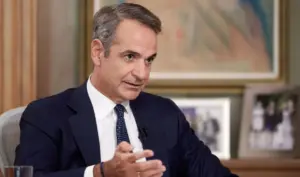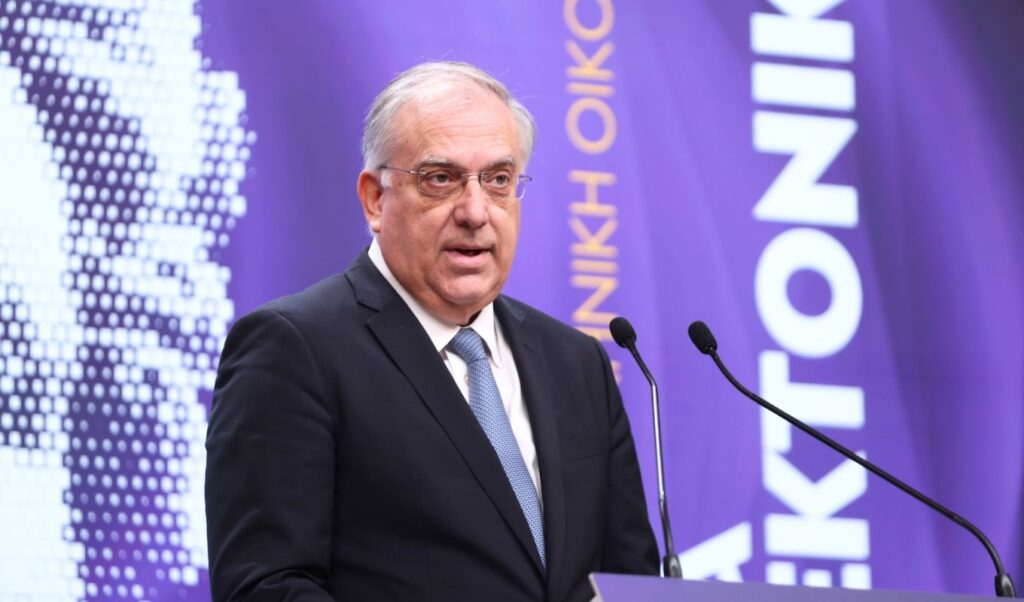
Greece’s Minister of Development, Takis Theodorikacos, sent a clear message that “the law applies to everyone,” stressing that “the state has a duty to protect consumers.” His remarks came in response to criticism from the Hellenic Federation of Enterprises (SEV) and supermarket chains, which claimed that the imposition of fines was partly responsible for rising product prices. Speaking on ERTnews on Friday morning (27/11), Minister Theodorikacos defended the government’s policy of market inspections and fines, making clear that penalties will continue to be imposed and publicly disclosed, as required by law.
Read also: Theodorikacos responds to SEV and supermarket chains: “The law is the law and it applies to everyone”
The minister also announced that in the coming weeks, a new development scheme worth €150 million will be launched, targeting exclusively small and medium-sized enterprises (SMEs). He emphasized that supporting entrepreneurship does not mean turning a blind eye to market violations, noting that more than €25 million in fines have been issued over the past two and a half years for market infringements. “Fines cannot be the cause of inflationary pressures,” Theodorikacos stated, pointing to the supermarket sector’s annual turnover of €12 billion.
What Takis Theodorikacos said about supermarket revenues
Market inspections will continue because the law requires it, and we have asked the Independent Market Inspections and Consumer Protection Authority to intensify controls during the Black Friday period as well, the minister noted. Theodorikacos outlined new development schemes focused on SMEs, boosting extroversion, and leveraging modern technologies. He announced that the upcoming €150 million development scheme will be dedicated exclusively to small and medium-sized businesses. The funding will cover the procurement of machinery and equipment, as well as staff training, enabling employees to harness the capabilities of artificial intelligence and emerging technologies.
Artificial intelligence in Greek small and medium-sized businesses
“We want to bring artificial intelligence into the Greek SME,” he said, describing it as “an opportunity and a vehicle for a more effective and productive economy.” He stressed the importance of helping small and medium-sized businesses absorb new technologies, while also training their employees in the use of these rapidly evolving tools.
“It is critically important that people in the workforce are able to use this remarkable technological tool,” he noted, indicating that the scheme could be launched as soon as December or January. He also previewed additional development schemes focused on extroversion and strengthening exports — both of products and services.
Support for Greek industry
Turning to the topic of Greek industry, Theodorikacos underlined that supporting it is a central priority of the Ministry of Development’s policy, implemented through the Development Law and the upgrading of industrial parks. “We are supporting Greek industry with everything we have — including the Greek food industry — because that is good for the economy and for society,” he said.
He clarified, however, that supporting entrepreneurship does not override the need to enforce legislation and conduct market inspections. “We are in favor of the free market,” he noted, adding that private businesses exist to generate profits, make investments, and hire workers — but everyone is obligated to comply with the law.
Initiatives to tackle the cost of living
On the topic of cost-of-living measures, Theodorikacos referred to the National Price Reduction Initiative, which remains in effect until December 31st and is currently in its second phase, covering 1,100 product codes. Additionally, for the 15 festive days in December — from Christmas through New Year’s (December 18–31) — reductions of up to 25% are planned across 26 product categories, ensuring that every household can afford the essentials for the family table.
Theodorikacos argued that the measures taken over this period have produced tangible results, citing Eurostat data showing negative food inflation for three consecutive months. “Negative inflation means falling prices — not just a slowdown in price growth,” he clarified, adding that while not all products saw price reductions, average prices were indeed lower during that period.
International developments
The minister also referenced global developments, noting that two ongoing wars have driven up energy and fuel prices, with knock-on effects that are gradually rippling through the supply chain. He stressed that boosting domestic production and economic resilience is a fundamental prerequisite for expanding Greece’s capacity and achieving better price control. Theodorikacos made special mention of the Independent Consumer Protection and Market Inspection Authority, led by Ms. Tsagkari, whose inspections will be ramped up — with particular focus on the Black Friday period and the detection of misleading discount practices. He noted that these inspections serve a dual purpose: protecting consumers and safeguarding businesses that operate in full compliance with their obligations.
Market fines
On the subject of market fines, Theodorikacos noted that over the past two and a half years, a total of €25 million in fines have been imposed on businesses and other market actors, asserting that all of these have been fully collected. He also recalled that the law mandates the public disclosure of fines exceeding €50,000, and clarified that inspections and the enforcement of penalties now fall under the remit of the Independent Consumer Protection and Market Inspection Authority.
He also referenced the “PosoKanei” platform, which has surpassed 450,000 users and allows consumers to compare prices and find the best deals. “Prices differ. If you look around, you can always find a better alternative,” he said, emphasizing the importance of transparency and consumer awareness.
Responses to SEV and supermarket industry criticism
Commenting on public statements made by the president of SEV, Mr. Spyros Theodoropoulos, and the president of the Greek Supermarket Association, Mr. Giorgos Masoutis, Theodorikacos addressed criticism regarding the way market inspections and fines affect the public image of the food industry and supermarket sector. In response, the minister stressed that the government supports Greek industry and healthy entrepreneurship — but that this cannot come at the expense of tolerating legal violations. “These are businesses, and the pursuit of profit is legitimate. We are in favor of the free market,” he said, adding that businesses exist to generate profits, make investments, and create jobs. He made clear, however, that when specific laws are found to have been broken, the state is obligated to intervene.
On the specific issue of publicizing fines, Theodorikacos reiterated that the law requires the disclosure of penalties exceeding €50,000, and that the state is bound to implement legislation. He also clarified that inspections and the imposition of fines now fall under the Independent Consumer Protection and Market Inspection Authority, which operates independently of the government apparatus. He firmly rejected the claim that fines are creating inflationary pressures, pointing out that the approximately €25–30 million in total fines issued over the past two and a half years have been fully collected.