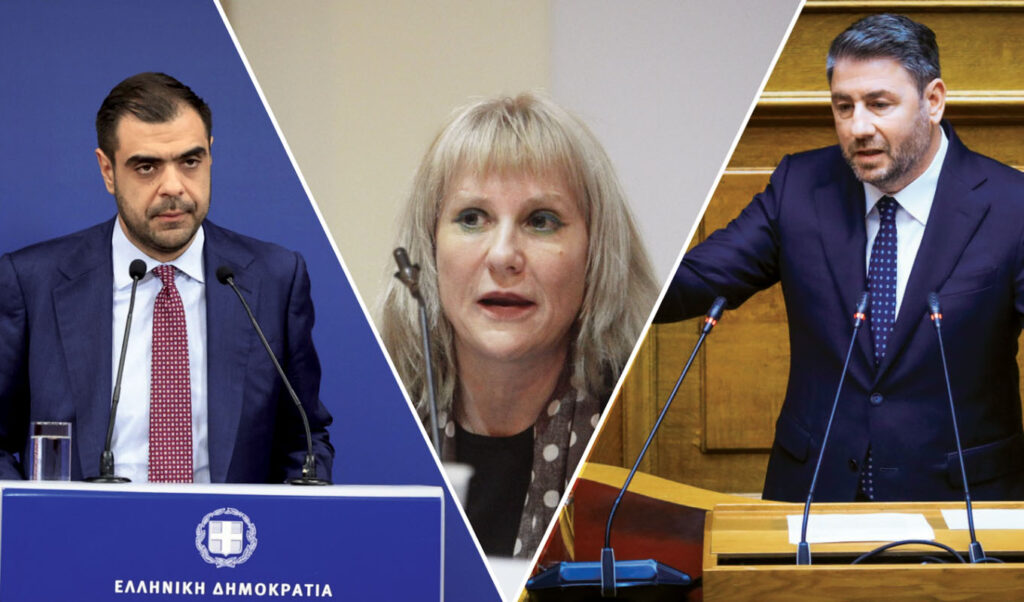
Sharp accusations between the government and the main opposition erupted following statements by Soti Triantafyllou about PASOK, against the backdrop of public debate that has reignited around the OPEKEPE case and broader issues of transparency and accountability in the political system.
How the fierce PASOK & New Democracy confrontation began – What Soti Triantafyllou declared
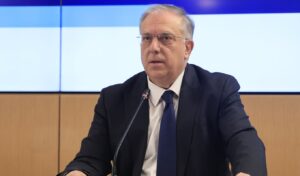
The author’s initial position, in her television intervention on the evening of Great Monday (06.04.2026), caused apparent irritation at Charilaou Trikoupi street, as she used the OPEKEPE case to attribute chronic responsibilities to the political system, arguing that in Greece “there was never transparency” and that the country has been nurtured in “impunity” and “non-accountability”. In the same context, Soti Triantafyllou mentioned that “as a party, PASOK – probably along with the rest of the left – is not entitled to speak in moral terms after what it did for 20 years”.
Nikos Androulakis’ social media post
The reaction from PASOK’s side was not long in coming. Nikos Androulakis chose to respond indirectly, reposting on social media the statement by lawyer and deputy head of the party’s Economics sector, Mariniki Theodorou. This intervention essentially constituted the first official political response from Charilaou Trikoupi to the author’s criticisms.
“Since when is morality the privilege of specific and ‘infallible’ individuals?”
Mariniki Theodorou’s statement
In her post, Mariniki Theodorou countered that the crucial question is not “who is entitled to speak in moral terms,” but “whether we still have the courage to serve them in practice, as people and as a society”. With a sharp tone, she posed the question: “Since when is morality the privilege of specific and ‘infallible’ individuals?”, while characterizing Soti Triantafyllou’s formulation as “absolute and invalidating”. In the same post, she emphasized that “we are not only entitled, but obligated to speak and fight for the better, especially when decline spreads everywhere”, concluding with the phrase that “PASOK is a living organism, made up of people with dreams, values and struggles”.
This indirect response by the PASOK president is not simply perceived as a reaction to the author’s statements, but also functions as a political signal that Charilaou Trikoupi does not intend to leave unanswered accusations concerning the institutional and moral legitimacy of its current stance toward the government.
Pavlos Marinakis’ comment
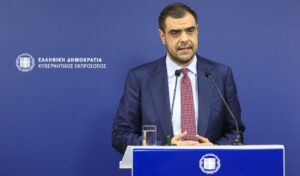
The discussion, however, quickly took on dimensions of open conflict between New Democracy and PASOK, when government spokesperson Pavlos Marinakis made his statement on the morning of Great Wednesday (08.04.2026) on SKAI radio. His intervention provoked immediate and intense reaction from PASOK, which with an official announcement attempted to shift the focus from Soti Triantafyllou’s statements to the confrontation with the government.
PASOK: “The government spokesperson is not in a position to give lessons about ‘institutional limits'”
In its announcement, PASOK’s Press Office states that “Mr. Marinakis today accused PASOK’s deputy economics spokesperson, Mariniki Theodorou, for expressing her opinion with seriousness, respect for her interlocutor and accuracy”. In this way, Charilaou Trikoupi attempts to present the government spokesperson’s reaction as an attempt at political targeting of an opposition official for a public statement.
In the same text, PASOK notes that “in Greek democracy, just as Ms. Soti Triantafyllou has the right to declare that PASOK is not entitled to speak in moral terms, anyone else who disagrees with her position has the same right of expression”. At the same time, it insists that “dozens of officials and voters of a democratic progressive party do not lack moral standing to comment on the corruption produced by New Democracy’s ‘managerial’ government”.
The announcement, moreover, significantly raises the tone against the Maximos Mansion, as Charilaou Trikoupi speaks of “democracy made in New Democracy of Mr. Mitsotakis”, leaving hints about different measures and standards in public discourse. Even more aggressive is the conclusion, according to which “the spokesperson of the government that set up a malodorous parastate, undermining the rule of law, human rights and national security, is not in a position to give lessons about ‘institutional limits'”.