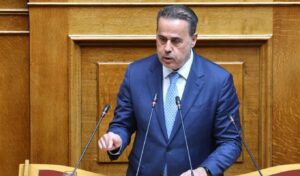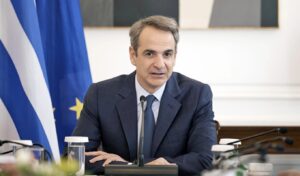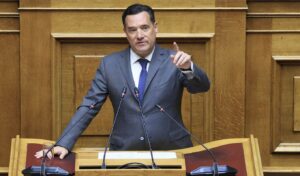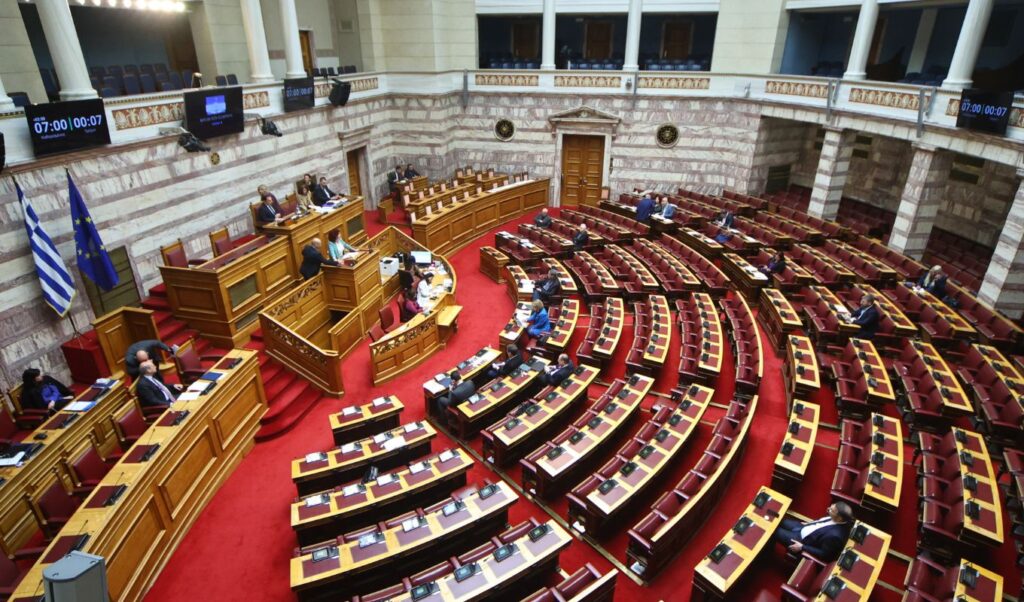
Prime Minister Kyriakos Mitsotakis‘s decision to propose establishing incompatibility between ministerial and parliamentary roles, to take effect after the 2027 elections, has dropped like a “bombshell” on the political system and inevitably sparked extensive debate about its implementation. Notably, the incompatibility between minister and MP roles is not unknown in European affairs, as it already exists in several EU countries.
Ministerial-parliamentary incompatibility: How it works in Cyprus
For example, in Cyprus there is a Separation of Powers as the executive and legislative branches are distinct. This means no member of the ministerial council can simultaneously be a member of the House of Representatives. Specifically, if an MP enters the government structure, they must resign from their parliamentary position, with their seat not remaining vacant but being filled by the first alternate. If a minister or deputy minister leaves government either through reshuffle or resignation, they remain outside Parliament.
What the French Constitution states
In France, the 1958 Constitution states in Article 23 that the duties of a government member are incompatible with exercising any parliamentary mandate. Under this framework, if an MP becomes a minister, they lose their seat, which is taken by the first alternate. Similarly, in the Netherlands, Article 57 of the Constitution explicitly states that a member of the Dutch Parliament cannot simultaneously be a minister or deputy minister. Simply put, if an MP is appointed minister, they lose their seat, which goes to the next candidate from the same electoral list. However, if a cabinet member has resigned, they can combine their office with parliamentary participation until a decision is made on their resignation. This occurs during transitional periods when new governments are formed after elections.
Belgium: What Article 50 of the Constitution provides
Meanwhile in Belgium, Article 50 of the country’s Constitution states that a member of Parliament who is appointed minister ceases to be an MP. However, when they resign, they regain their parliamentary seat. Continuing with northern countries, in Norway, Article 62 of the Constitution states that members of the Council of State are not permitted to attend parliamentary sessions as representatives while holding a portfolio. Their seats are covered by substitutes while they serve as ministers.
Kyriakos Mitsotakis’s televised message
It should be recalled that Prime Minister Kyriakos Mitsotakis during his televised message on Monday morning said that “I will propose for discussion in public dialogue a new package of institutional reforms, beyond our proposals for Constitutional Revision. Among them, the incompatibility of minister and MP, with replacement of the minister in Parliament by the first alternate for as long as they participate in the Cabinet, and with simultaneous upgrading of the MP’s role.” “Obviously, the above proposals will be put to consultation with society, so as to be implemented after the next national elections. They will also form part of the commitments we will undertake, if the people trust us again. And in any case, they certainly signal my personal decision for the country to definitively win the war against the bonds of its past,” the prime minister concluded.