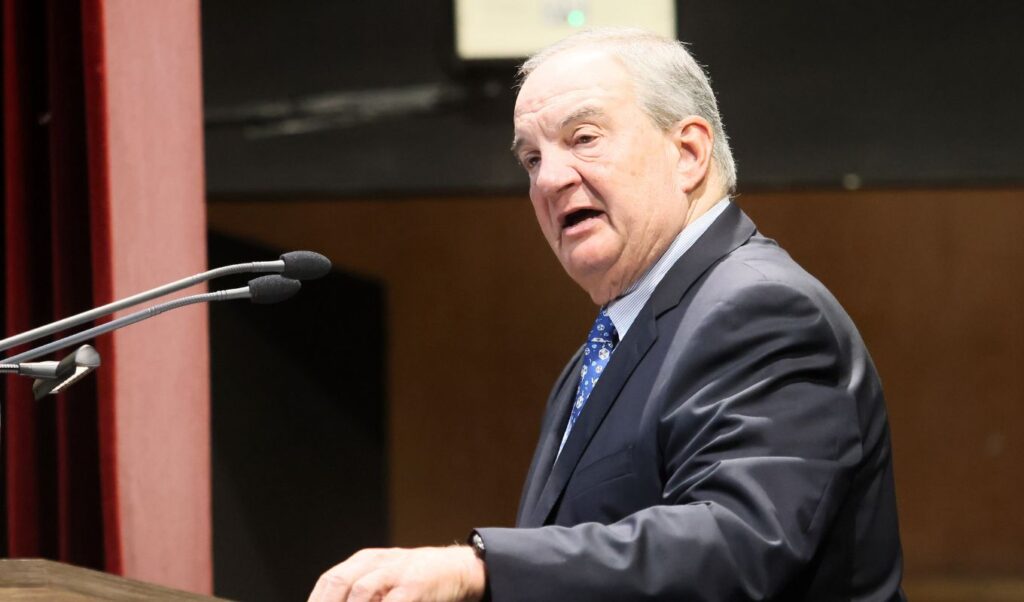
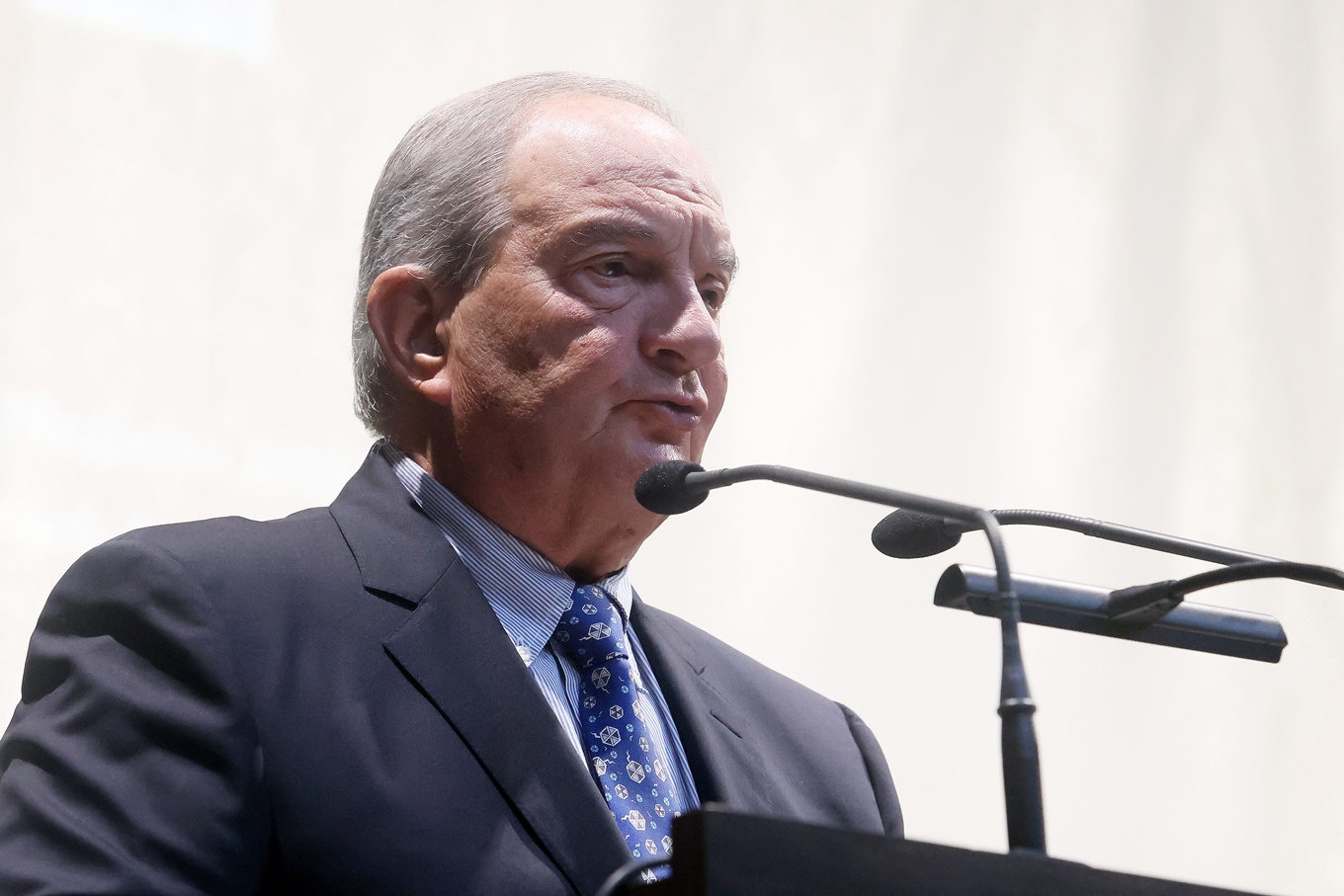
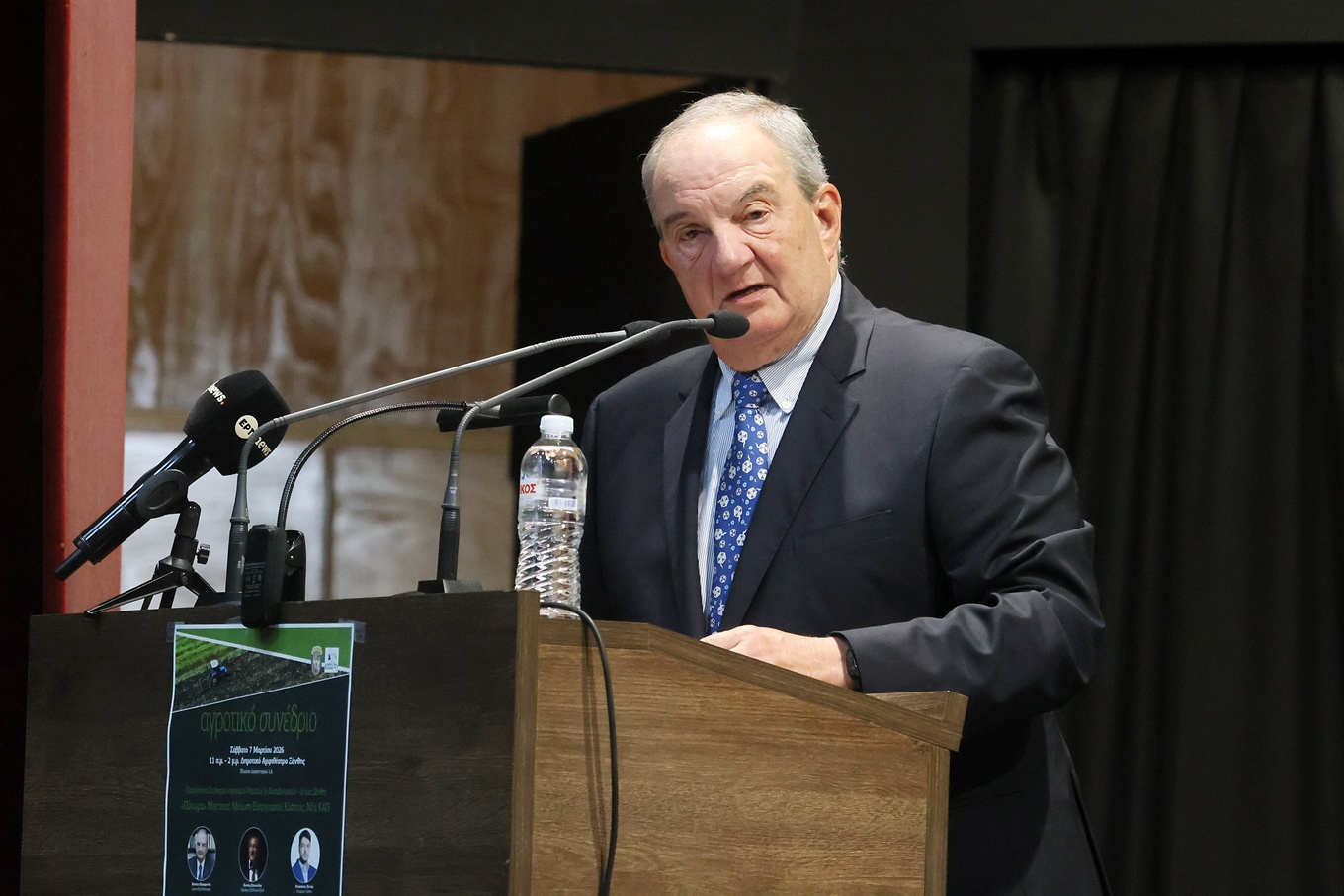
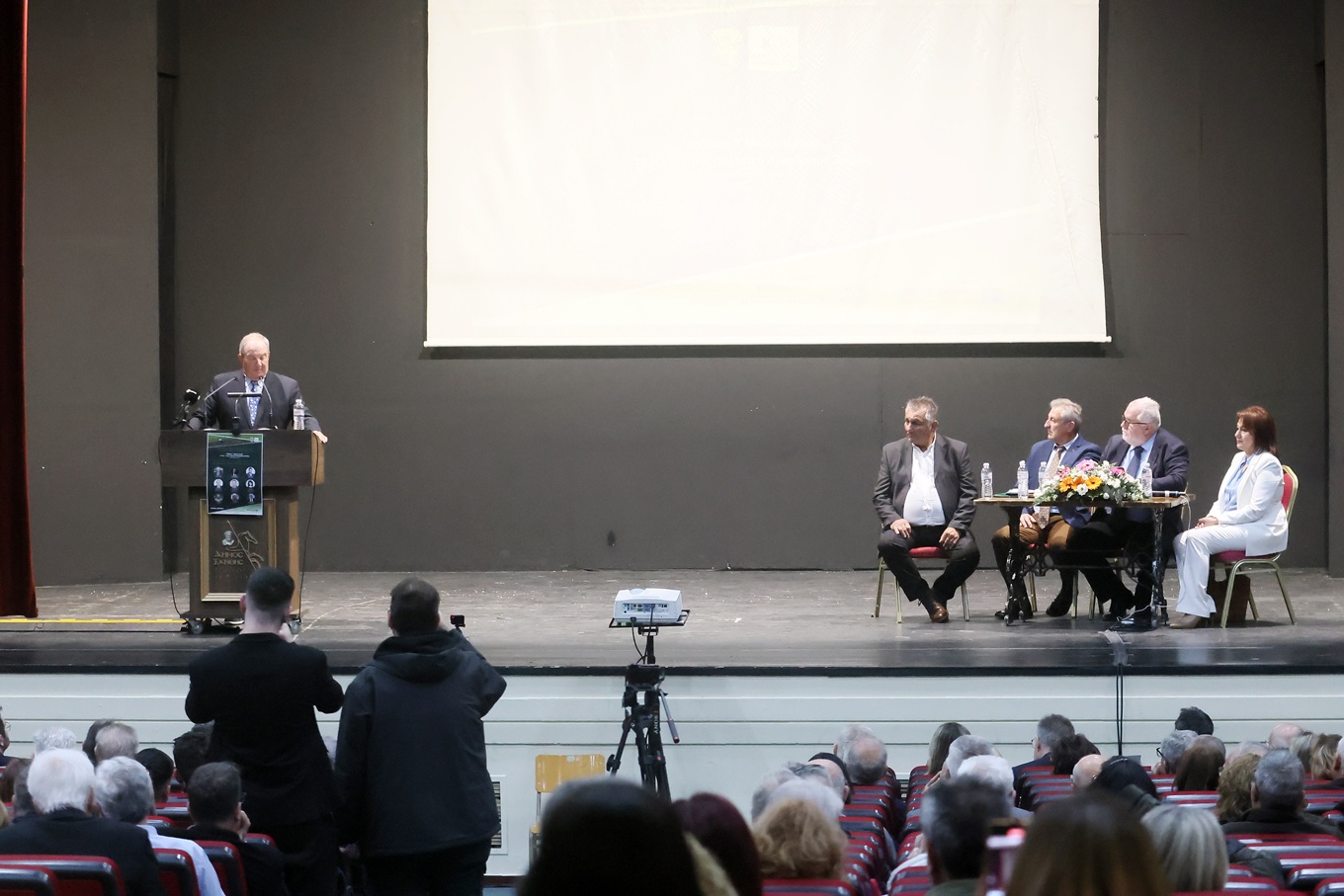
A clear message about the prevailing situation in the primary sector and the difficulties faced by farmers was sent by former Prime Minister Kostas Karamanlis, during his speech at the Annual Conference of the Panhellenic Association of Agricultural Affairs and the Panhellenic Association of Agricultural Photovoltaics, in Xanthi. “In 2025 throughout Europe, and in our country, there was a rapid escalation of problems that cumulatively struck the agricultural world with severity,” Kostas Karamanlis initially noted characteristically.
“Real and growing problems that – let’s not kid ourselves – are sufficient on their own to trigger farmers’ protests, without external incitement. Let us acknowledge that farmers’ mobilizations are not an annually recurring ‘event’ by revolutionaries without cause. They are the natural consequence of chronic productive dysfunctions and structural weaknesses that governments do not decide to address effectively,” the former Prime Minister also noted.
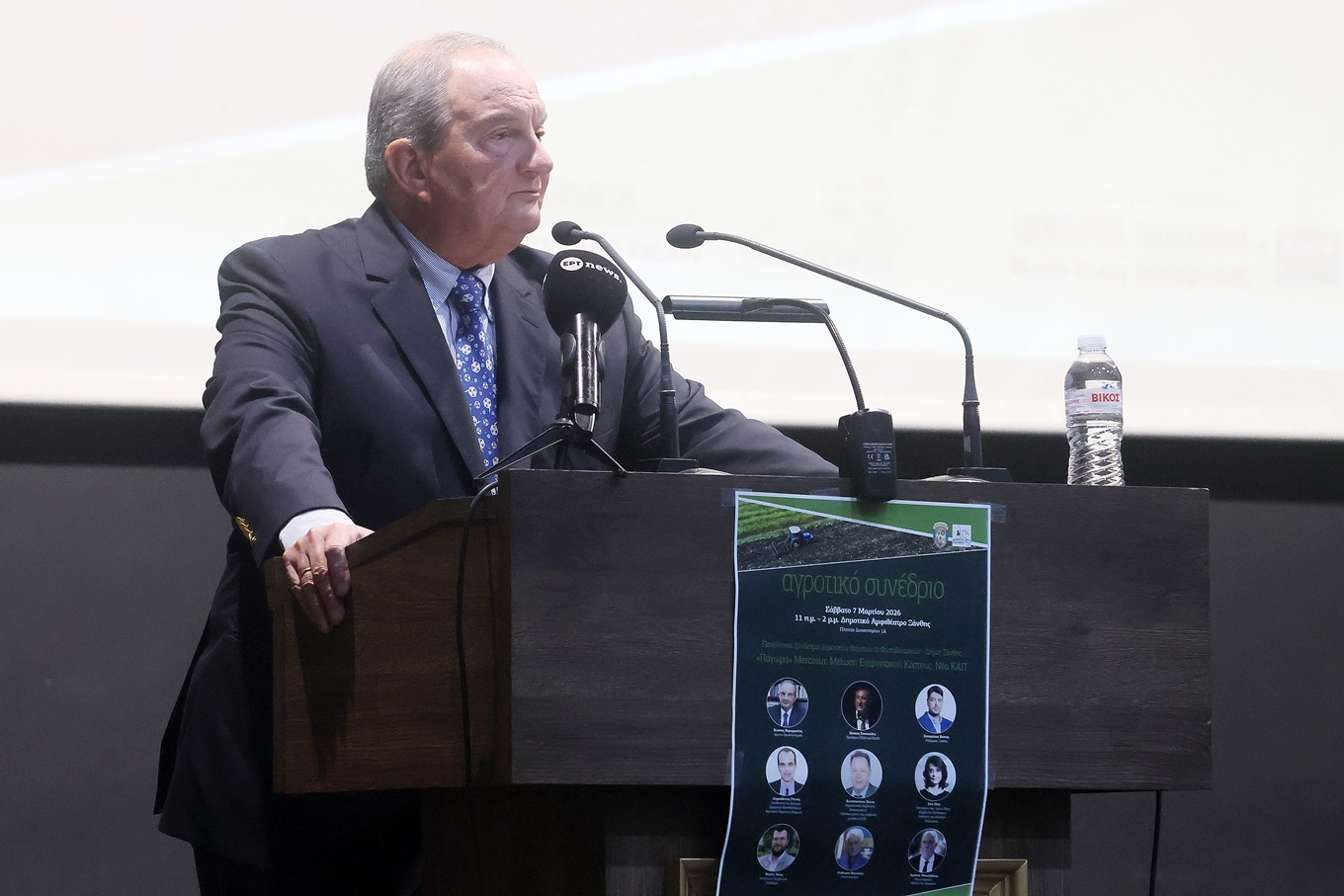
Kostas Karamanlis’ complete speech
“Ladies and gentlemen,
With particular joy, on behalf of the SEKE Group, I welcome you to the border town of Xanthi. The city that is rightfully considered the cradle of cooperativism.
Because from here began the rich activity of perhaps the leading cooperativist in Greece, the creator of an extensive network of cooperatives and cooperative enterprises, the founder of PASEGES, Alexandros Baltatzis.
I am certain that this year’s Conference will also produce useful conclusions, will highlight ideas and proposals whose implementation can ensure viability for the Primary Sector and prospects for the agricultural world.
Friends,
In 2025 throughout Europe, and in our country, there was a rapid escalation of problems that cumulatively struck the agricultural world with severity:
Skyrocketing energy costs. Especially now that the war in Iran is unfolding, the prospect is unpredictable, beyond geopolitical implications in the energy landscape, regarding both transportation and, primarily, cost.
Fluctuations in fertilizer and feed markets.
Enormous economic burden from the EU’s hasty and poorly prepared decisions on green transition.
Intense insecurity and risk of competition distortion against European products from the provisions of the EU-MERCOSUR agreement.
In our country, to all these were added:
Explosion of production costs.
Decline in producer prices and the inevitable reduction of agricultural income.
Extensive damage from natural disasters.
Livestock farmers’ losses from animal diseases. I should note that here in Xanthi the largest percentage of livestock was affected. Let us add to the problems pressing the agricultural world the delays in payment of compensations and subsidies. And moreover in an environment of scandalous lack of transparency.
Real and growing problems that – let’s not kid ourselves – are sufficient on their own to trigger farmers’ protests, without external incitement.
Let us acknowledge that farmers’ mobilizations are not an annually recurring “event” by revolutionaries without cause. They are the natural consequence of chronic productive dysfunctions and structural weaknesses that governments do not decide to address effectively. As long as agricultural policy is exhausted in negotiations under pressure, in announcements of fragmentary measures and provision of temporary facilities, the crisis – because it is a crisis – will be recycled.
Now, without further delays, it is time for restructuring and bold actions.
The future of the primary sector will determine the prospect of the Greek periphery, the developmental dynamic of the entire country. In a spirit of understanding, with a willingness for consensus, with a sense of national responsibility, we must develop and implement a comprehensive plan for immediate restructuring, stable reorganization and sustainable development of the primary sector.
Friends,
One of the most characteristic structural weaknesses of Greek agriculture – we all agree on this – is the small and fragmented plot. At the same time, the directions and priorities of the new CAP show a clear favor towards those farms that have size, capital, know-how and administrative adequacy. Moreover, linking subsidies to performance indicators works more easily for large and organized units, rather than for small, isolated, elderly producers without skills.
Therefore, encouraging and multilevel support of new-type collective schemes is a one-way street. Modern cooperatives that function as business entities. That invest in research and innovation. In standardization and quality. In competitiveness and extroversion. In systematic promotion and marketing of their products in domestic and international markets. Cooperatives with professional management and adoption of industrial production standards, which negotiate and conclude direct contracts with retail centers. In two words, modern practices that ensure high producer prices and decent income.
A representative example of this new model of collective organization of producers and cooperative enterprise that achieves impressive results – precisely because it adopts and has been applying in practice for years the above good practices – is SEKE. These results are anything but self-evident in a global market that beyond competition and climate of uncertainty is affected by arbitrary interventions and wrong decisions.
One such wrong decision is being conceived with the possible adoption of the proposal by the relevant EU commissioner for excessive increase in taxation on tobacco products, invoking public health protection.
I strongly question the effectiveness of such regulation. Experience from countries that tried to limit tobacco consumption through over-taxation shows that what eventually happened was a reduction in the share of legal products in favor of contraband, whose consumption skyrocketed. Result? Enormous loss of state revenues and subsidization of illegal networks for production and trade of contraband cigarettes. Networks whose turnover exploded, while their “black” profits are channeled into financing organized crime.
Ladies and gentlemen,
The biggest problem facing the primary sector and the Greek periphery today is aging and the non-viable renewal of the agricultural population. It is the distancing of young people from the agricultural profession. Their alienation from activities related to the primary sector. Their tendency to flee from their land and place. If we let this trend develop without timely and targeted interventions, we will sooner or later be led to abandoning the Periphery, to desertification of the countryside. Such development constitutes a major national threat.
We must act now. Build on reliable foundations a more friendly, more viable, more secure environment within which young men and women of the Periphery can live, work and produce with dignity, security and prospects. Education, training and continuous scientific support of young farmers. Reintegration into the production process of idle lands, reaching 6 million acres, with priority to young farmers. Fast, transparent and fair payment of subsidies and compensations. Timely announcement of agricultural income support programs, without bureaucratic obstacles. Creation of modern and resilient infrastructure in the Periphery. And of course low-interest loans to young farmers without strict guarantees.
And a necessary note concerning farmers’ and cooperatives’ non-performing loans. Their settlement is a necessary condition for the recovery of the agricultural sector. Let us agree that the relevant procedures have been unjustifiably delayed, resulting in excessive increase of debts. It is now an imperative need to accelerate the procedures provided by law and the relevant decisions of the Bank of Greece. And I emphasize that in every loan settlement, article 39 of Law 3259/2004 on compound interest must be applied to the letter.
These major challenges transcend today. They concern all of us. I point this out at every opportunity given to me. In the Periphery beats the heart of Greece. A strong Greece cannot exist without a productively thriving, economically robust and vibrant Periphery.
With these thoughts I wish good success to the Conference proceedings. And to the leaders as well as the members of the Association, good strength and good continuation in the important work you perform.”