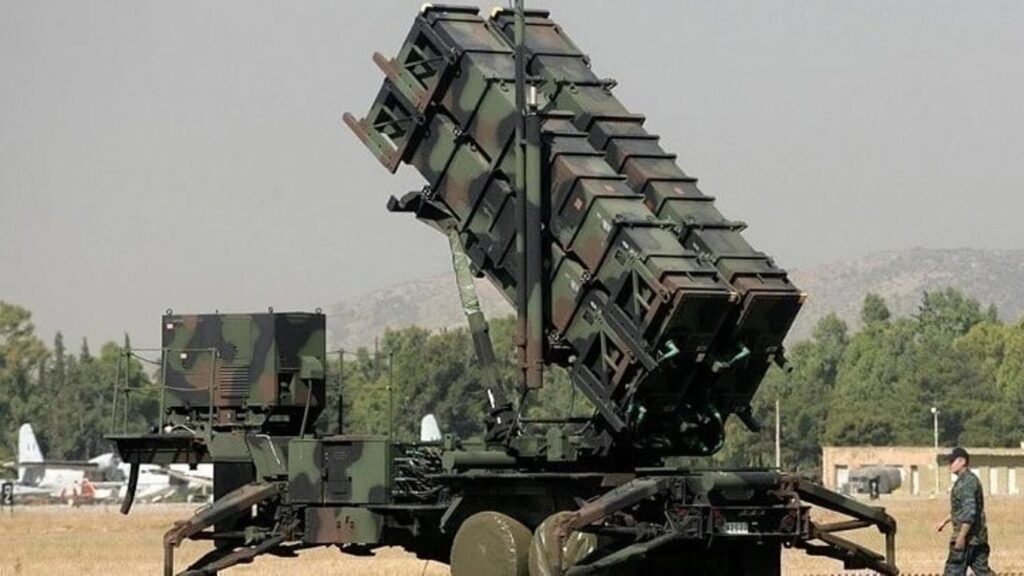
Greece is proceeding with a critical defensive deployment in the north, spreading a new “umbrella” of protection that concerns not only its own security but also the fortification of Bulgaria. Following a request from Sofia, a Patriot battery is being transferred to Didymoteicho, while two F-16s are positioned in Lemnos, in a move that comes to strengthen the anti-aircraft and anti-ballistic protection of the region. This decision shows that Athens is taking a more active role in the defensive coverage of the Balkan neighborhood, during a period of intense concern about developments in the Middle East and the possibility of a broader threat from Iranian medium-range missiles. At the same time, the deployment of Greek assets sends a clear message that the country considers its defensive arrangement a matter of absolute sovereignty, without accepting external interference or challenges.
Patriot in Didymoteicho: The new shield for Bulgaria and the north
According to reports, the Patriot battery is being deployed in Didymoteicho, while the two additional F-16s have already been positioned in Lemnos. With this arrangement, Greece significantly strengthens the defensive posture of the northern zone and simultaneously offers protection to Bulgaria, which appears concerned about its exposure to potential ballistic threats. The logic behind this deployment is clear. Bulgaria, as a country located within the geographical range of Iranian medium-range ballistic missiles, appears to have determined that it needs reinforcement. The distance of approximately 2,100 kilometers from Iran places it within a theoretical danger circle, especially during a period when military fluidity in the broader region feeds scenarios of concern. In the same context, it is estimated that the presence of American aircraft at Bulgarian airports increases Sofia’s level of alertness.
At the same time, the battery deployment is not presented as a move that weakens Greek defense. On the contrary, Defense Minister Nikos Dendias clarified that these actions were taken following a request from Bulgaria, which is a member of both NATO and the European Union, and that they do not affect in the slightest the anti-ballistic protection capability of Greek territory.
Bulgaria, F-16s and the message to Turkey
The emerging picture shows that Bulgaria is seeking immediate reinforcement, as despite the fact that it recently acquired eight new F-16 Vipers, its defensive arrangement is still considered limited. It has older air defense systems and apparently does not consider them sufficient to cover the requirements of a period of increased risk. That’s exactly why it turned to Athens, seeking support. The Patriots, with a range reaching up to 160 kilometers, are described as a critical link in this defensive chain. Their operation concerns not only the north but is part of a broader defense network. In the same context, reference is made to the Patriots of Karpathos, which are presented as the first line of protection for Souda. The overall picture shows that Greece is forming a multi-level anti-ballistic shield, from north to south.
The Turkish side, however, appears annoyed by the Greek moves. After the reactions of the Turkish Foreign Ministry regarding Karpathos, Turkish press reports followed that once again target Nikos Dendias. Hürriyet referred to the Patriot installation in Karpathos, while Sabah chose a more aggressive tone against the Greek Defense Minister. Meanwhile, Giorgos Gerapetritis emphasized that the deployment of Greek forces is a matter that concerns exclusively the country’s sovereignty, is non-negotiable and is not subject to discussion or notification.