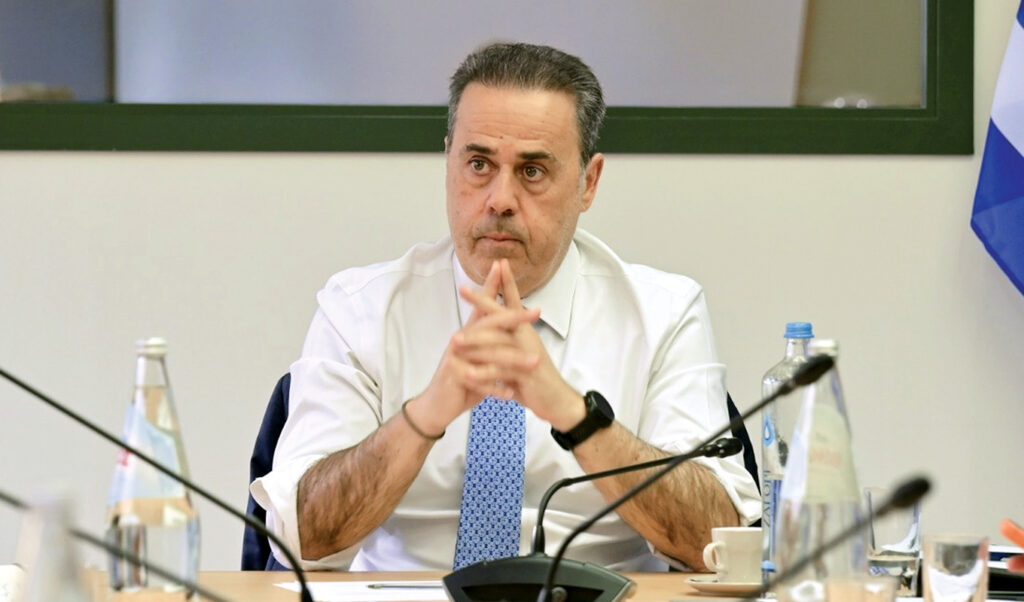
The government’s plan to transform Greece from a basic energy hub into a country that will produce natural gas was discussed during the Production and Trade committee session by Environment and Energy Minister Stavros Papastaurou. “Greece is making a leap and from an energy hub is laying the foundations with the agreements of Chevron and Exxon for natural gas production. This prospect cannot be taken for granted as it depends on whether the deposits are commercially exploitable. Just as it cannot be taken for granted, so it cannot be underestimated. That we became a reliable energy hub was not an obvious development,” Minister Papastaurou initially stated. “The government invested in this with infrastructure. These infrastructures allowed us to transform our geographical position into a geopolitical advantage. Our country was transformed into a central gateway for American liquefied natural gas and now we are seeking to become a natural gas producer,” added the Environment and Energy Minister.
Papastaurou: When will the first drilling take place
At the same time, he made a commitment to expedite the procedures so that, as he said, “in 12 months – early 2027 – we will have the first exploratory drilling in the Ionian Sea after 50 years and this is a national success that began with actions by Giannis Maniatis. Beyond Giannis Maniatis and the Papandreou government, the Samaras-Venizelos government also made announcements in 2014. But now is the time for this long-term effort with different governments to reach the point of exploration.”
“This process leads us to production if the deposits are commercially exploitable. No one says we will become Norway or Qatar, but it is our homeland’s wealth and we must investigate whether we will exploit it,” Minister Papastaurou further emphasized.
He also responded to the criticism leveled days ago by former Prime Minister Antonis Samaras regarding a clause that was added to the agreement with Chevron and allegedly disputes the country’s sovereign rights. “A private agreement does not cede,” Minister Papastaurou initially stated and meaningfully added that “the contractual provision even for extreme cases is a legal practice that concerns the protection and allocation of responsibility for any compensatory right someone may have. It does not constitute acceptance or recognition of these cases. The median line between South Crete and Libya if this median line is moved, it drags along the lateral. That is all and nothing else. Just as when we had the discussion on the CCS bill and you asked me about ADMIE and I told you that we will not relinquish the state’s position in infrastructure, in the same way I tell you that the lateral has to do with any movement of the South.”