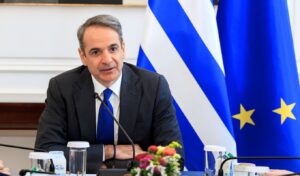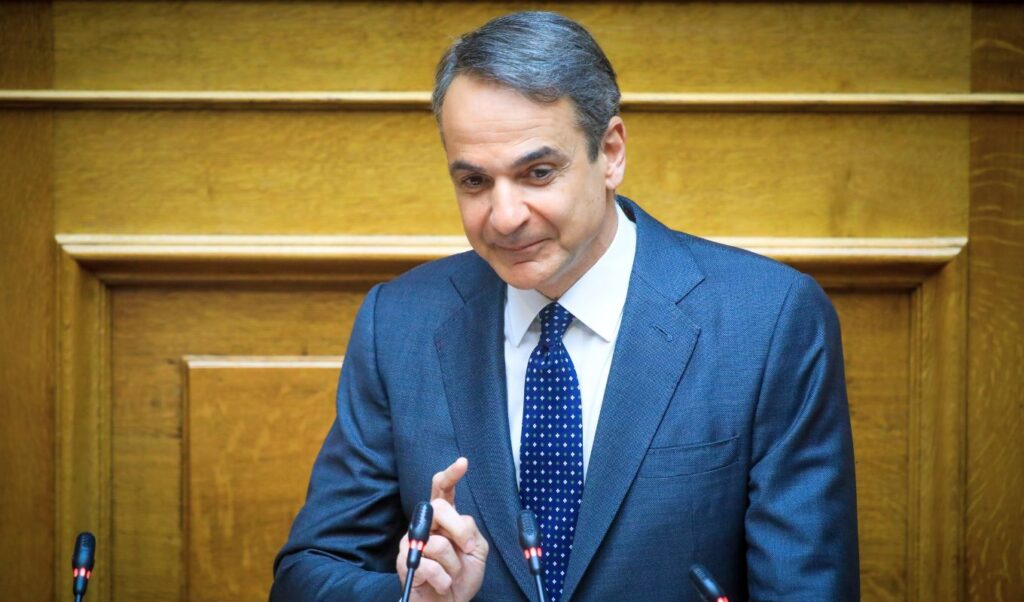
A six-front operation has been launched by the government amid the rapidly unfolding developments in the Middle East, which now extend even to Cyprus. The first front is the repatriation of approximately 1,500 Greeks currently in the United Arab Emirates who are trying to return to Greece, along with several hundred more from other countries in the region. “The Crisis Management Unit has been activated at the Ministry of Foreign Affairs, multiple communication lines have been established in all involved states – and unfortunately, there are many – platforms have been created in all states for repatriation declarations,” said Kyriakos Mitsotakis yesterday, Wednesday, during his speech in Parliament, revealing that “there is also a special plan, as soon as it becomes feasible, as soon as flight safety can be ensured and airspaces open, for an organized return of those who wish it under state responsibility.”
Read: Mitsotakis: The mission to Cyprus is defensive – Greece present wherever national duty calls (Video)
One of the most crucial fronts concerns Cyprus, where the two frigates “Kimon” and “Psara” and four F-16 Viper aircraft have already been positioned since Wednesday, with Greek military support being announced and arriving even earlier than French and British assistance. “Greece is present with responsibility and strength wherever national duty calls and places its upgraded Armed Forces at the service of global Hellenism,” the Prime Minister stated in the same speech, framing the presence of the Navy and Air Force in Cyprus as follows: “This mission is defensive and peaceful. It is conducted based on both bilateral and European solidarity with only one objective: to deter threatening actions against the independent state of Cyprus.”
A significant front is the freedom and security of international navigation, with particular emphasis on the ten Greek-flagged ships in the Persian Gulf (205 total in the broader region) and the 85 Greek sailors there, with whom the Ministry of Shipping and Coast Guard headquarters maintain regular communication.
Two additional fronts concern the Ministry of Citizen Protection, for the effective guarding of persons or facilities that have been assessed as potential targets connected to the warring states in the Middle East, and the Ministry of Migration, which is processing various scenarios for a possible increase in migration flows from the Middle East and Persian Gulf states toward Greece.
The sixth and critical front is the economy, with essentially the entire planet concerned about rising oil and natural gas prices, which will drag along the prices of other products. Mr. Mitsotakis revealed from the parliamentary podium that the government is preemptively examining measures to absorb as much as possible any negative consequences from the crisis on the economy (scenarios suggest a new fuel pass in the pipeline) and that, in parallel, if required, it will take special measures to control potential excessive price increases.
The Maximos Mansion positively assesses Wednesday’s parliamentary discussion, saying the Prime Minister presented the country’s readiness against the international crisis in all fields: from the economy to diplomacy and defense, and from migration to terrorism and Citizen Protection issues. At the same time, they note, he emphasized the nation-centered character of his policy, which he summarized in the phrase: foreign and defense policy is not exercised with ideological but with national criteria, and referred to the country’s decision to stand by Cyprus.
Finally, they highlight the fact that he connected the bill under discussion for postal voting of expatriates in national elections with recent developments and the effort to strengthen global Hellenism worldwide, as it will now be integrated into the electoral body and the country’s affairs.