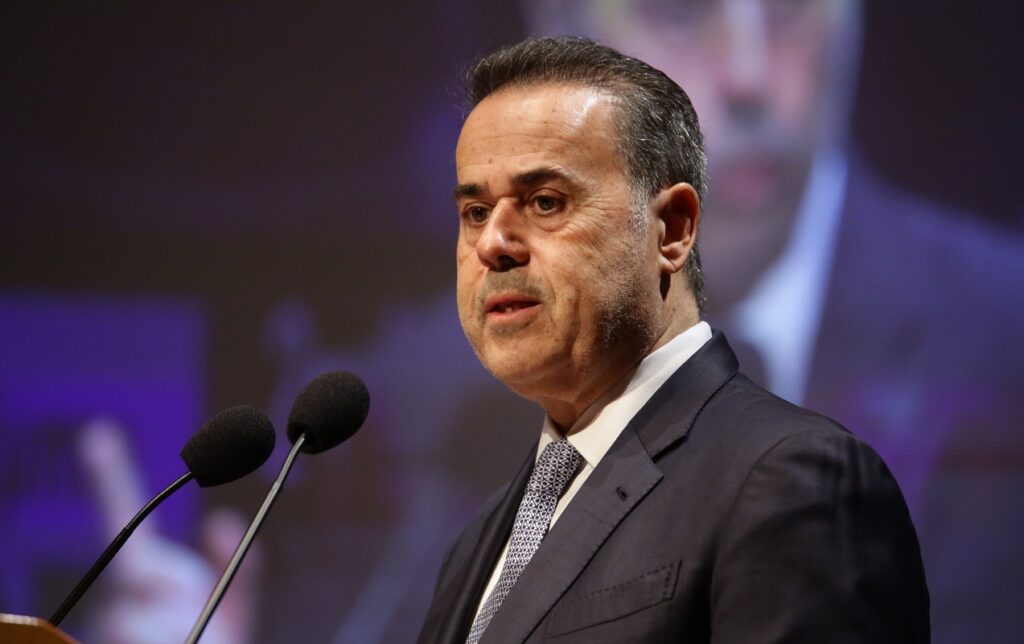
An extensive meeting was held at the Ministry of Environment and Energy to assess the crisis in the Middle East and its potential impact on the Greek energy market. The meeting included Environment and Energy Minister Stavros Papastathrou, Deputy Minister Nikos Tsafos, as well as representatives from supervised agencies and oil, natural gas, and electricity companies. The focus was on both supply security and price developments amid heightened geopolitical tensions. After the meeting, Papastathrou confirmed adequate supply in the country, emphasizing that the government follows a balanced energy policy that strengthens economic resilience. As he noted, the diversified energy mix acts as a shield during periods of international instability.
Read: The Brussels moment for the Vertical Corridor: The plan changing Europe’s energy map
Papastathrou: Energy security as national priority
The minister emphasized that energy security constitutes national security, noting that developments in the Middle East require continuous monitoring and immediate coordination. In this context, he highlighted constant real-time communication with the European Commission, the Regulator, operators, and energy companies. The meeting aimed not only to map the current situation but also to limit potential impacts from the international crisis, particularly regarding fuel and electricity price fluctuations.
Papastathrou: Coordination with agencies and companies
According to the minister, Greece closely monitors international developments and maintains full coordination with all market stakeholders. Cooperation with oil, natural gas, and electricity companies is considered critical to ensure smooth supply and prevent disruptions. The government, as Papastathrou emphasized, remains vigilant, aiming to maintain stability in the domestic energy market and protect consumers and businesses from potential turbulence.