Cyprus became a target of Iranian forces from the very first moment of the war. On Sunday afternoon, British Defense Minister John Healey stated that two missiles from Iran had been launched toward the British Air Base at Akrotiri. The Cypriot side immediately denied these statements. However, by Monday, no one doubted that Cyprus was entering the eye of the storm, with rhetoric from Tehran remaining particularly aggressive.
General Sardar Jabbari of the Islamic Revolutionary Guards threatens to intensify attacks against Cyprus, claiming that the island has been transformed into a military base for the United States. Senior diplomatic sources from Cyprus tell parapolitika.gr that so far the Republic of Cyprus has not received direct threatening messages and that these are strikes against the British. However, this means that territory of a NATO country (Britain) is being hit, which automatically affects Cyprus as a member state of the European Union.
Cyprus’ displeasure with Britain’s stance
The Cypriot government’s displeasure is intense, as Britain gave permission to the US to use the bases for military operations, breaking previous assurances that their use would be limited exclusively to humanitarian purposes. Government spokesman Constantinos Letymbiotis even left open the possibility of renegotiating the status of the bases due to these developments: “In this context, we do not exclude anything,” he emphasized.
The power vacuum in Iran
Cypriot government sources who spoke to parapolitika.gr mentioned that what worries them most is that there is a power vacuum in Iran and each general decides at will, and the other concern is that there appear to be still active Hezbollah cells in Lebanon that are conducting the attacks. As they argue, after the attacks Cyprus tries to maintain communication with the Iranians, assuring them that under no circumstances does it make its infrastructure available for offensive purposes, but only for humanitarian ones: “We want to be consistent in this. We have excellent relations with all countries in the region and we want to maintain them,” they say characteristically.
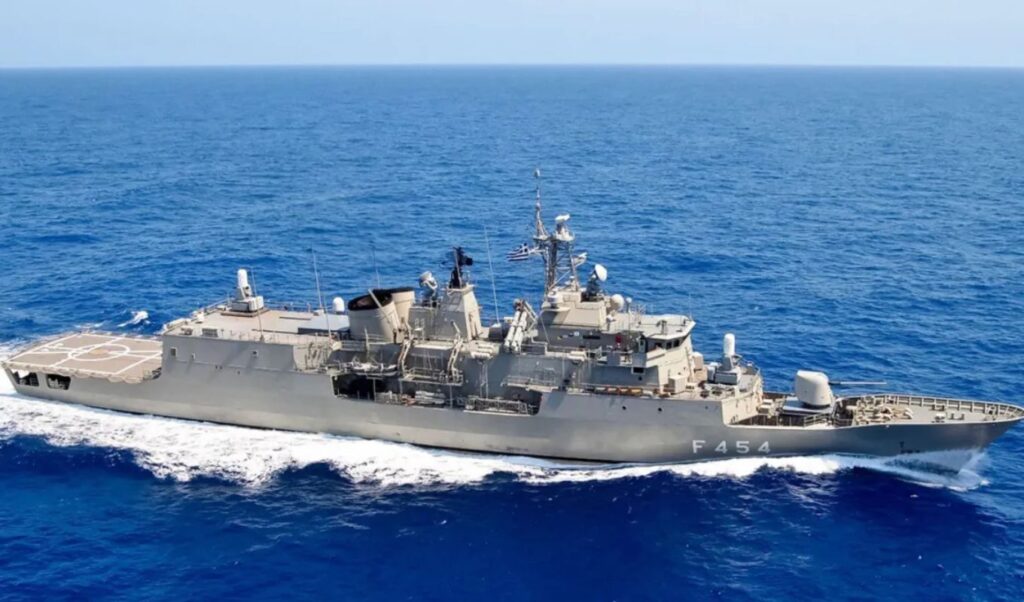
Facing this escalating threat, the Republic of Cyprus is seeking ways to fortify itself. In cooperation with Britain and other allies, but mainly with Greece’s support, defense mechanisms have been fully activated. Greece, responding to the climate of insecurity and the request for protection from the Cypriot government, sent frigates and F-16 fighter aircraft to the island. A diplomatic source conveys the atmosphere to parapolitika.gr: “Everything is activated,” they say characteristically.
However, so far NATO’s Article 5 has not been activated to invoke the principle of collective defense, which constitutes the core of the Alliance’s existence. It should be remembered that, according to Article 5, an attack on one NATO member state is considered an attack against all. However, it is not automatically activated. For it to be activated, a member state of the alliance must request it, and in this case Britain or Greece, since Cyprus does not belong to NATO. Cypriot government sources told parapolitika.gr that such a possibility has not been discussed so far.
The second case of support that Cyprus could request from other states concerns the activation of EU Article 42.7, which provides that in case of armed attack against a member state, the rest are obliged to assist with the means at their disposal. According to Cypriot government sources, assistance from France, Germany and other European countries to Cyprus is provided within the framework of EU cooperation.
Despite diplomatic and defensive efforts, expert assessments remain pessimistic. Analysts believe that the situation will not de-escalate soon, with Cyprus remaining vulnerable due to its strategic position and the involvement of foreign forces on its territory.