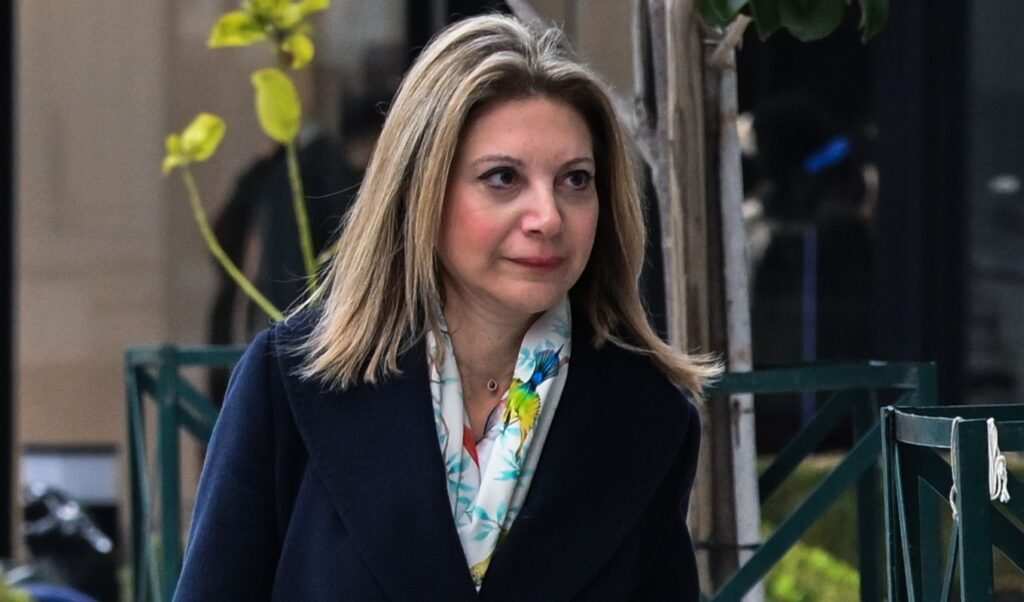
At breakneck speed and through the website gennisi.gr, Maria Karystianou is building her party, setting the agenda she will focus on, thus initiating a discussion about political life and the need to create a new political entity. Information suggests it may be announced on March 25th, with the dual (national and religious) message that the day carries, and its name will be “Gennisi” (Birth).
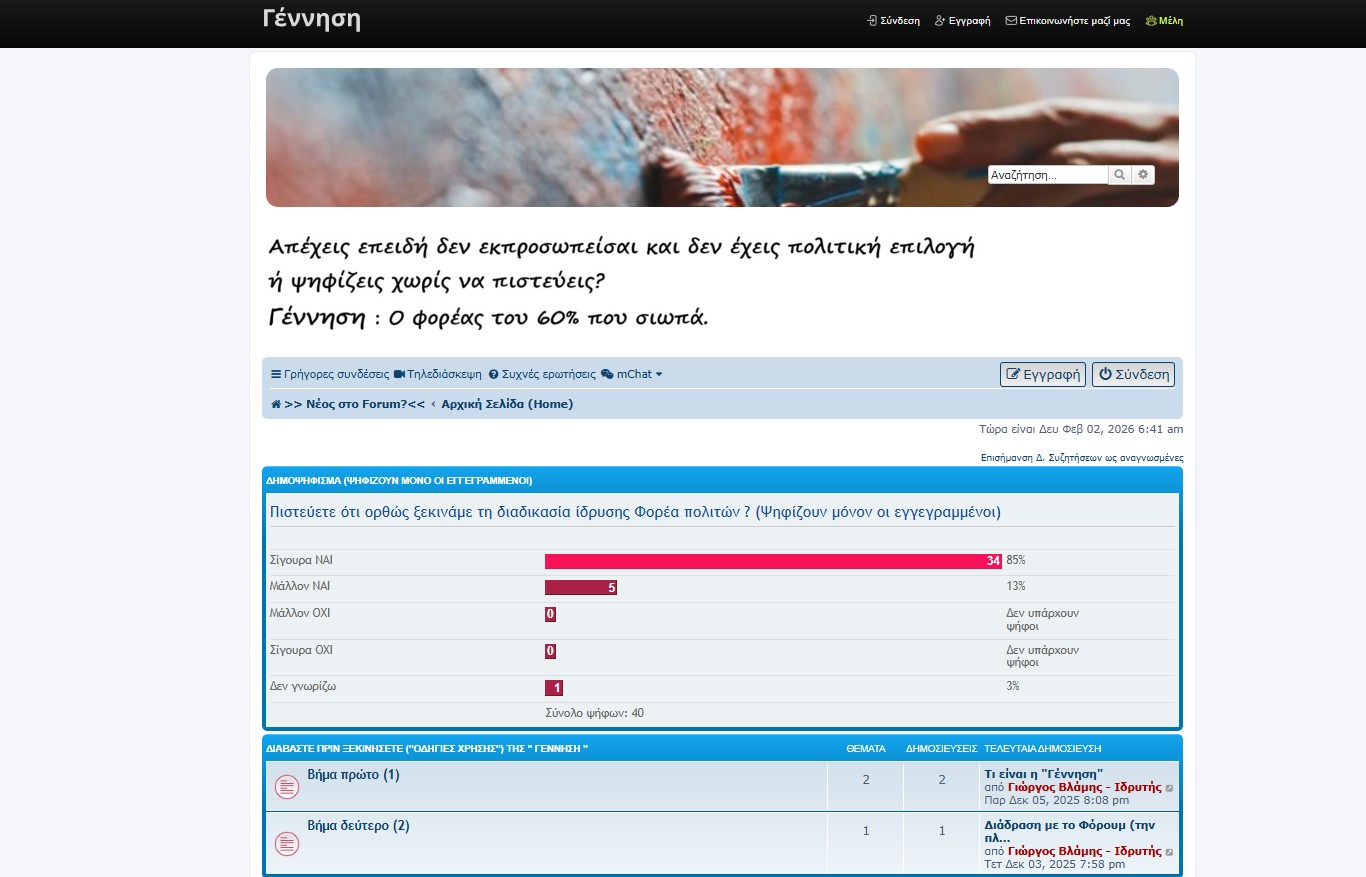
The administrator of the gennisi.gr website appears to be Georgios Vlamis, who belongs to the group “I ask Maria Karystianou to take over the governance of Greece.”
This group, which operates on Facebook, has 47,000 members, supporters of the former president of the Association of Relatives of the Tempe 2023 victims.
Karystianou’s name does not appear anywhere on the gennisi.gr website
It is characteristic, however, that on the gennisi.gr page, Maria Karystianou’s name does not appear anywhere. The administrator actually appeals to disappointed voters and those who abstain from politics and don’t vote, while talking about creating a programmatic political agenda covering all sectors.
“60% of Greeks abstain and a large percentage supports people who don’t really represent them. Until when?”
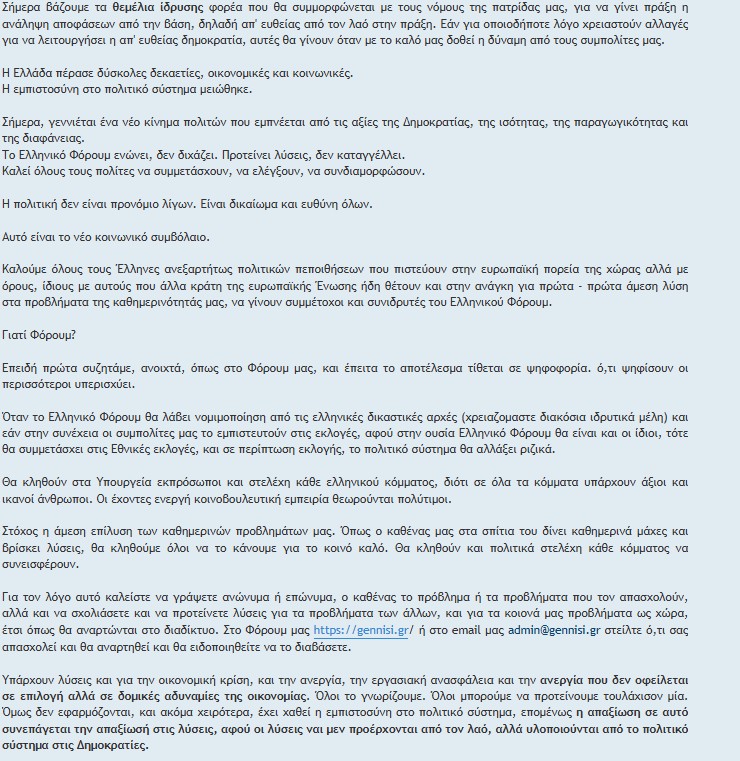
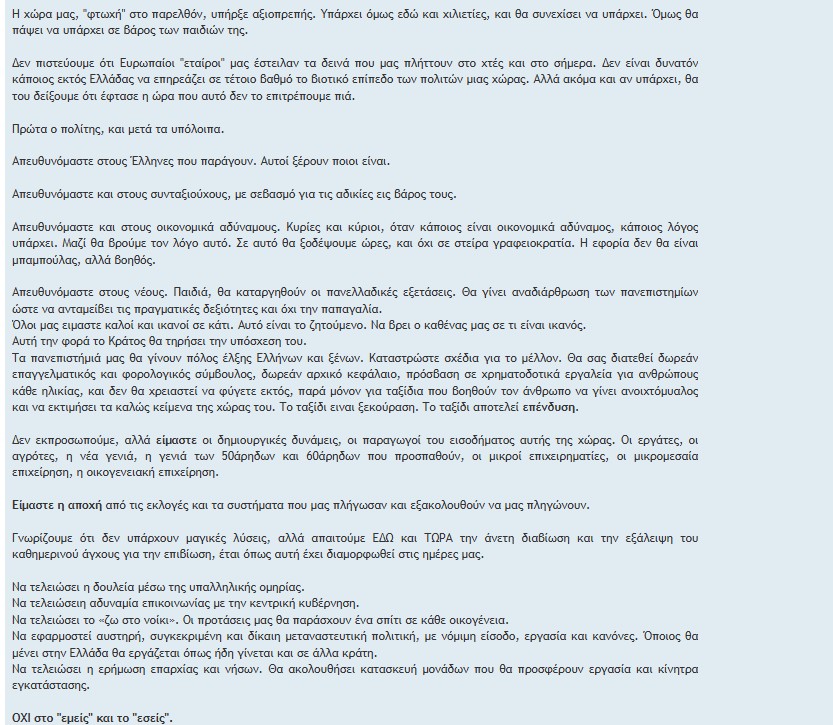
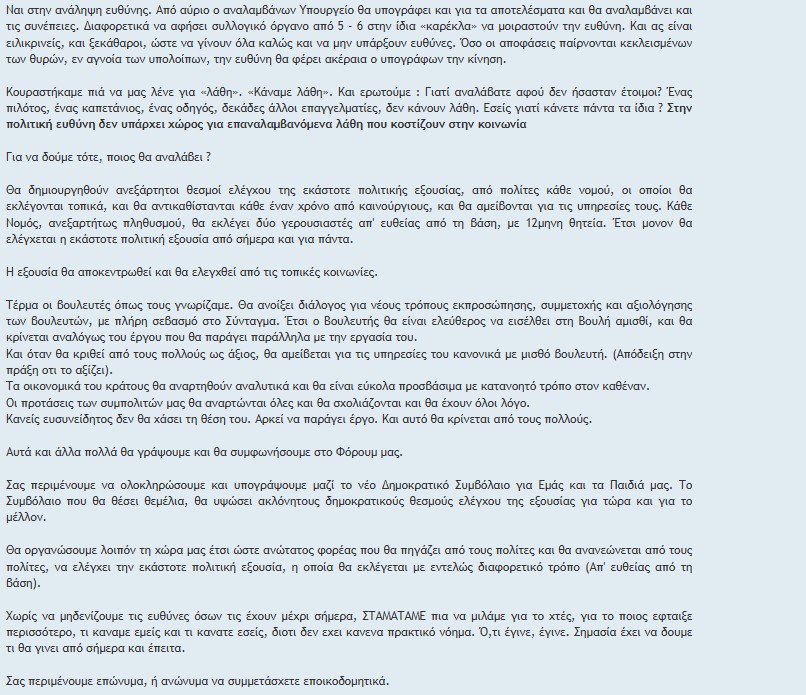
Instructions are then given on how someone can register with the group. “We want to identify the real reasons why each person abstains and record solutions. One by one for each person separately (we must break the silence, overcome anger, devastation and speak),” it characteristically states.
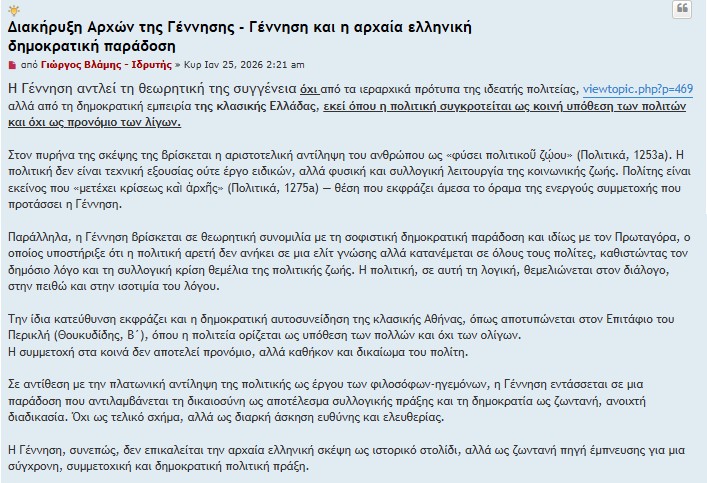
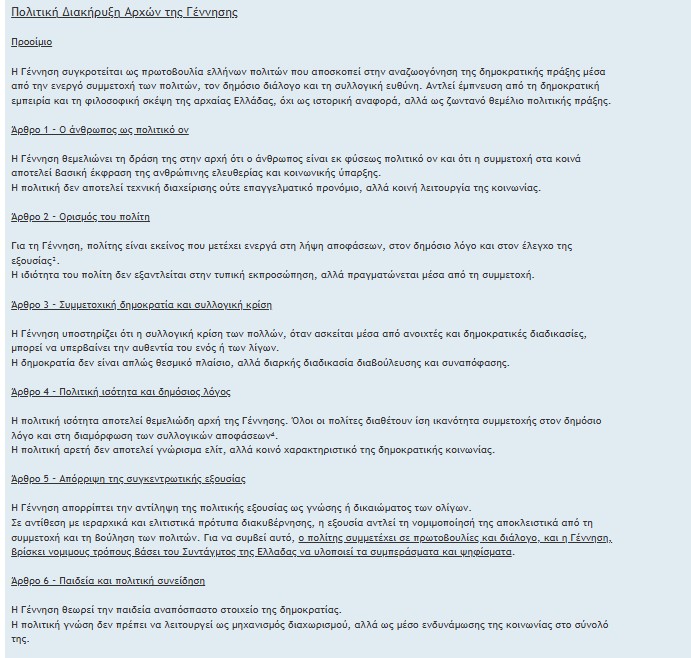
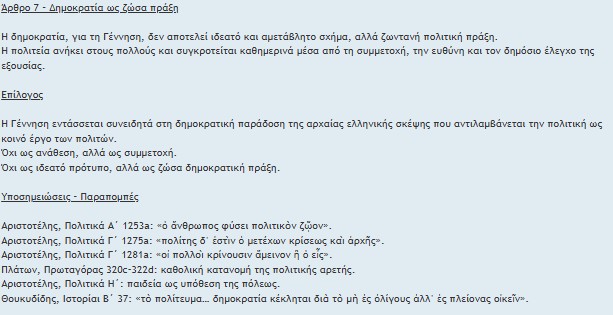
“We must believe that with the power given to us by our percentage, without leaders and cliques, but with a broad administrative team at the helm, which will emerge through direct democratic procedures from all of us and will be controlled by our constitution, as well as an independent team of auditors who will emerge through direct democratic procedures from ourselves, we can promote true direct democracy (all Greek technocrat scientists propose solutions publicly, citizens vote on proposed solutions through referendum, majority prevails).
To establish the institution of party oversight, as well as other institutions that will make our state truly organized and free.
Our decisions to become part of Greece’s Constitution, for us and for future generations.
So that no one can ever decide for us alone again.”
“Gennisi aims to enhance citizen participation in public dialogue, it is a community/space for co-decision rather than a traditional party”
“Gennisi,” argues the website administrator, “is not a traditional political party. Gennisi aims to enhance citizen participation in public dialogue and to ‘give birth to’ ideas and solutions, without necessarily being structured as a party.
Gennisi is a community/space for co-decision rather than a traditional party with hierarchies and political machinery.
This means we think differently from political parties, because we pursue collective processing and consultation of ideas by the citizens themselves, not just a predetermined political line with citizens simply ‘sending messages.'”
Gennisi is an initiative by Greek citizens created in Greece for people who have distanced themselves from the political process because they don’t feel represented.
Its basic characteristics are:
It aims for open dialogue and citizen participation through votes/referenda.
It addresses people from all social groups: high school graduates, workers, unemployed, retirees, youth, small entrepreneurs, farmers, citizens from regions and abroad.
It aims to:
a) record citizen experiences regarding abstention from public affairs and find solutions to social and political issues,
b) create a citizen entity with participatory basis, whose political future remains open through active citizen participation (direct democracy), in order to demand changes that will transform the political system through the introduction of supra-party institutions.
Immediate improvement of citizens’ lives in every corner of Greece.
Defense of Greek citizens’ rights against any organization outside Greece.
State organization.
Repatriation of people and capital.
Coordinators define the topics to be discussed among members who have registered on the relevant platform.
For example, one topic was: “Gennisi – Greek Dialogue for state, institutional & social reconstruction: Examining politics in Greece, current affairs, social problems, government, bills, news, elections, abstention, polling (political).”