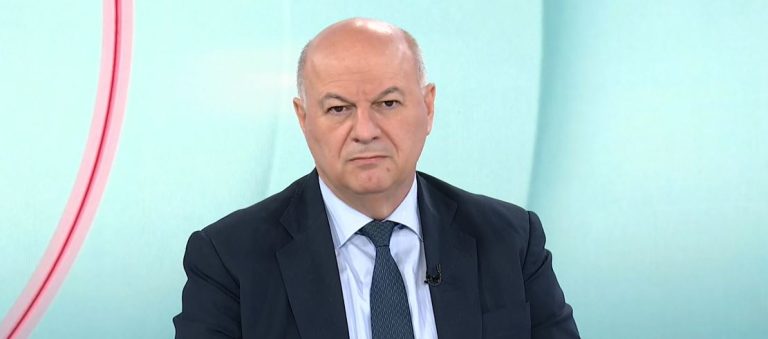
Emphasizing that vaccination does not necessarily prevent animal culling, the Minister of Agricultural Development, Kostas Tsiaras, noted among other things that the “national strategy for the country is to strengthen biosecurity measures and effectively close the foot-and-mouth disease cycle without resorting to vaccination.” Mr. Tsiaras clarified that the issue of dealing with foot-and-mouth disease is a national issue for Greek livestock farming and that we must all understand that if we don’t close this cycle, Greek livestock farming will face great danger both with the reduction of livestock capital and other risks that may emerge in the future precisely because the country will have foot-and-mouth disease established for a long period.
Additionally, the Minister of Agricultural Development noted that “it is vital to close the foot-and-mouth disease cycle, if possible by the end of the year, so we can enter into significant reconstruction and reorganization of Greek livestock farming.” Mr. Tsiaras initially referred to the meeting held under the Prime Minister, which was attended by the four regional governors of the areas recording the most cases, as well as the regional governor of Epirus.
Tsiaras: We must keep Greek livestock farming sustainable
“In the meeting we clarified that the national strategy for the country is to strengthen biosecurity measures and effectively close the foot-and-mouth disease cycle without resorting to vaccination,” the Minister noted, emphasizing that the government’s position is clear.
“Essentially we all decided together that we must strengthen biosecurity measures in every possible way, with every possible assistance and contribution from the Greek state, with every willingness and possibility of utilizing human resources from the Regions through their own services, the DAOK and of course with the assistance of the Greek Police, since we see that the main reason for disease transmission is illegal animal movements, movements of people or vehicles that may carry the foot-and-mouth virus,” he stated, concluding that what has been recorded is that the main reason for disease transmission is movements.
He announced that next week or in the coming days the prime minister will meet with livestock farmers’ representatives to present the national plan for comprehensive reorganization of Greek livestock farming.
“We believe we must strengthen and keep alive, resilient, sustainable, with real development, Greek livestock farming. I personally believe that Greek livestock farming provides tremendous added value not only to the production process itself, but also to economic indicators,” the Minister emphasized.
Regarding vaccination, Mr. Tsiaras stated: “We actually have an excellent situation for Greek livestock farming itself. We must maintain and strengthen this situation even more. If for any reason we enter a vaccination logic, we must clarify and know the following: Vaccination does not mean that animals are not culled. I don’t know to what extent this is known or if some people understand it. The Commissioner himself, who proposes vaccination, has clarified simultaneously that even if the country enters vaccination, it doesn’t mean we won’t have animal culling, because the perception that exists among a large number of people is that if we vaccinate we won’t have animal culling.”
Furthermore, Mr. Tsiaras mentioned that “in the coming period we will develop through improvement plans, financing tools, the possibility and essentially transformation of the livestock farming model from a subsidized model to a model that will be productive and can truly have resilience and sustainability in the coming years, but of course we will also strengthen and support the comprehensive reconstruction of our country’s livestock sector.”
Regarding compensation, the Minister stated “First there are two facts. First, that compensation for slaughtered animals given is higher than what is given in Europe. Second, income loss compensation has been provided by decision of the prime minister himself. The prime minister himself stated that if the time is extended until livestock capital reconstruction exists, obviously these compensations will be repeated, meaning compensation will be given again in other words.”
He added that “Our great concern and the big question for all of us is how quickly we can enter the livestock capital reconstruction process.”
Finally, Mr. Tsiaras emphasized that as pre-announced there will be improvement plans both for reconstruction and restructuring of facilities, and for financing tools to repurchase livestock capital, noting that every possibility will be utilized both with European resources and with financing tools originating from the ministry and possibly from the Greek banking system itself.