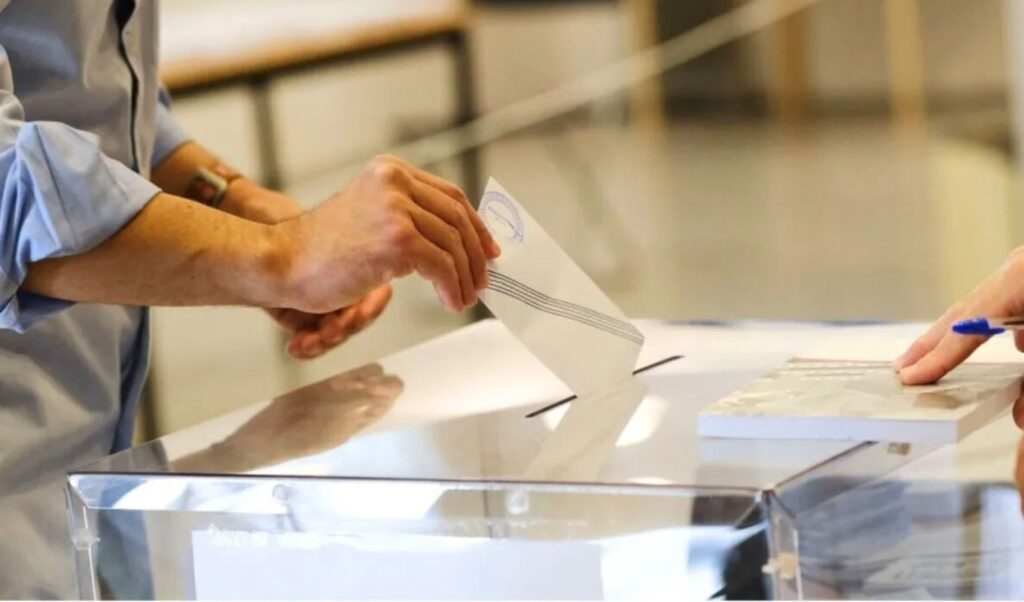
The percentage of undecided voters is increasing from poll to poll. In the recent Opinion Poll survey, the voting intention percentage stands at 19.1%. One in five voters remains undecided! In the GPO survey, the corresponding percentage is 17.2%, but three percentage points higher compared to the measurement just one month ago. Last November, ALCO recorded a 21.5% rate for undecided voters, jumping from 11.9% in the corresponding survey just nine months earlier. The timing is not coincidental, as it coincided with massive demonstrations over the Tempe tragedy. In other words, we’re talking about the second “party” after New Democracy. Of course, “party” is a figure of speech, as this represents the most heterogeneous public classified in this category. Different starting points and criteria, different political stimuli that even algorithms fail to detect.
The massive percentage of undecided voters and electoral fluidity
The massive percentage of undecided voters is not disconnected from recent developments in the political scene. On one hand, many who voted for New Democracy in the 2023 elections, dissatisfied, are keeping their distance from the governing party. This is reflected in New Democracy’s current polling numbers moving around 30%, well below the 41% of votes that gave it a new majority in 2023. On the other hand, opposition fragmentation, the multitude of parties, and the emergence of new ones that seem to become part of the problem rather than the solution push a significant percentage of voters to keep their distance. The difficult equation for parties involves this particular feature: approximately one in two undecided voters decides just 24 hours before the ballot box or even on election day itself. The obvious goal is to win over undecided citizens much earlier.
But what is the “identity” of undecided voters? Few findings provide even an approximate picture. Based on a relevant ALCO poll, 59% of undecided voters are women and 41% are men. The “critical mass” is found in the age group from 45 to 64 years. Regarding previous party identity, 41% of respondents stated they voted for New Democracy in previous elections, 12% for SYRIZA, 9% for PASOK, and 8% for another party. There are constantly new data determining parties’ strategic approaches to swing voters.
Regarding priorities citizens give to the country’s problems, the situation is extremely volatile and obviously contributes to increasing the percentage of undecided voters. High cost of living continues to be the “champion” in measurements for the most acute everyday problem.
At the same time, 8 out of 10 citizens believe Greece faces an institutional crisis, while a similar proportion expresses a crisis of confidence in parliament, government, and parties. Public Issue’s annual survey for 2025 reflects the permanent identity crisis of political parties, with only 8% of citizens trusting them. Against this backdrop of dissatisfaction, very few parliamentary parties show marginal gains, while fertile ground is created for announcing new formations, both from M. Karystianou and Al. Tsipras.
However, in the Opinion Poll survey, 83.8% of respondents declare themselves extremely concerned about geopolitical upheavals, and 80.7% believe these conditions make the need for political stability and strong leadership imperative. A trend the governing coalition certainly seeks to exploit, both by highlighting the extent of dangers and attempting to emphasize the importance of single-party government, which certainly requires regaining the trust of undecided voters keeping their distance from New Democracy.
Crisis of confidence
What’s interesting is how the number of undecided voters in respective measurements has increased dramatically over the past year. They become the unpredictable factor for where the chips will finally fall for parties when election time comes. The fluidity of the political scene is reflected precisely in this picture emerging from polls. Simultaneously, however, the large percentage of undecided voters feeds factors that favor undermining certainties. What might emerge? Referring only to the near term, the appearance of two new parties – Ms. Karystianou’s and Mr. Tsipras’s – could completely reshape political correlations. It will be very interesting to measure at that stage how the number of undecided voters will fluctuate. A number so unnaturally large that, when the time comes, it could determine whether we’ll have a single-party government or face successive electoral contests until government formation. Undecided voters are, ultimately, the barometer for all possible scenarios.
Published in Weekend’s Karfi