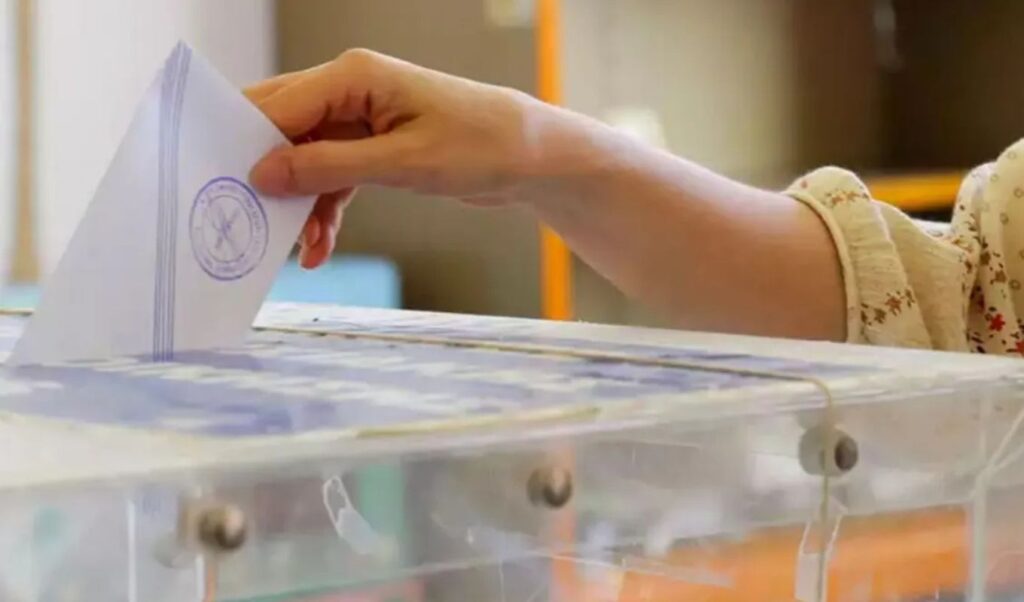
The government is attempting to make a major “opening” to the Greek diaspora -in view of the 2027 ballot box- by establishing for the first time postal voting in national elections for Greeks abroad and, simultaneously, giving them the right to elect their own members of parliament.
The proposal, which will be discussed in a multi-party committee, concerns the establishment of postal voting in parliamentary elections exclusively for voters located outside the country. At the same time, a new electoral district will be created, to be called the Greek Diaspora District and will have three seats.
Postal voting: How diaspora seats will be distributed
Specifically, the distribution of total seats (all 300) will be calculated based on the total votes received by each coalition in all electoral districts, including the new Greek Diaspora one. The distribution of the three seats in the Greek Diaspora electoral district will be done exactly the same way as in the other three-seat districts (e.g. Argolida, Laconia, Arcadia, Boeotia). Where will these three seats be taken from? From the State MPs, who from the current 15 will “return” to 12, as was traditionally the case.
For Kyriakos Mitsotakis, who characterized this reform as another “seal” in the “passport” of modern and open Greece, the goal is twofold: The main one is to activate the Greek diaspora and have them participate much more massively in national elections than in European elections, and the second is to proceed with an exercise of consensus with the other parties.
Thursday sees first meeting of informal multi-party committee on postal voting
The competent Interior Minister, Theodoros Livanios, has already extended an invitation to parties represented in Parliament to participate in an informal multi-party committee to discuss this government initiative. The first meeting will take place the day after tomorrow, Thursday, January 29, at 11:00 AM at the Interior Ministry. “The electoral process constitutes the supreme expression of democracy. Conditions today, more than ever, require us to take the next, obvious step, transcending party lines, and strengthen the voice of Greeks abroad and our country’s extroversion. I look forward to a substantial dialogue with all parties represented in Parliament, so that this reform becomes state law, provided the required enhanced majority is secured,” Mr. Livanios stated.
Seeking consensus
The right to exercise voting rights for Greeks abroad in national elections from their place of residence will be established, however, only if the relevant legislative initiative gathers 200 votes. As explicitly provided by the Constitution (in article 54), “a law passed with a majority of two-thirds of the total number of MPs may determine matters relating to the exercise of voting rights by voters located outside the Territory. Regarding these voters, the principle of simultaneous conduct of elections does not prevent the exercise of their voting right through postal vote or other suitable means, provided that counting and announcement of results are conducted when this happens throughout the Territory.”
Even if PASOK agrees, having expressed positive views in the past about postal voting for diaspora Greeks, together with New Democracy the votes they total in Parliament are 189, and at least one additional party will need to vote positively for this reform to be implemented.
Regarding the exercise of this right for Greeks residing within Greece, the legal community is divided on whether this requires Constitutional Revision to be applicable in national elections. In any case, this is something expected to be discussed at a later time with the parties.
Same procedure as European elections
The procedure will be identical to that successfully implemented in the European elections. Greeks living abroad -workers, students, etc.- will be able to access the Interior Ministry’s special electronic application and register in special postal voting electoral rolls exclusively through taxisnet using their personal credentials or simply by submitting their Greek passport and police identity card details in combination. Subsequently, they will declare the Electoral Material Delivery Address where they wish to receive the postal voting envelope, which can be collected exclusively by the voters themselves or explicitly authorized third parties. The sending of envelopes by the Interior Ministry will occur immediately after the proclamation of coalitions by the Supreme Court. The voter will select the party and MPs they prefer, place the ballot in the special voting envelope, seal it and put it in the return envelope, and send it to the pre-filled address of the postal voting sorting center in Greece.