The first GPO poll of 2026 for “PARAPOLITIKA” picks up where it left off at the end of last year. The evolution of farmers’ mobilizations and discussions about upcoming party formations continue to dominate the agenda and monopolize domestic political news.
GPO poll for Parapolitika: voting intention and estimate
Overwhelming support for farmers – Over 82% back their demands
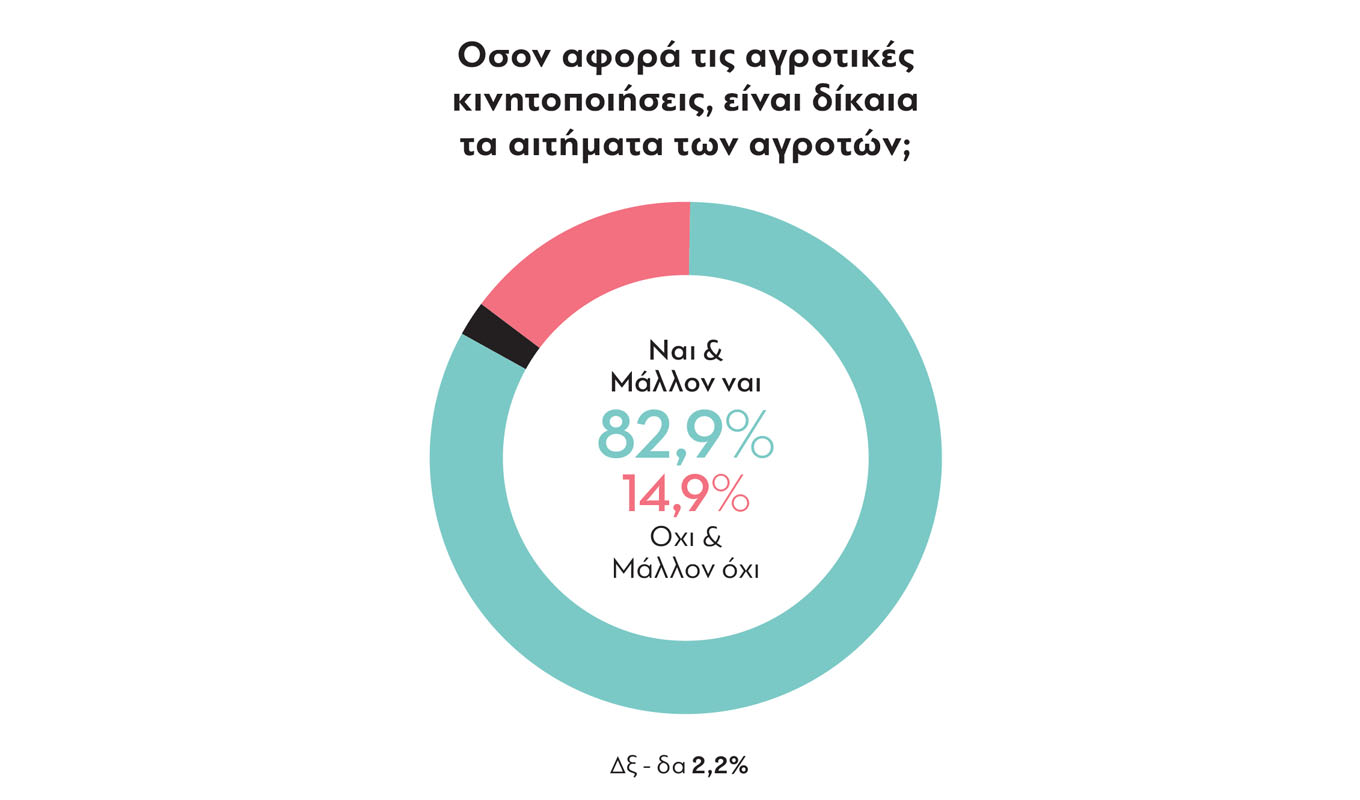
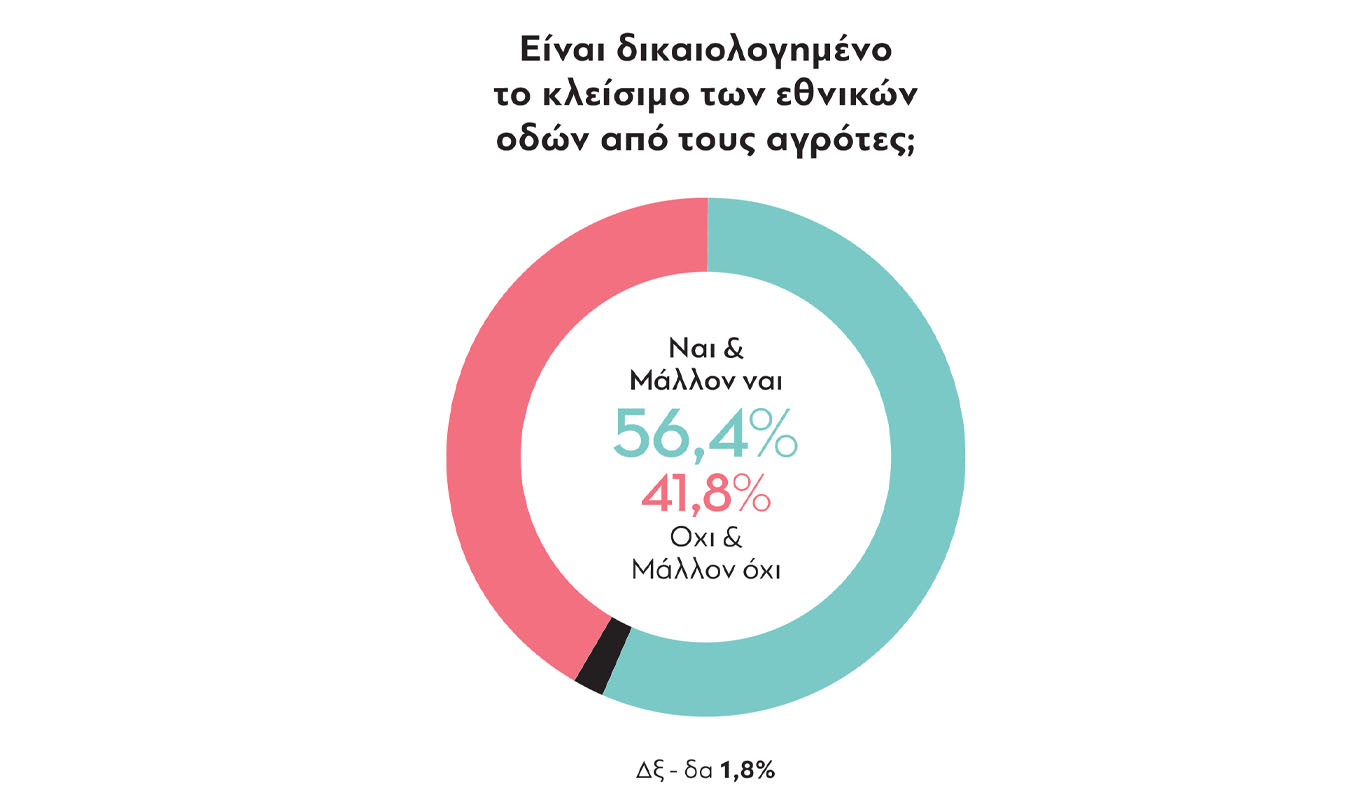
Until the completion of the research process, negotiations between farmers and the Maximos Mansion regarding dialogue initiation and ending blockades were ongoing. Data shows that despite the lengthy mobilizations and hardship experienced by citizens during the holidays, Greek society’s support for farmers’ demands remains strong at 82.9%. Equally significant, though notably reduced from December, is the 56.4% that continues to justify road blockades. The corresponding percentage that justified this practice last month was 64.8%, representing an 8 percentage point decrease, explained by fatigue caused by the farmers’ blockades.
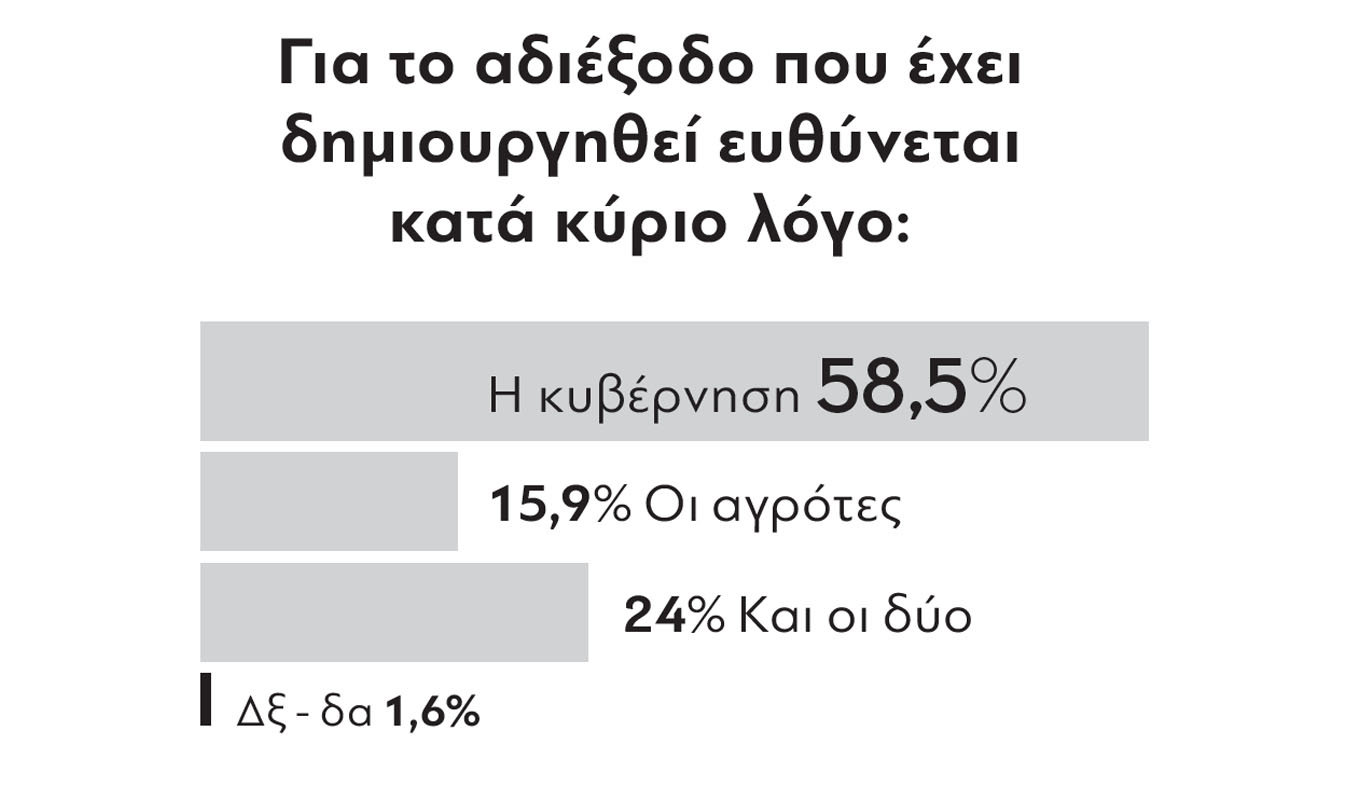
The vast majority continues to hold the government responsible for the deadlock at 58.5%, versus 15.9% blaming farmers primarily and 24% believing both sides are equally responsible.
67.2% believe the government hasn’t responded adequately to farmers’ demands, versus 31.4% who judge these were satisfied to the extent possible.

Karystianou: popularity decline after announcing party formation
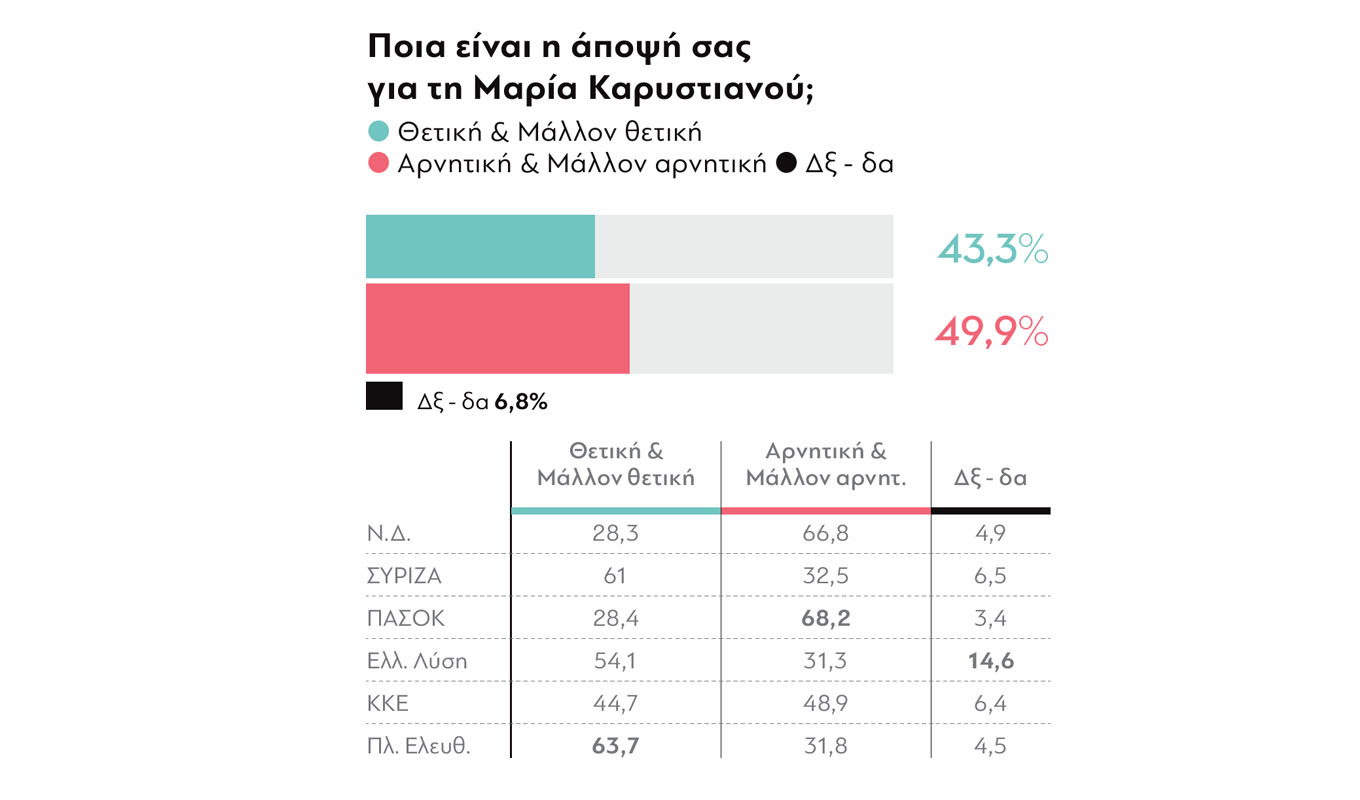
In the purely political agenda, Ms. Karystianou’s announcement of forming a new party appears to create realignments in the political landscape, especially within the opposition struggling to position itself politically against her. Ms. Karystianou seeks political autonomy through her statement, leaving behind the advantage of universal support as she’ll now face different treatment. Characteristic of this change is her approval rating, as for the first time negative views at 49.9% exceed positive ones at 43.3%. Months ago, Ms. Karystianou recorded polling popularity of around 75%, percentages previously enjoyed only by some Presidents of the Republic, not active politicians.
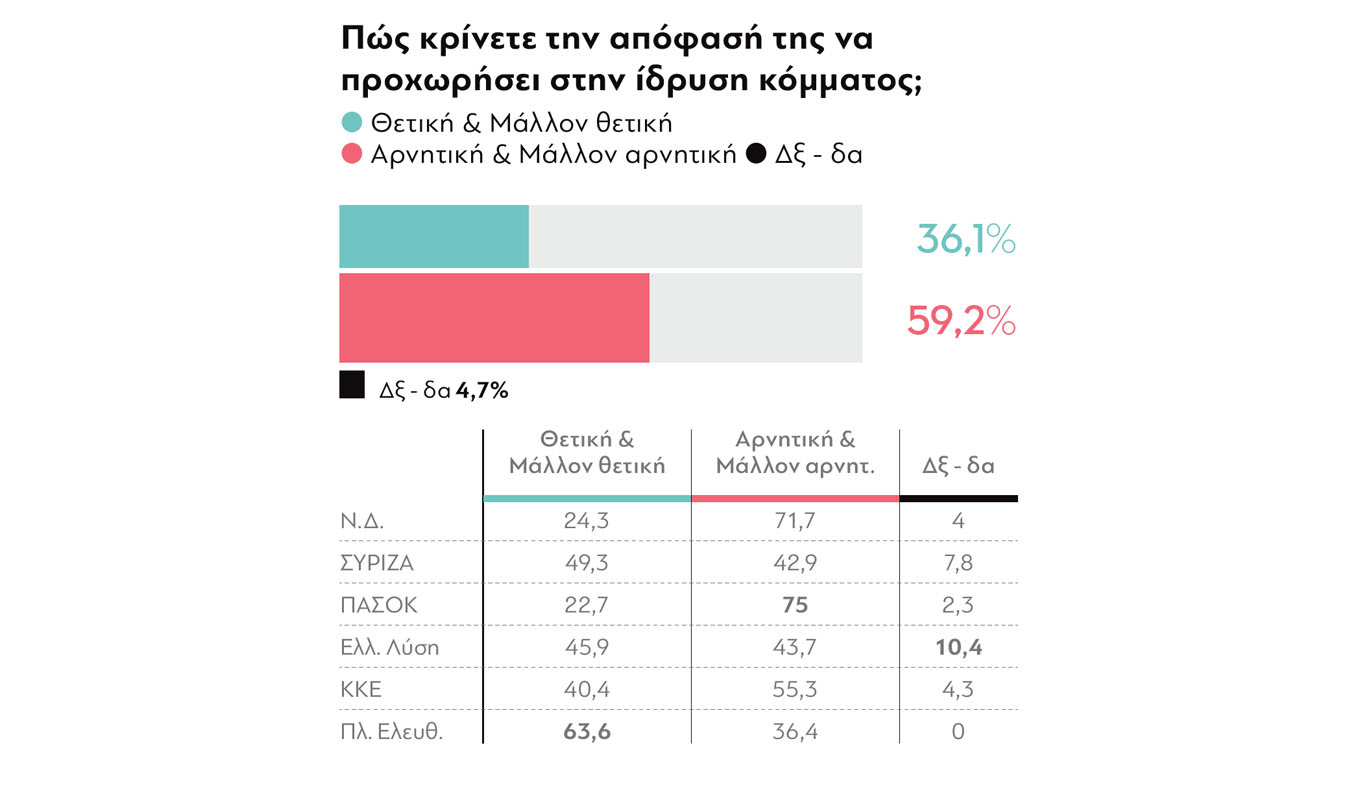
The percentage viewing her party formation decision positively is even lower at 36.1%, versus 59.2% who disagree. The 36.1% approving her decision isn’t small, but shows changing sentiment among large segments of Greek society now judging Ms. Karystianou in political terms.
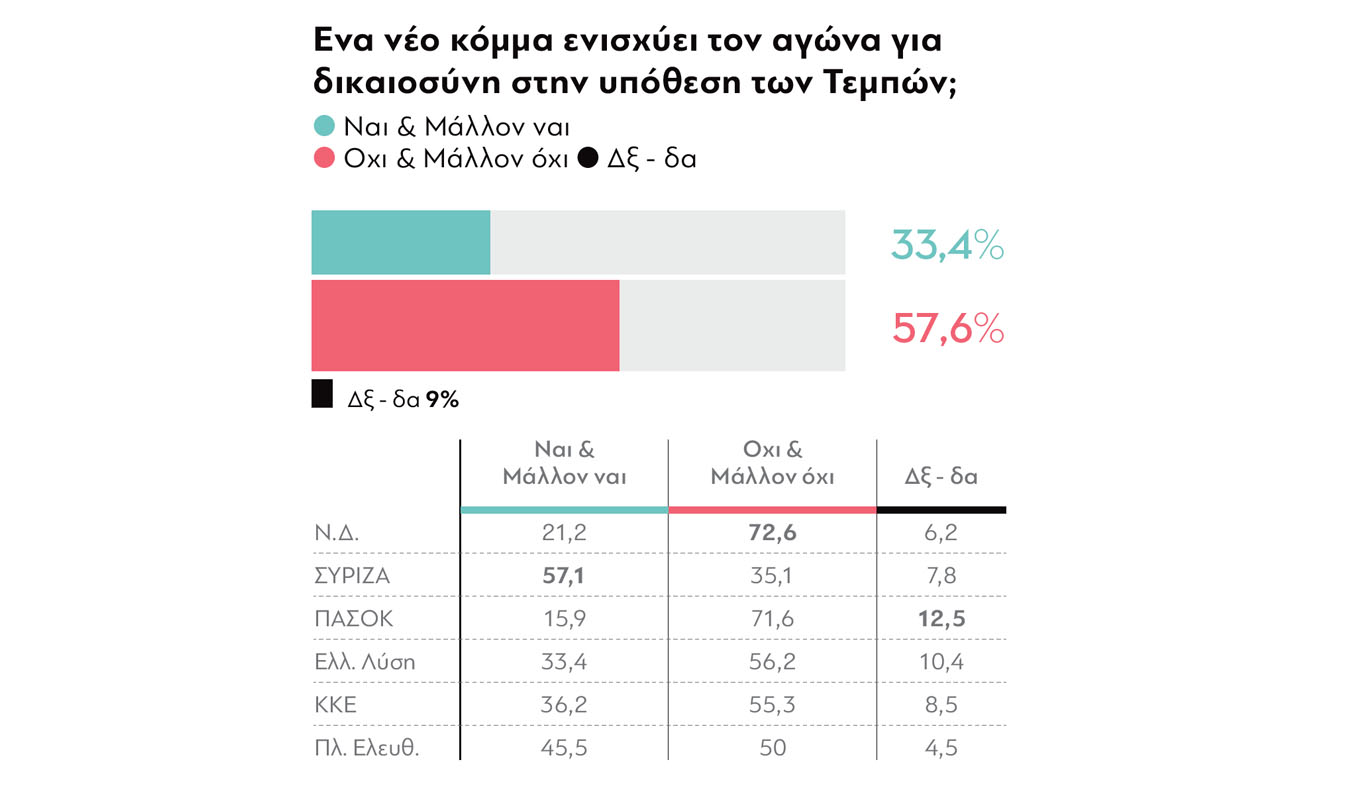
Interesting are responses about whether her decision to form a political entity will strengthen or weaken her and other relatives’ fight for justice, with 33.4% believing the party will function supportively, versus 57.6% thinking it will misdirect and weaken the case’s essence.
Karystianou’s party reaches 22.8% potential vote
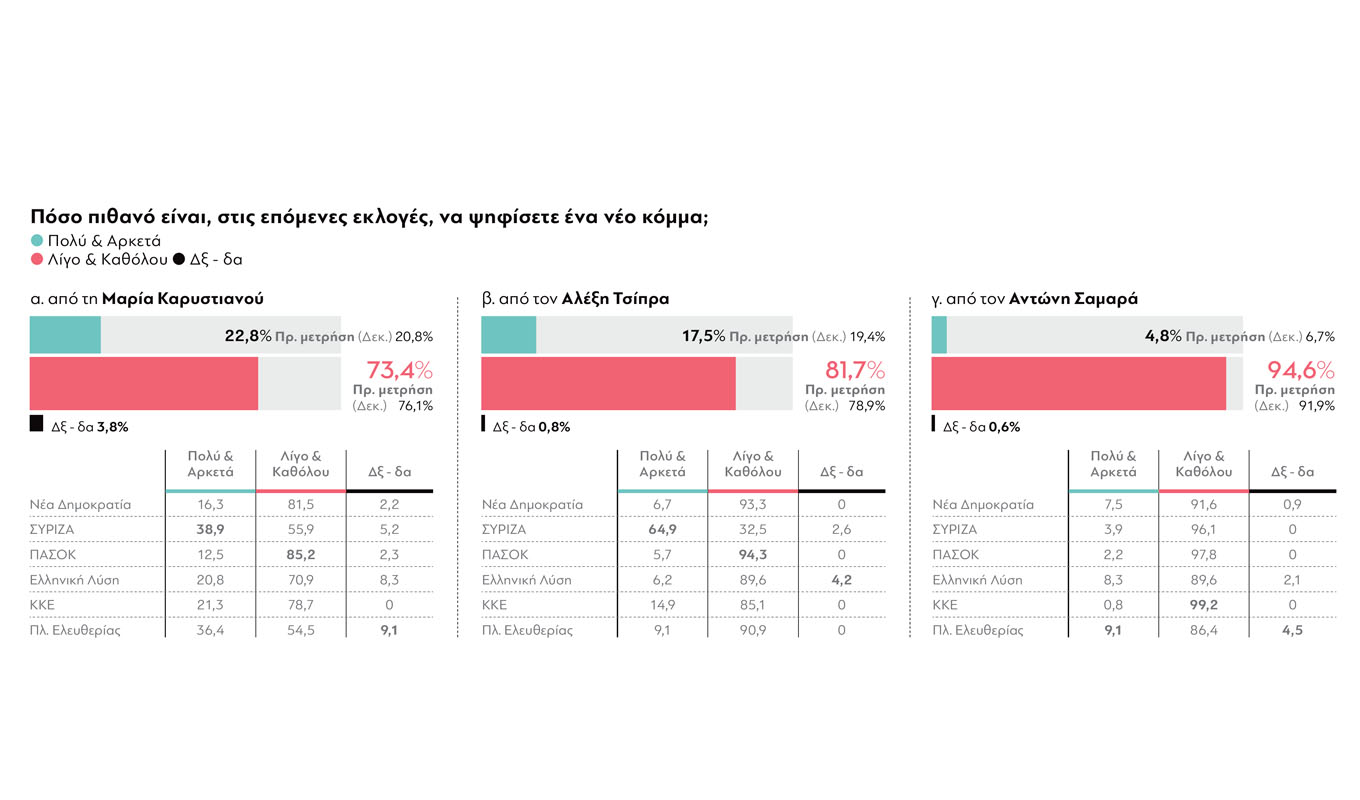
In potential voting however, Ms. Karystianou appears strengthened by 2 percentage points, as the very and quite likely scenario now registers 22.8%, versus 20.8% in December. Specifically, very strong intention stands at 10.2% and quite likely scenario at 12.6%. We must emphasize again that these percentages don’t constitute voting intention but potential registration containing uncertainty and overlapping with other possible choices.
Decline in dynamics of potential new parties by Tsipras and Samaras
Conversely, voting probability for Mr. Tsipras’s party retreats from December’s 19.4% to today’s 17.5%, while potential voting for Samaras’s possible party also declines from 6.7% to 4.8%. Clearly current events significantly influence the electorate’s preferences, preferences subject to continuous changes and significant shifts until we finally see how many and which new parties will form.
Undecided voters increase – fluid political scenario
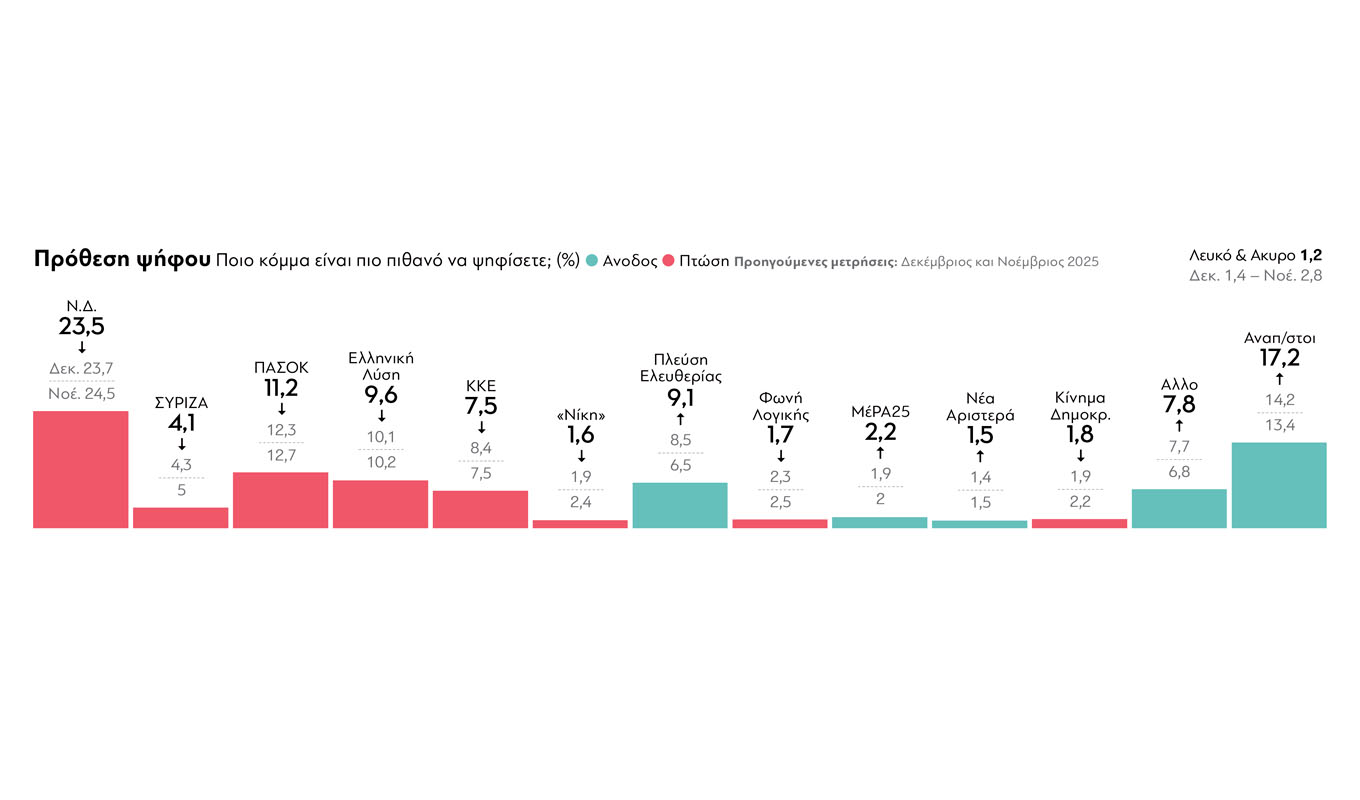
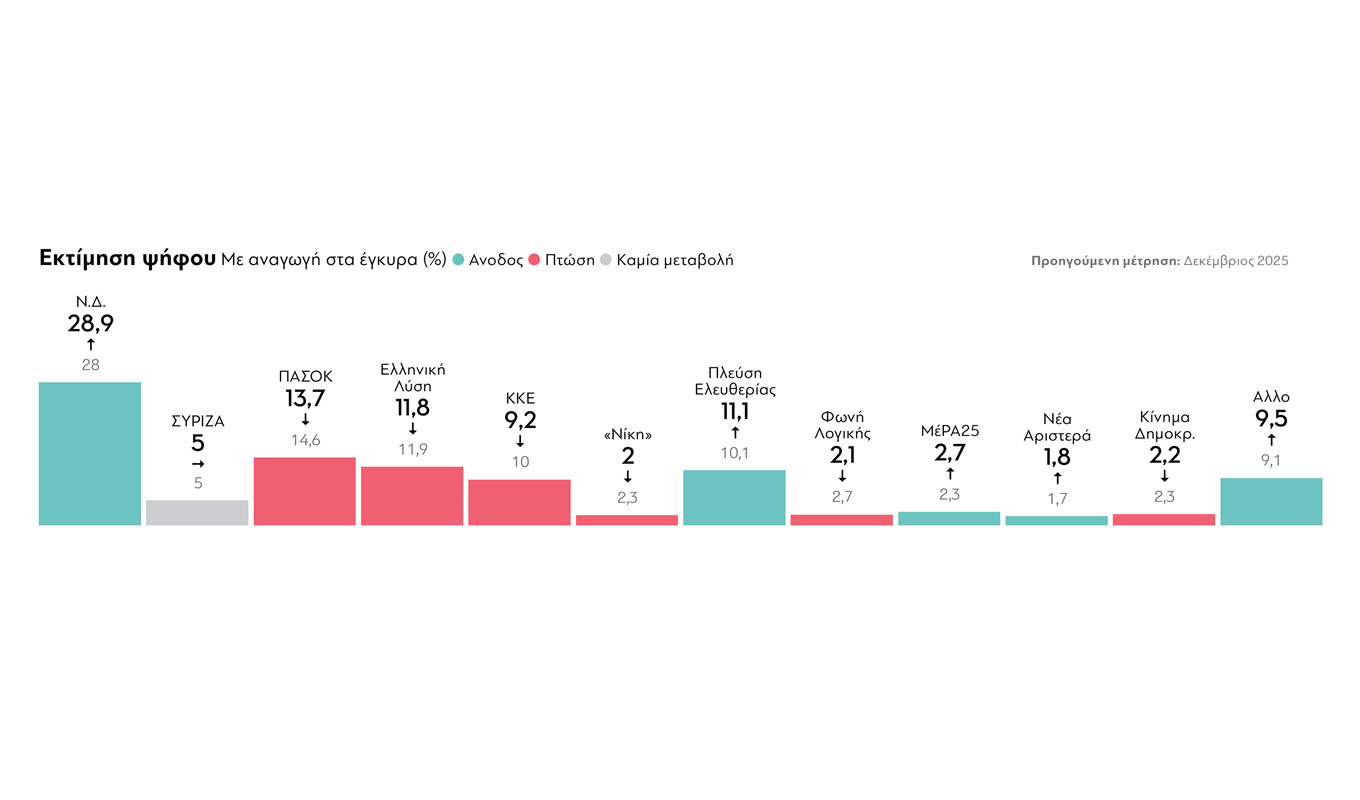
Given these developments, the voting intention table for existing parties shows no significant changes, with Course of Freedom showing some gains and the main change found in the undecided percentage, increasing by 3 units to 17.2%.

Published in Parapolitika