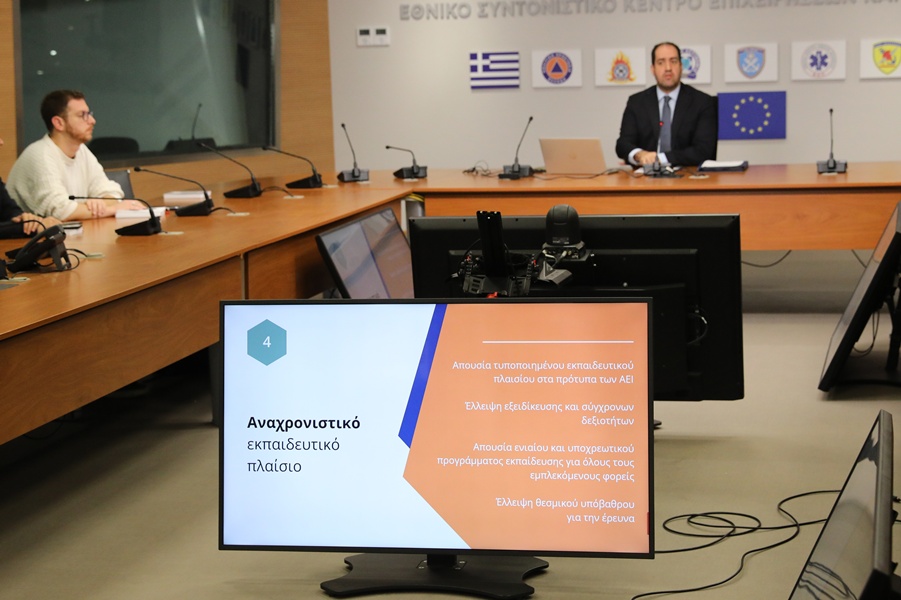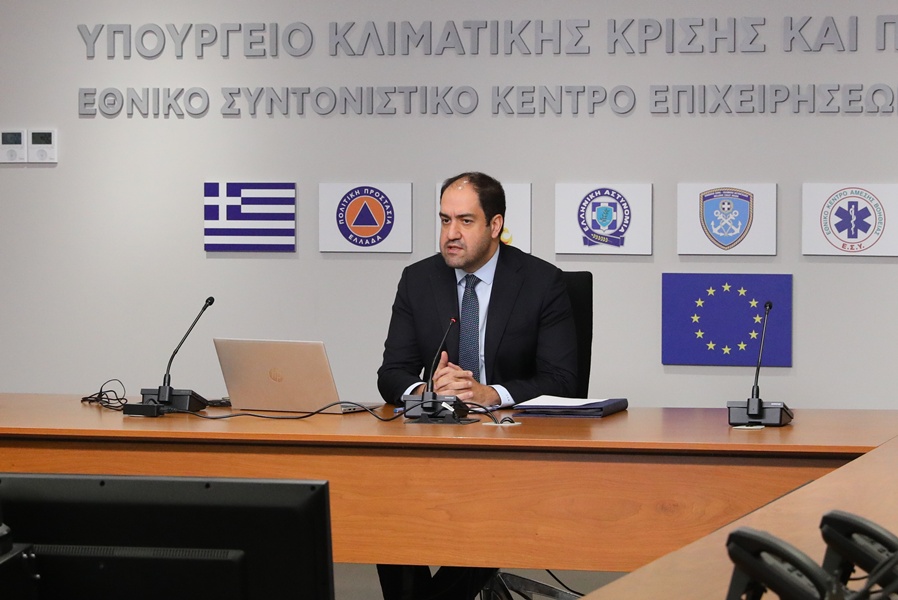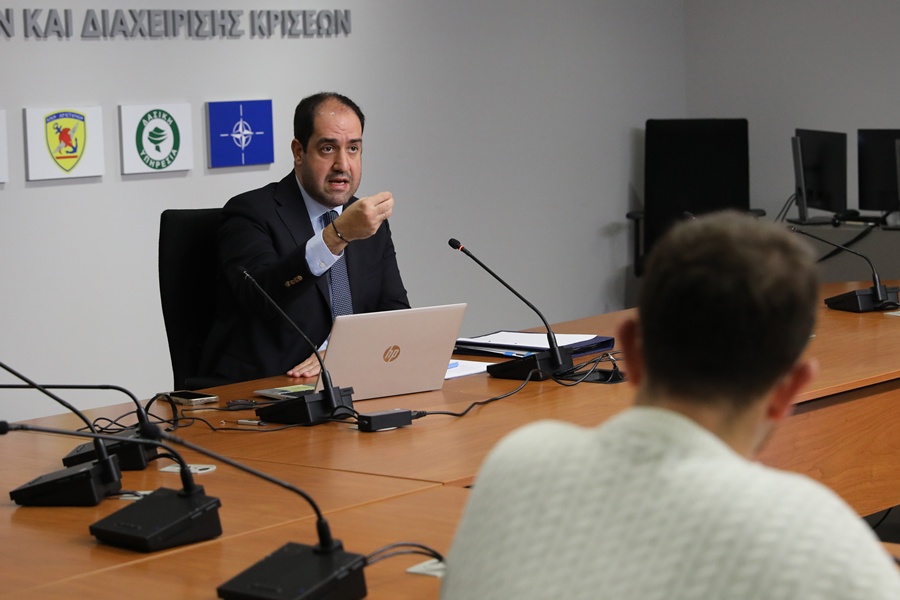
Following the presentation of the new bill to the Cabinet a few weeks ago, the Minister of Climate Crisis and Civil Protection, Giannis Kefalogiannis, presented the new framework for managing natural disasters at a press conference, titled “Active Battle,” which is expected to enter public consultation immediately. The bill aims to radically change the country’s civil protection model, shifting the focus from post-disaster response to prevention, early coordination, and institutional evaluation of each crisis. This represents a comprehensive reform of how the state prepares for, intervenes in, and evaluates natural, technological, and human-caused disasters.
Giannis Kefalogiannis: What the “Active Battle” bill provides
A central pillar of the new framework is the creation of a unified crisis management system through the establishment of 13 operational centers, one in each region, which will be fully interconnected with the National Coordination Center. At the same time, clear rules of engagement and command are established, based on the internationally recognized Incident Command System (ICS) model, to avoid delays and uncertainties in the first critical hours of any incident. Within this framework, the establishment of a meteorological unit is planned, which will provide specialized and targeted data to field commanders, taking into account climate variations that affect the development of phenomena such as fire fronts.
Special emphasis is placed on wildfire prevention, with the establishment of mandatory Fire Prevention Plans for all municipalities and regions in the country. These plans will include risk mapping, operational data, available resources, and critical infrastructure. At the same time, new operational prevention tools are being institutionalized, such as prescribed (controlled) burning and firebreaks, with strict scientific planning and control, while controlled grazing using domestic animals is also introduced to reduce combustible material in forest and semi-forest areas.
The bill also provides for upgrading the Arson Crime Response Directorate, aiming to strengthen investigative work. In this context, the creation of 35 new Investigative Teams is planned, freeing firefighters operating in the field from preliminary investigation work.
Significant changes are also coming to the education sector, with the upgrade of the Fire Academy to a higher education institution, with the possibility of implementing postgraduate and doctoral programs.
Beyond fires, the ministry is also focusing on flooding phenomena, with the establishment of a Special Flood Risk Assessment Committee, which will evaluate the vulnerability of each area, taking into account not only meteorological data but also geomorphological and infrastructure characteristics.
Finally, aiming to utilize data arising from each operational activity, the establishment of Special Scientific Evaluation Committees is planned, which will investigate the causes of disasters and evaluate the actions of involved services, strengthening institutional memory and continuous improvement of the system. The “Active Battle” bill aims to form the basis for a modern, interoperable, and resilient civil protection system, capable of responding to the increasing challenges of the climate crisis.