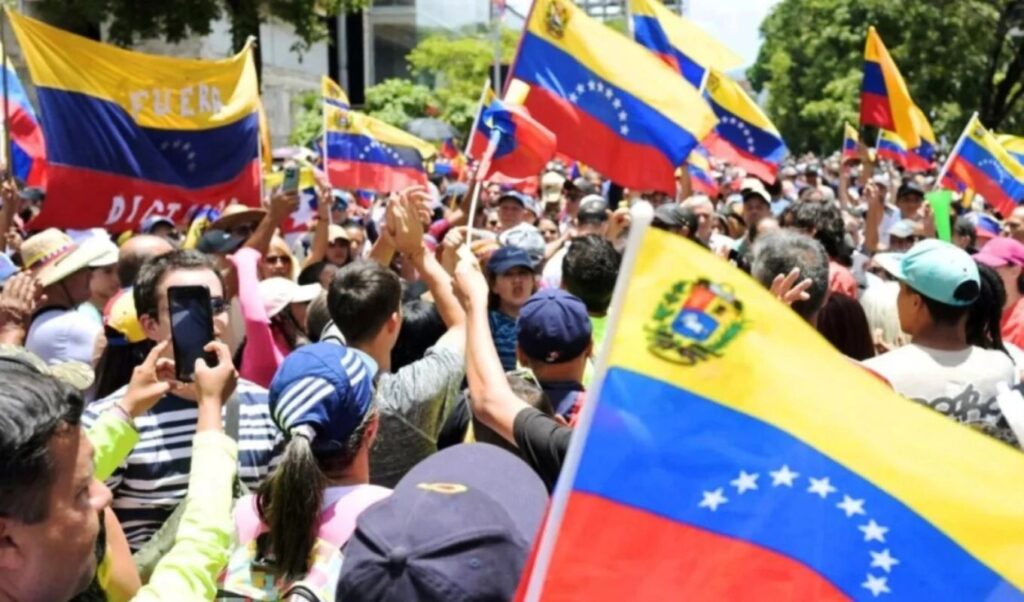
Greece aligns its position behind the unified stance of European Union member states regarding the developments unfolding in Venezuela, according to senior diplomatic sources speaking to parapolitika.gr. Our country co-signed with 25 other states the declaration by EU High Representative Kaja Kallas regarding the consequences of American intervention in Venezuela, which called for calm and restraint and reminded that “under any circumstances, the principles of international law and the United Nations Charter must be respected.”
The head of Greek diplomacy, Giorgos Gerapetritis, also reiterated yesterday our country’s longstanding position on the need to observe international law and the right of self-determination for the Venezuelan people. At the same time, he emphasized the importance that Greece places on adherence to international law. As he stated after his meeting with Bahrain’s Foreign Minister, “Members of the UN Security Council, like Greece and Bahrain, have a special obligation to support the principles and values that have underpinned peace and prosperity in the world for 80 years.”
Yesterday, at the emergency session of the UN Security Council, Greece expressed its support for efforts aimed at peacefully resolving the crisis, emphasizing that these should be conducted in full compliance “with the UN Charter and international law.”
Panagiotis Ioakeimidis to parapolitika.gr on Venezuela: Greece highlights international law as the core value of its foreign policy
Professor of European Studies at the University of Athens, Panagiotis Ioakeimidis, speaking to parapolitika.gr, commented on the fact that “26 EU member countries, all except Hungary, have adopted a relevant declaration emphasizing that in every instance, under all circumstances, international law and the UN Charter must be observed.” As he emphasizes, “Greece has co-signed this declaration. Therefore, Greece highlights international law as the fundamental value of its foreign policy and cannot but stress the supremacy of law in any actions relating to the conduct of international relations. Consequently, Greece’s stance and policy regarding the military intervention in Venezuela should be framed within this context.”
According to Mr. Ioakeimidis, Greece and other smaller countries should not accept the new doctrine of might makes right, which appears to be promoted by the US and other powerful countries. As he says, “they should remain committed to the logic of international law and the power of diplomatic solutions based on international law. Because if they accept the logic of the supremacy of the strong, then they are essentially doomed by default. They have no prospect of surviving in an international system dominated only by the few who possess power, who have strength.”
Kostas Ifantis: “Painful dilemmas for Greece”
For Professor of International Relations Kostas Ifantis, developments in Venezuela “create painful dilemmas for Greece. This is not the first time and will not be the last. The balance required in Athens’ approach is not easy, but the only criterion in such circumstances is narrow national interest. The statements by leaders of major European countries are characteristic of this strategic difficulty.”
It’s worth noting the assessment by Professor of International Relations Petros Vamvakas that the imposition of might-makes-right politics will eventually end: “What can stop Trump is what stops all great powers, usually, when they enter such a trajectory. It’s their overextension as they won’t be able to remain committed to Gaza, Ukraine, and Venezuela – so many fronts. They spread themselves too thin and this is the Achilles’ heel of all great powers. We should maintain some composure and political leaders should wait to see how all this settles. Especially small countries that are vulnerable.”