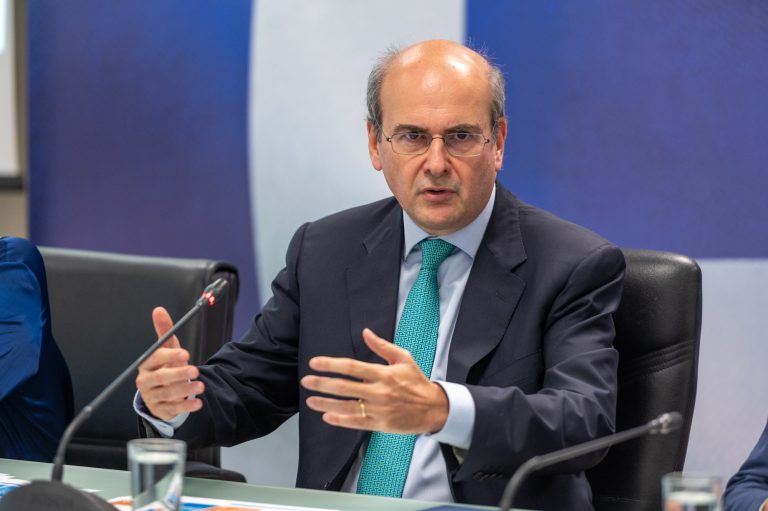
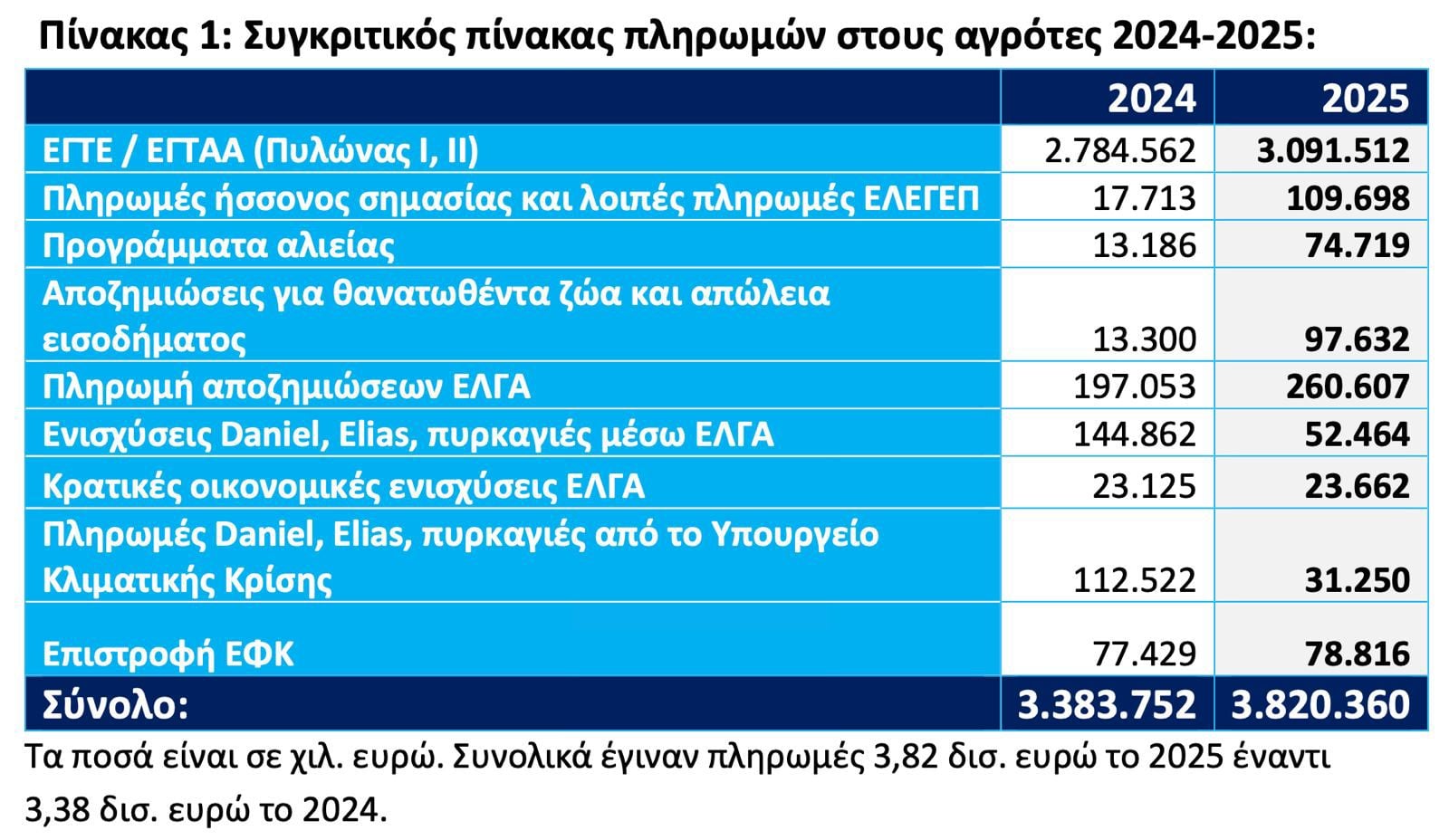
Government Deputy President Kostis Hatzidakis sent a clear message to farmers that the government has implemented support measures worth €3.8 billion and that there are no longer any excuses for not engaging in dialogue. Specifically, Deputy Prime Minister Kostis Hatzidakis noted in a social media post: “€3.82 billion was paid to our farmers in 2025 by OPEKEPE, the Ministry of Finance, and ELGA. This amount is the largest in recent years and 13% higher than the €3.38 billion paid in 2024.”
He added that “with the intervention of the European Public Prosecutor’s Office, OLAF controls, Economic Police investigations at OPEKEPE, and months-long negotiations with the European Commission, what was achieved was not self-evident.”
“And for this, I must publicly thank everyone involved from the Ministry of Rural Development, OPEKEPE, AADE, and my own office in this agonizing effort,” he emphasized.
Hatzidakis on farmers: Answers to 7 questions
Mr. Hatzidakis pointed out: “You may have some important questions. Let’s answer them:
1) Were there no delays in 2025? Yes, there was a one-month delay. Instead of late October, the first payments were made at the end of November. They started just 8 days after the green light given by the European Commission on 19/11. Also not self-evident.
2) And will you finally admit your responsibilities regarding OPEKEPE? Of course we admit them. New Democracy is the only party that admits them. No one else who has governed in the last 45 years admits responsibilities. If it serves that only New Democracy is to blame, fine, we close it and move on.
3) Then why was there turmoil in recent months? Because fines were imposed and negotiations took place with the Commission for a new hybrid system for 2025, definitive and digital from 2026. Only for some, the government was to blame not only for the fines that had been imposed, but also for the effort made through negotiations with the Commission to introduce a new, transparent system and avoid new fines for the future. For them, the government loses both ways.
4) And with this new system will the country receive the same money? Yes, for direct agricultural support and farmer income support from Brussels, exactly the same (the rest is support through ELGA, de minimis programs, etc.). Only these amounts will be distributed more fairly in favor of real producers! Whoever doesn’t want this, let them come out and say it! One can understand the reaction of those who may have made over-declarations. It’s no secret that for several thousand cases, data has been seized by the Economic Police, while several thousand tax numbers have also been referred for further cross-checks. The vast majority, however, will benefit from the new, fairer system.
5) And why was the absorption of OPEKEPE into AADE needed? AADE has shown during the coronavirus period that it can function as a large, reliable, national payment authority. It has credibility both in Greece and in Brussels and can end a chapter of disputes and fines. This transition is a very important reform.
6) Yes, but do you dispute that certain sectors – livestock farmers, cotton producers, wheat producers – face major problems? Obviously they face problems and the government prioritizes them. For 2,500 livestock farmers who lost livestock due to foot-and-mouth disease, an average of €33,600 per farmer has been given for the loss of capital and related income for one year. Livestock farmers will receive an additional €80 million, which are funds from Brussels that remained from implementing the new payment system. Cotton and wheat producers will receive an additional €80 million through so-called ecological schemes, from subsidies that also remained due to implementing the new subsidy payment system. Note here that cotton producers saw cotton prices decrease internationally, but also saw product production increase significantly compared to previous years. Add to this the payment, for the first time, of €177 million through the so-called Measure 23 for farmers who saw a large decrease in their production due to climatic conditions.
7) But these aren’t the only problems. A list of 27 demands has been submitted. Indeed, of which 16 have been satisfied and an additional 4 are being examined for satisfaction. Some others are beyond fiscal capacity or outside the European framework. Add that all previous years we have proceeded with tax reductions for farmers, we have reduced VAT on animal feed, fertilizers and agricultural supplies, and the special consumption tax on agricultural oil is now being refunded. While of course obvious compensations were and are given due to Daniel to farmers in Thessaly.”
“But I now pose a question in turn: Say that nothing I write is true. Why don’t the farmer union leaders of the blockades engage in dialogue with the government, when the Prime Minister himself has called them? They would have the opportunity to present their positions to the government, as has happened in previous years, to explain them better if they haven’t been understood, and to expose the government if it happens to follow an intransigent and unfair stance toward them,” writes Mr. Hatzidakis.
He emphasizes that “when you set up blockades, you inevitably cause difficulties in the economic and social life of the country and simultaneously refuse to engage in dialogue with the Prime Minister, every good-faith third party is entitled to express great puzzlement about this stance. Could there be other motives? Greek citizens are entitled, I think, to an answer.
At this stage, we are all facing our responsibilities: Both the government for maintaining legality, as it has undoubtedly shown a tolerant attitude that makes other social groups complain, and the farmer union leaders who cannot both continue blockades and refuse dialogue. It’s a matter of simple logic, I think.”
“And one last observation: Obviously, agriculture and livestock are not just European subsidies. They are agricultural cooperatives with their problems, producer groups not as widespread as elsewhere, problems with fragmentation and small size of agricultural plots, not satisfactory and to the extent it should be education of young farmers, insufficient competitiveness of the agricultural sector in certain areas,” he adds.
“Major, chronic problems for which there are responsibilities both of those who have governed in recent decades and various leaders over time of the agricultural world. It’s good for all of us to see our mistakes and try, even if late, all together to address them. The cross-party committee proposed by the prime minister in Parliament is a great national opportunity that we must utilize. Because above right, center and left, we are Greeks!” concludes Mr. Hatzidakis.
See here the tables with detailed farmer payments