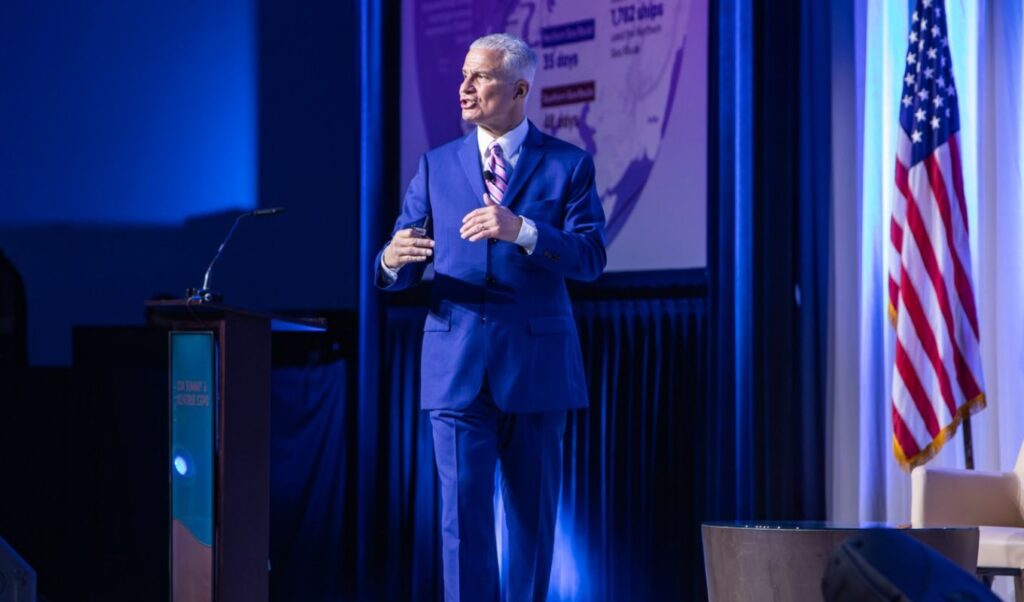
The US strategy for utilizing Greece’s port infrastructure upgrades our country and gives it a pivotal role in the energy supply sector for the Old Continent. According to geopolitical analyst and State Department Diplomatic Advisor (2009-2023), John Sytilidis, the US-Greece cooperation also upgrades the country’s defensive armor. Meanwhile, Washington seeks to maintain a balance among Mediterranean countries, particularly with Turkey, as Mr. Sytilidis argues that for the Trump administration, Turkey “remains an unpredictable regional power with external influence far beyond its borders“.
John Sytilidis to parapolitika.gr: Greece as US “strategic backbone”
However, could we conclude that Greek-American relations are being strengthened diplomatically against Turkey?
Mr. Sytilidis argues: “The extensive use of Greek ports signals US determination that Greece will become their primary military territory in the Eastern Mediterranean and Southern Europe. Greece no longer simply hosts the strategic naval base in Souda Bay. It has become America’s reliable logistical backbone for power projection in critical geostrategic points: Southern Europe, the Middle East, North Africa, and the Mediterranean, from the Suez Canal to the western Ionian Sea. These regions concentrate the most powerful 21st-century threats for Greece and its NATO allies, including Russian aggression, Chinese economic expansion, Iranian-led destabilization, energy insecurity, and managing Turkey’s increasingly independent foreign policy away from NATO goals and objectives. The Trump administration remains committed to delivering the 20, possibly up to forty, advanced F-35 fighter jets to Greece within schedule, and officially supports Greece’s historic, multilevel $3 billion defense technology agreement for purchasing Israeli air defense and precision long-range strike systems, including the long-range artillery ballistic missile system, within the ambitious “Achilles Shield” program amid Turkey’s ongoing territorial and sovereignty aggression against Greece, Cyprus, and other regional countries.
Turkish efforts to terminate CAATSA sanctions imposed by the first Trump administration and maintained under the Biden administration and second Trump administration continue. Secretary of State Marco Rubio remains adamant that Ankara remains excluded from the F-35 program. The State Department informed Congress on December 15 that the Trump administration’s position regarding “Turkey’s acquisition and continued possession of the Russian S-400 air defense system has not changed.” The United States has conveyed to the Turkish government our laws and policies regarding Russian defense equipment acquisition and the implications for Turkey’s F-35 aircraft acquisition. We have also expressed our disapproval of Ankara’s S-400 acquisition.
Many American senators and Congress members have also made clear to Ankara that any improvement in US-Turkey relations depends on Turkey’s aggressive behavior against Greece in the Aegean and continued occupation of Northern Cyprus, as well as its acquisition of Russian missile systems.
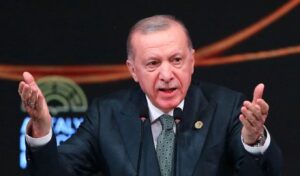
Simultaneously, Turkey remains a significant US ally within NATO and beyond alliance operations, particularly in Syria, Iraq, Somalia, Qatar, Libya, the Caucasus, and as a diplomatic mediator between Moscow and Kiev, in ways that Greece could not – or would not – achieve. President Erdogan has offered the apparent disarmament of Hamas in Gaza – a vital interest of the Israeli government. Turkey, besides diplomatic support for the terrorist organization Hamas, also maintains a long-term alliance with the Muslim Brotherhood, aiming to overthrow moderate Sunni governments throughout the broader Middle East and North Africa.
Unfortunately, differences between Greece and Turkey, the two regional NATO allies, are based on deep mistrust and mutual suspicion, and remain deep, intense, and extremely difficult to resolve under Turkey’s current leadership. The relative calm in Greek-Turkish bilateral relations is a welcome development, especially since tensions can easily flare up if Turkey miscalculates again in Greece’s territorial waters or airspace or launches another “Blue Homeland” campaign or undermines diplomatic efforts to resolve Cyprus’s multilateral issues“.
Reevaluating Greece’s strategic geography and diplomatic credibility
Recently, President Trump called the Turkish president “a very good friend“. Are the cooperative relations between Greece and the US not actually relations of mutual support?
“In the world’s most contentious regions, President Trump tends more toward transactional diplomacy rather than ideological alignment and shared values. This is evident in his personal diplomacy with dictators like Chinese Communist Party General Secretary Xi Jinping and North Korea’s Kim Jong Un, and authoritarian leaders like Russian President Vladimir Putin and Saudi Crown Prince Mohammed bin Salman. The White House views President Erdogan within a realistic diplomacy framework that helps maintain NATO alliance cohesion and advance specific US interests where Ankara has influence. Turkey controls US and NATO access through the Dardanelles and Bosphorus Straits to the Black Sea and hosts American forces, including up to fifty B-61 nuclear bombs, at Incirlik Air Base.
President Erdogan played a decisive role in convincing Hamas to release all remaining living and dead Israeli hostages and helping Washington achieve the Gaza war’s termination, a political goal of deep personal significance for President Trump. US-Greece relations are certainly based on mutual support as a strategic priority of the Trump administration. These latest bilateral developments indicate American reevaluation of Greece’s strategic geography and diplomatic credibility, as well as – but not overly dependent on – shared democratic values. It also reflects Washington’s concern that Turkey remains an unpredictable regional power with external influence far beyond its borders. Washington needs special influence to limit Turkey’s uncooperative foreign policy and secure alternative regional infrastructure if President Erdogan closes access to checkpoints and bases. It’s also important to consider US-Greece cooperation as an issue of allied interests in addressing Chinese “predatory” lending and hostile diplomacy, Russian revisionism, and Iranian-funded terrorism for regional destabilization.
The US supports a regional balance of power in the Eastern Mediterranean by cultivating and strengthening multiple relationships, so Washington’s ties with both Athens and Ankara can be strong, lasting, and mutually beneficial“.