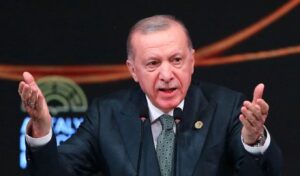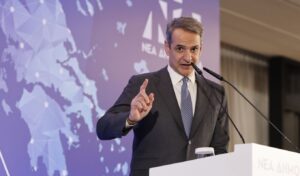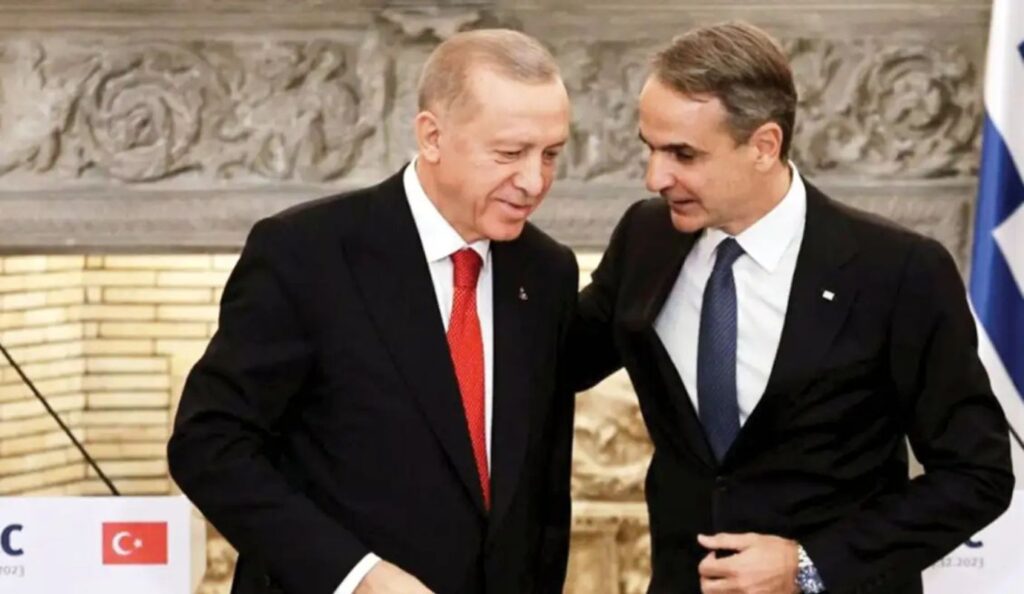
Cautious optimism that issues of exclusive economic zones (EEZ) and continental shelf could be discussed with Turkey was expressed on Wednesday by senior diplomatic sources from the Foreign Ministry, during a meeting with diplomatic correspondents marking the end of the year. “It is extremely important that these issues are resolved at some point. As long as they remain unresolved, all other problems that arise will persist,” they noted characteristically, expressing the belief that “there is room for this to happen,” while simultaneously clarifying that under no circumstances would issues concerning national sovereignty be put up for discussion. The same senior Foreign Ministry sources assured that the meeting between Prime Minister Kyriakos Mitsotakis and Turkish President Recep Tayyip Erdogan will take place in the first quarter of the new year, with the diplomatic offices of both leaders working toward finding a specific date. As they argued, the establishment of the High-Level Cooperation Council two years ago – although it did not help open dialogue on EEZ/continental shelf delimitation – contributed to avoiding major crises, while they characterized Greek-Turkish relations as satisfactory and functional “which allow us to communicate.”
Regarding Kyriakos Mitsotakis’ initiative for a 5X5 dialogue among Mediterranean countries, the same sources mentioned that consultations and approaches by Greece with other countries are taking place, but they are still in an early stage. At the same time, they clarified that contrary to what has been published, “there is no external intervention” in undertaking this initiative, attributing it to the need to “rise above circumstances to determine our own affairs.”
“Turkey will not create problems with the cable” – Marco Rubio coming to Athens
In the briefing to diplomatic correspondents, extensive reference was made to the GSI cable connecting Greece with Cyprus, with diplomatic sources maintaining that the electrical interconnection project “must and will be completed,” noting that it is a standing position of Greece and concerns an issue that has primary value for Cyprus. At the same time, they clarified that “no geopolitical issue exists,” countering claims that Turkey prevented the continuation of the project and assuring that when work continues “Turkey will not create a problem, because the project is protected by International Law. Once the technical-economic issues are resolved, it will proceed normally,” they emphasized characteristically.
The same sources expressed the belief that Greece today has a strong international footprint, citing as examples our relations with Egypt, which are at their best level, or with the US, which are excellent. Regarding the Strategic Dialogue with the US, which was scheduled for early December, it is expected to take place in the first quarter of 2026 with the presence of US Secretary of State Marco Rubio in Athens.
Concerning Libya, according to the same sources, Athens has acquired a functional relationship, which was confirmed by the results of the visit by the President of the House of Representatives, Aguila Saleh, who rejected the Turkish-Libyan memorandum as invalid. For discussions regarding EEZ delimitation, senior diplomatic sources maintained that the convening of the technical committee might be scheduled for early next year, while efforts are simultaneously being made to form a unified government in the North African country that will help in the final resolution of the issue.
Mitsotakis to Israel on Monday
As has been announced and as parapolitika.gr has written, next Monday, Prime Minister Kyriakos Mitsotakis and Foreign Minister Giorgos Gerapetritis are expected to travel to Israel where the trilateral meeting of Israel, Greece, and Cyprus will be held. The Greek delegation will also visit Ramallah to meet with Palestinian Authority President Mahmoud Abbas. The talks are expected to address the implementation of the second phase of the Trump plan and, as senior diplomatic sources mentioned, Athens will participate in supporting humanitarian aid and Gaza reconstruction, not excluding the participation of our country in the International Stabilization Force, after first clarifying the area where it will be deployed, the mode of action, and the countries that will participate in it.