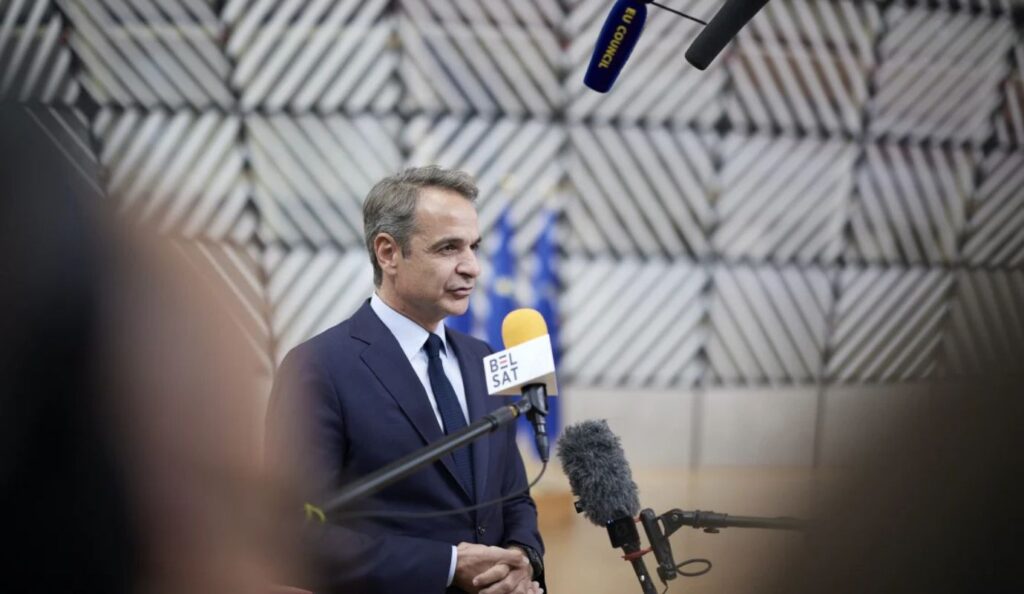
The last EU Summit of 2025, and the final one before Cyprus assumes the rotating six-month EU presidency, begins in a few hours in Brussels. The city is expected to be “besieged” by thousands of farmers who are descending – with tractors and without – to demonstrate against European agricultural policy.
Ukraine will be one of the central – and perhaps most thorny – issues in discussions among the “27.” “At the October European Council, we committed to covering Ukraine’s pressing financing needs for the period 2026-2027, including regarding its military and defense efforts. At our next Summit, we must decide, based on ongoing preparatory work, how to implement this commitment,” writes European Council President António Costa in his letter to the “27” leaders.
Athens stands firmly alongside Kiev and supports continued European financing. Regarding options for Ukraine financing, specifically the granting of a Recovery Loan utilizing frozen Russian assets, Greece, according to government sources, seeks to play a constructive role in this discussion. Consequently, our country is in principle positive about their utilization with the greatest possible legal and fiscal security, the same sources emphasize.
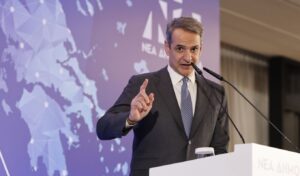
Mitsotakis’ proposal at the EU Summit for Russian assets
In this context, Greece, like other member states, has requested from the Commission an assessment of potential fiscal and broader economic impacts related to the recovery loan and accompanying guarantees. Kyriakos Mitsotakis is expected to propose that, in case of guarantee activation, an escape clause mechanism should be triggered, so that public expenditures arising from potential guarantee repayments would be excluded from expenditure target calculations, as defined within European fiscal rules frameworks.
Support for embattled Ukraine through a loan backed by frozen Russian assets consistently faces Belgium’s refusal, on whose territory and jurisdiction the majority of these assets are located. “As Europeans, we must find a way to provide financial support to Ukraine to ensure it continues to be a functioning state,” is the position expressed by Mr. Mitsotakis, who, while not wanting to publicly pressure Belgium, privately acknowledges this is the optimal solution.
The Summit agenda
The EU Summit will also address the European Union’s Multiannual Financial Framework from 2028 onwards. The Greek government’s basic position is that Competitiveness and Cohesion are first-priority objectives, complementary rather than competitive with each other – essentially communicating vessels – and must be viewed through the same lens with a holistic approach covering the entire Union and businesses of all sizes, obviously including SMEs.
Additionally, the Common Agricultural Policy remains a first-priority objective and must have distinct and adequate resources at European level, something Mr. Mitsotakis is also expected to emphasize, along with Cohesion policy.
“We will have an initial discussion about something that directly concerns us all – the European Union’s next budget, where I will again have the opportunity to present national priorities for maintaining Cohesion and Common Agricultural Policy resources, but also to put on the discussion table the need for a European response, not just a national response, to the housing problem, which is no longer just Greek but European,” stated Kyriakos Mitsotakis before departing for Brussels during his meeting with President of the Republic Kostas Tasoulas. “We announced some additional measures yesterday, but it’s clear that in the agreed financial framework, there must also be European resources to address the housing crisis and support mainly our fellow citizens who are currently renting,” the prime minister emphasized.