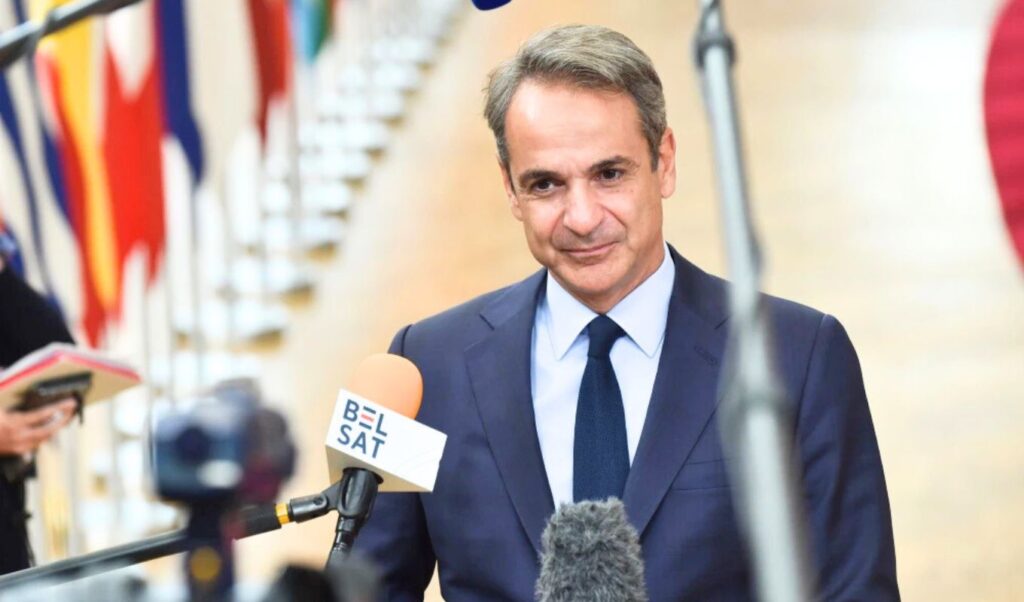
Kyriakos Mitsotakis is traveling to Brussels to participate tonight in the EU-Western Balkans Summit and from tomorrow, Thursday December 18, in the European Council Summit. Government sources state that Greece firmly supports EU enlargement as an investment in regional security and stability. They emphasize that the country maintains its position that this is a process dependent on the performance of each candidate member state. They add that this is a challenging process requiring reforms and compliance with accession prerequisites. Regarding Western Balkan partners, our country’s established position – they add – is that the future of the Western Balkans lies within the EU. Greece steadily supports their accession prospects provided they meet the conditions and prerequisites, particularly good neighborly relations and adherence to binding international agreements.
EU enlargement, Ukraine and budget framework on the table for the “27”
Key discussion topics at the Summit of the 27 are expected to include the latest developments in Ukraine and related peace negotiations, as well as the country’s financing needs for the 2026-2027 period. The agenda also includes the next Multiannual Financial Framework, EU enlargement, geo-economics and competitiveness. Regarding options for financing Ukraine, specifically the provision of a Recovery Loan utilizing frozen Russian assets, Greece seeks to play a constructive role in this discussion. Consequently, our country is generally positive about utilizing these assets with the greatest possible legal and fiscal security.
Within this framework, Greece, like other member states, has requested from the Commission an assessment of potential fiscal and broader economic implications related to the Recovery Loan and its accompanying guarantees. The prime minister will propose that in case of guarantee activation, an escape clause mechanism should be activated, so that public expenditures arising from potential guarantee repayment are excluded from expenditure target calculations, as determined within the framework of European fiscal rules.
Regarding discussions on the next Multiannual Financial Framework, which will focus on the architecture of the next budget and related specific issues, the government’s basic position is that competitiveness and Cohesion are first-priority objectives, complementary rather than competing with each other – essentially communicating vessels that must be viewed through the same lens with a holistic approach, covering the entire Union and businesses of all sizes, obviously including small and medium enterprises. Additionally, a first-priority objective is and must remain the Common Agricultural Policy, for which, like Cohesion, distinct and adequate resources must be provided at the European level.