Good morning! This review couldn’t start any differently than with the news of Greece assuming the Presidency of the Eurogroup for the next 2.5 years. A major national and collective achievement, unthinkable just a few years ago. The election of the Minister of National Economy and Finance, Kyriakos Pierrakakis, is highly honorary for the country and personally for him. It was neither obvious nor easy, especially for a member state that was on the margins of the EU just a few years ago, treated as a “black sheep and weak link,” under surveillance and outside investment grade. Yet, we set ambitious and simultaneously realistic goals, worked with planning and consistency, and achieved the recovery of our economy and our country’s credibility, thanks to the policies we have implemented since 2019. We became an “example and inspiration.” These are not my words, but those of official bodies, organizations, and political figures from larger and more powerful countries. Despite the problems that certainly continue to exist, this is proof that the country is changing course. And it is precisely this change that allows us today to speak with confidence about the next step.
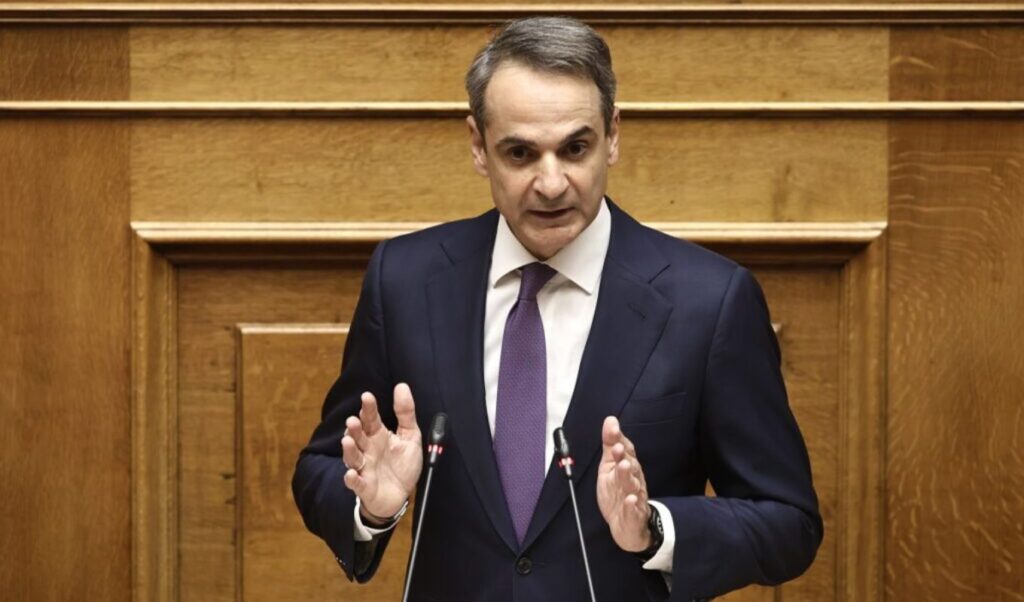
For what we have achieved in 2025 and previous years, as well as for the government’s priorities for next year, I will speak analytically on Tuesday in Parliament, during the discussion of the 2026 budget.
Until then, however, it’s worth highlighting an important decision of ours concerning the victims of Mandra and the Mati tragedy. From now on, families of those who were lost, the injured and burn victims will receive a special pension of 1,700 euros. At the same time, the court compensations awarded to them are protected, without asterisks and exceptions. All their debts to the tax office, insurance funds and Local Government are also written off. The pain is not erased nor is the loss forgotten. However, the state must stand firmly beside those who were tested, with consistency and without pending issues. This is the same institutional care we ensured as a government for the victims of the Tempi accident. It’s important that this legislative initiative was passed with an exceptionally broad majority, which is rarely recorded in parliamentary chronicles.
With the same consistency, we proceed with interventions concerning the chronic justice of the insurance system. One of these concerns the personal difference of the Katrougalos law, an issue that affected thousands of pensioners and prevented them from seeing increases like everyone else. With an amendment passed by Parliament on Wednesday, approximately 670,000 pensioners will start seeing increases from January 1st. In 2026, with the abolition of 50% of the offset, they will receive 50% of the annual increase, while from 2027 they will receive the entire increase, as the offset is completely abolished.
We practically support pensioners with clear solutions, transparency and respect. I remind you of the 250 euros that 1.4 million low-income pensioners, poor elderly and people with disabilities have already received as permanent support, the 2.4% increase from 1/1/2026 for 2.5 million pensioners, and the additional benefit they will have in their disposable income from the new reduction in tax rates.
I now completely change subject and come to the field of farmer mobilizations, where my position is clear: roadblocks that effectively turn against other social groups do not serve farmers’ demands. On the contrary, they undermine them. While occupations of roads and other public infrastructure belonging to everyone are not responsible actions, but moves that harm the country and, of course, local economies in the regions.
I was surprised to learn of the decision by the Nikaia blockade to refuse my invitation for a meeting with a nationwide farmers’ delegation on Monday. Dialogue cannot happen with ultimatums. And solutions emerge only from discussion. Whoever refuses these principles of logic and Democracy bears great responsibility toward the rest of society.
For my part, I repeat that the government’s door remains open to those farmers and livestock breeders who want to meet either with me or with Deputy Prime Minister Kostis Hatzidakis and Minister of Agricultural Development Kostas Tsiaras. Something that farmers and livestock breeders from Crete did recently. At the same time, the government takes into account every fair demand. Thus, it is already studying a package of additional support measures. Always, however, within the framework of the national economy’s capabilities and according to European rules. Measures which will mainly be based on resources from the redistribution of unused amounts that arose from the new framework for agricultural subsidies. It’s obvious, after all, that positive response to the demand of a particular social category could not derail the positive economic course of the entire country. As obvious as it is that no measure outside the framework of the Common Agricultural Policy could stand in Brussels.
Uncompromising, however, remains my position on the rehabilitation of OPEKEPE through its integration into AADE. This is because it is the catalyst that will comprehensively modernize the primary sector in the country. With the result that, on one hand, EU funds will finally strengthen national production, and honest farmers will receive more money every year. It seems, however, that this bold decision of ours has upset quite a few who had become accustomed to operating by exploiting the gaps and dysfunctions of the old system. I’m sorry, but this pathology of 40 years and cross-party responsibilities must stop. No one, after all, wants some opportunists to live at the expense of honest professionals and the State itself. This is something that I think should also concern the opposition, whose stance appears contradictory: while it has long denounced OPEKEPE’s problems, now that the government and the European Commission are proceeding with its reform, it reacts. And, of course, it doesn’t answer what all citizens are asking: does it want the roads closed or free for everyone?
Let me move to housing, an issue that concerns many citizens, mainly young people, but not only. And it certainly doesn’t concern only our country. Almost throughout the Western world, prices in rent and housing market are increasing. In the last 2.5 years, with 43 distinct state interventions, both for acquisition and rental of housing, with a total budget of over 6.7 billion euros and more than 1.5 million beneficiaries, we are trying to provide solutions that relieve a multi-factor problem. In the recent meeting of the Government Committee for Housing Policy, the next goals for 2026 were also determined. We are proceeding with the utilization of the first 10 public properties for affordable housing through social contribution, as well as for the construction of about 1,350 affordable homes in 3 inactive barracks. At the same time, two new programs will be activated for renovations in old houses as well as municipal buildings intended for housing for public employees in municipalities and communities up to 1,500 inhabitants. Another important intervention is the extension of the Relocation program to another 6 regional units, in Drama, Kilkis, Serres, Florina, Pella and Kastoria. The program, I remind you, was created to strengthen border areas and give incentives to people to return to their place, to utilize their property or even to settle in an area they choose. The 10,000 euro support is granted without income criteria.
In the field of daily life and citizens’ rights, the European disability card was put into operation, which allows our disabled fellow citizens to enter the Metro, all mass transport means of Athens, all buses of Thessaloniki and public museums and archaeological sites, without needing all this past torment of showing many different papers at the counter. We saw this in practice too, making a Metro journey with Panagiotis and Petros last Wednesday. A simple procedure, as it should have been from the beginning. This is just one of many interventions we make to help our fellow citizens with disabilities move freely, participate equally in social and economic life and not feel excluded in their daily lives.
In the health sector, prevention and early care remain our constant priority. In the coming days, after signing the relevant Joint Ministerial Decision, SMS sending begins to approximately 8,000 adults with severe obesity, so they can receive free comprehensive nutritional, psychological and therapeutic support. Greece leads many other countries in this matter, implementing the guidelines given this year for the first time by WHO for addressing obesity, a modern scourge with millions of victims each year. This specific action is part of the large “I Prevent” program running by the Ministry of Health since 2022. Very soon, free screening for prevention of kidney dysfunction also begins and targets early detection of kidney diseases in high-risk citizens. Today, Greece contributes with its experience to shaping European priorities for health checks, within the framework of the EU’s Cardiovascular Health Plan, while several countries have already expressed interest in adopting elements of the model we implement.
Something else concerning public health. From now on, doctors as well as each of us, will have at our disposal the Personal Citizen Health Assistant in the MyHealthApp application. This is a digital assistant based on artificial intelligence, which gathers basic elements of our medical file and makes them easily accessible. With a simple question, the user can find information such as vaccination history, diagnoses, medications, test results, as well as data for minor or protected family members. At the same time, the application provides information about emergency hospitals and open pharmacies, while the citizen’s file is constantly updated with new material. Additionally, health professionals will be able to quickly and safely view their patients’ history, improving the speed and quality of diagnosis. This is another step toward a modern, digital and more effective health system, with the citizen at the center.
One of the most impressive, in terms of participation, was the fifth “Rebrain Greece” event organized by the Ministry of Labor in New York last Sunday. Over 1,500 Greeks from the United States and Canada attended. The event’s goal was to highlight the significant professional opportunities that now exist in our country and what today’s Greece is, how much it has changed from the crisis years when many of our compatriots were forced to leave. The event included 35 business groups seeking specialized executives and operating in cutting-edge sectors, from construction and artificial intelligence to energy, tourism and pharmaceutical industry. Besides professional opportunities, there are also tax incentives for them to return and build the next chapter of their lives in Greece.
I come to transport, as after Athens, 24-hour operation of Mass Transport Means is extended to Thessaloniki in December for one weekend – on the 20th or 27th of the month. Thus, young people’s – and not only – return from evening outings can be done safely with Mass Transport Means. An important service for protecting society that becomes reality with the contribution of transport workers and we owe them recognition. Additionally, so-called “smart” cameras are put into operation on the city’s buses to digitally detect violations in bus lanes and dangerous driving behaviors.
I move to the Education field to highlight that the extroversion of Greek higher education is progressing rapidly. I don’t know how well known it is that 8,015 foreign undergraduate and postgraduate students are currently studying at the National and Kapodistrian University of Athens and there are 240 doctoral candidates, also foreign. The extroversion and international orientation of the largest Greek university, which already counts 866 cooperation agreements with Higher Education Institutions in 58 countries, is expanding with 3 new undergraduate programs in English (Philosophy, Medicine and Pharmacy) and an additional 33 postgraduate programs expected to attract even more foreign students. I will return however with a fuller report on the results of extroversion in all public universities in recent years.
Let me add to the Education section the operation of 13 new Experimental Schools in the coming school years (2026-2027 and 2027-2028). Only three of these will be located in Attica – in Chalandri, Tavros and Nea Ionia – while the rest will operate in the Region, in cities like Alexandroupolis, Florina, Corfu, Arta, Zakynthos and Karditsa. To date, the Experimental Schools network numbers 120 school units nationwide and with their increase, more students will have access to innovative educational environments, to cultivate talents and skills to meet the increased demands of the era and the needs of the new generation.
I close with positive news about Tatoi. Within the week, the Ministry of Culture announced the public international tender for granting use of the former royal estate for at least 65 years. Of the 40 buildings on the estate, 24 are granted for development, with uses including hospitality, catering and agri-food activities, always with the condition of mild development and respect for the natural and cultural environment. A decades-old pending issue is closing.
And with this I also close today’s review. Whatever you do, have a good time. And as the holiday schedule has begun, I wish good strength to the workers. Goodbye!