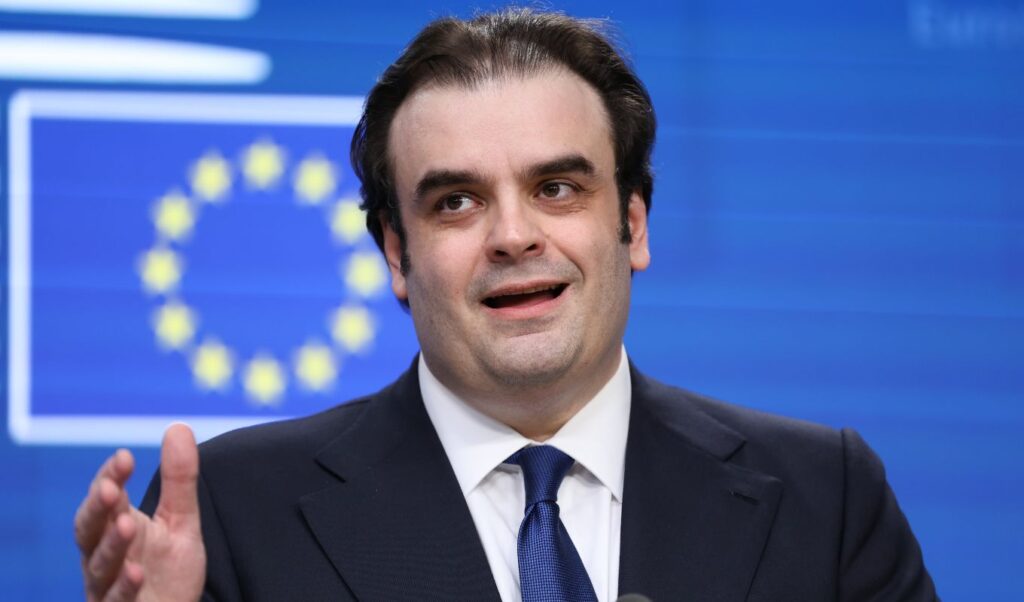
The election of Greek Finance Minister Kyriakos Pierrakakis to the presidency of the Eurogroup represents a very interesting development in the European political landscape. Kyriakos Pierrakakis’s victory is the result of a combination of diplomatic support, a credible economic profile, and the broader need of the Eurozone for leadership that can manage the increased geopolitical pressures caused by the war in Ukraine.
Kyriakos Pierrakakis new Eurogroup president: What it means for Europe and Greece
More specifically, Kyriakos Pierrakakis’s name gathered positive impressions early on in several EU capitals. The main reasons behind this are that Greece, after a long period of economic crisis, now appears as a stable economy within the Eurozone, with remarkable performance and consistent fiscal policy. This reinforces the narrative that the Greek Finance Minister can lead the Eurogroup without prejudice.
At the same time, indications that Belgium might withdraw its own candidate, Finance Minister Vincent Van Peteghem, created a framework where Pierrakakis’s election seemed increasingly likely.
Another factor that decisively influenced the electoral process was the Belgian government’s uncompromising stance on the issue of using “frozen“ Russian assets to finance Ukraine. Belgium, which hosts the custodian Euroclear where a large part of the frozen Russian resources are located, has repeatedly stated that their disposal or utilization involves high legal and financial risk, as Belgian authorities fear potential lawsuits from Russia as well as destabilization of international confidence in the banking system.
This position, while understandable from a technical perspective, has caused dissatisfaction among several EU governments that desire more aggressive economic support for Ukraine. Thus, at a time when Europe seeks unity, Belgium’s candidacy seemed to be undermined by its own national policy line. Finally, decisive was also the support for Mr. Pierrakakis from member states with special weight in EU economic policy, such as Germany, which saw the Greek candidacy as a factor of unity and synthesis at a time when the Eurozone is being tested by the consequences of the war in Ukraine.
Pierrakakis’s challenges as new president
Taking over the leadership of the Eurogroup at this particular critical juncture is not simply an administrative role, but a strategic one. The new president will be called upon to coordinate European economic policies at a time when the utilization of Russian assets is being extensively discussed, the creation of a long-term financing mechanism for Ukraine is being promoted, and the Eurozone is seeking ways of economic autonomy from external pressures. In all the above, Pierrakakis’s presence can function as a factor of stability and smoothing of differences between member states, as Greece, being a country that does not face direct banking risk from the use of Russian capital, can promote more neutral and balanced solutions.