The electrical interconnection cable project between Greece and Cyprus (Great Sea Interconnector) enters a new round of discussions following the removal of Cyprus Energy Minister George Papanastasiou in Friday’s cabinet reshuffle announced by Cypriot President Nicos Christodoulides, while the cable project’s opponent, Finance Minister Makis Keravnos, remains in government.
In early October, when the crisis in Greek-Cypriot relations emerged, many analysts believed the project’s fate would depend on which minister would ultimately prevail in the upcoming Christodoulides government reshuffle. However, Keravnos’s retention in government – who had raised sustainability concerns about the project – cannot be interpreted as the Cypriot government’s complete adoption of his positions. This is because the assumption of the Energy Ministry by Democratic Party deputy president Michalis Damianou provides indications that the project will continue, as the new Energy Minister has supported the project’s necessity and, according to sources, fully backs the initiative.
Syrigou tells parapolitika.gr about the cable: “Cyprus’s new Energy Minister supports the necessity of completing the electrical interconnection”
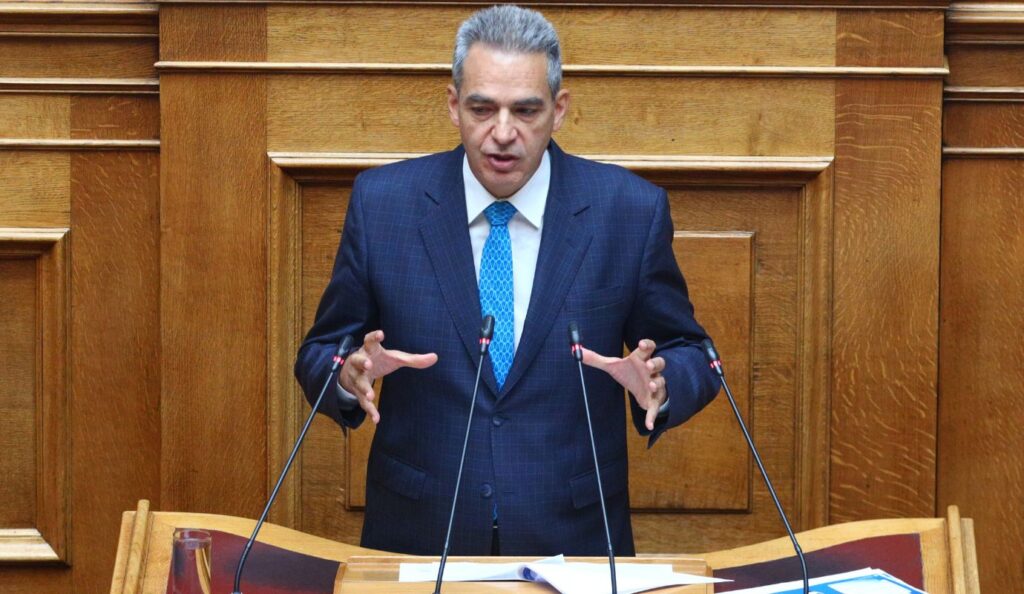
Professor of International Relations Angelos Syrigou, speaking to parapolitika.gr, expressed his belief that the leadership change in Cyprus’s Energy Ministry was made so Christodoulides could enable new ministers to fully prepare their portfolios ahead of Cyprus assuming the EU presidency in January 2026. “Cyprus’s tactics regarding the cable are not changing,” Syrigou emphasized, assuring that “Cyprus’s new Energy Minister supports the necessity of completing the Crete-Cyprus electrical interconnection. However, he may need some time to be briefed on the project’s details.” According to Syrigou, Cyprus’s assumption of the European Presidency stands favorably regarding Turkey’s reactions: “The Turks will be much more exposed if they interfere with Cyprus’s EU Presidency,” he notes characteristically.
Commission’s stance “key” for the cable project
The project, however, continues to be complicated by new parameters. One strong parameter is the stance the Commission will ultimately maintain, as a month later, Energy Commissioner Dan Jørgensen rejected the need for updating economic-technical parameters, as expressed by Kyriakos Mitsotakis and Nicos Christodoulides and discussed at the Brussels meeting between Greece and Cyprus energy ministers. It’s obvious that for the European Commission, the project constitutes a “strategic priority,” as European officials have repeatedly assured, aiming for project completion. However, the Greek and Cypriot governments insist on project re-evaluation and seek time to integrate new investors into construction and find the appropriate momentum to address a potential new Turkish reaction in the project’s construction field. The latter factor causes the most doubts in Cyprus regarding GSI implementation, which aims for American support to clarify the geopolitical obstacles Ankara poses.
Today, Michalis Damianou assumes duties as the new Energy Minister and is expected to travel to Brussels on December 15, where he and his counterpart Stavros Papastavrou will meet Energy Commissioner Dan Jørgensen. The results of this meeting are expected to determine the project’s fate.