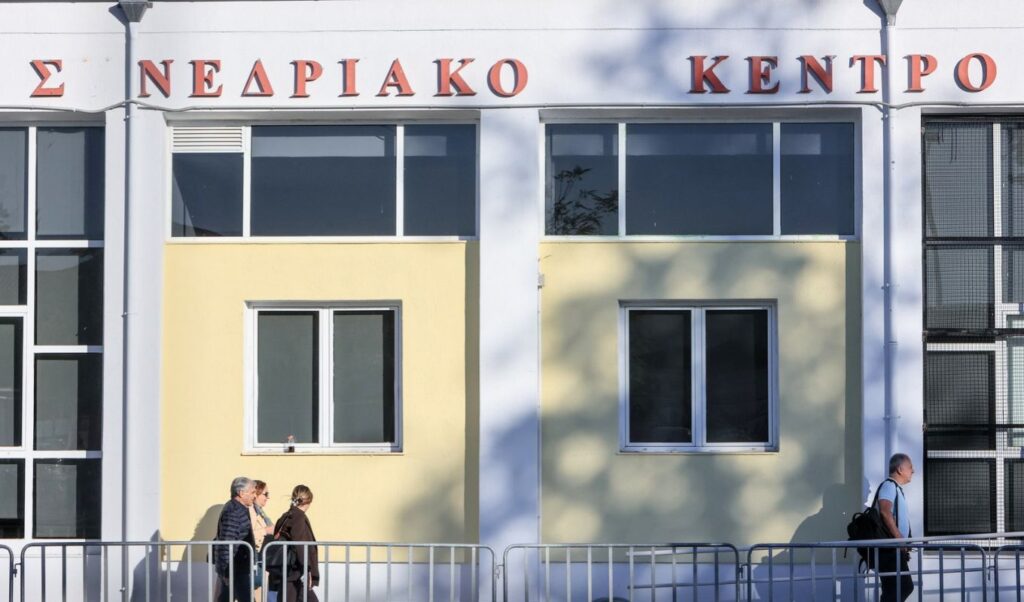
The 36th session of the trial for the Tempi rail disaster concluded in an emotionally charged atmosphere on Monday (05/10) in Larissa. The session featured harrowing testimonies and audio recordings from the case file, while tensions flared between lawyers representing the victims’ families. According to onlarissa.gr, the court heard testimony from Despoina Gkanidou, mother of Giorgos Papazoglou, Aikaterini Malioglou, mother of Nikitas Karatheodorou, and Eleni Vasara, mother of Agapi — all of whom described their final communications with their children, the agonizing hours following the collision, and their desperate search through hospitals. The fireball phenomenon, forensic examinations, the state of the railway network, and the management of the disaster site after the collision were among the key questions raised during the testimonies.
Read also: Sharp response over the fireball phenomenon: From xylene to hydrazine and “all-purpose projectiles”
Tempi trial: Mother of Giorgos Papazoglou delivers devastating testimony — “I am haunted by what my child went through”
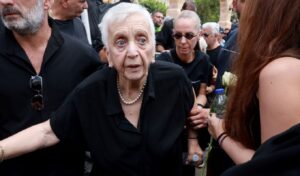
A deeply somber atmosphere pervaded the courtroom during the testimonies of the mothers who lost their children in the Tempi rail disaster. The testimony of Despoina Gkanidou stood out as she spoke about her son, Giorgos Papazoglou — a calm and gentle young man who loved music and was close to completing his degree, with dreams of pursuing research and an academic career.
According to the local outlet, she recalled the last message Giorgos sent her as the train departed Athens: “We’re off.” She replied with “Safe travels.” — “Safe travels…” she repeated in court, her voice breaking. She testified that her son had left his seat to get water from the snack bar. “That water cost him his life,” she said, noting that the official cause of death was recorded as carbonization.
She described the agonizing hours that followed — the unanswered phone calls, the family’s rushed journey to Larissa. Around 2 a.m., she recounted, they passed the site of the collision, where the fire was still burning.
Particularly distressing was her account of discovering photographs of her son’s remains in the case file some 15 months later. “What I saw was beyond any horror,” she testified.
Despoina Gkanidou speaks of “criminal cover-up” at the crash site
Ms. Gkanidou raised a series of questions about how the disaster site was managed, alleging a “criminal backfilling operation” and claiming that soil removal and site works began before the investigation was complete. She also called for a full investigation into the causes of the fireball and the fire, as well as the identification of human remains that have since been discovered.
“We don’t know how much my child suffered. It torments me, it haunts me — what my child experienced in those final moments,” she said.
Addressing the state of the railway before the collision, she argued that the problems were well known and that safety systems were not functioning. Of then-Transport Minister Kostas Karamanlis, she said: “He kept telling us the railway was safe. We believed him — and we lost our child.”
Her testimony concluded with a direct appeal to the court to conduct a full investigation into the causes of the tragedy. “I have faith in Greek justice. You are our only hope for the soul of my little Giorgos to find peace — and for us to find some too,” she said.
Her words drew applause from those present in the courtroom, prompting the presiding judge to intervene: “What are we applauding — a mother tearing her heart out?” From the families’ side came the reply: “A hero who is doing the state’s job for it.“
Aikaterini Malioglou: “Justice would be having him back”
Aikaterini Malioglou spoke about her son, Nikitas Karatheodorou, describing life before and after the tragedy. “My son was the joy of our home. He had so many plans for the future,” she said.
She testified that the family considered the train a safe means of transport and had in fact encouraged Nikitas to use it. On the night of February 28, they had been exchanging messages due to a delay. One of the last messages she sent him read: “Be patient, sweetheart — come home safe.”
After news of the collision broke, the desperate search began. “I kept calling Nikitas and his phone was dead. We didn’t know what to believe,” she said. Nikitas was not at any hospital, nor did his name appear on any survivor list. The family was later informed that he had been completely carbonized.
Ms. Malioglou raised questions about the functioning of safety systems, the stationmaster’s experience, and the conditions under which the trains were operating. “Two trains were on the same track for 12 minutes. They left the fate of hundreds of people to chance,” she said.
She also expressed concerns about the forensic examinations and the management of the crash site, questioning whether the removal of soil may have compromised the search for evidence.
“We demand a full and impartial verdict from this court. No one should be left unaccountable. We owe that to our Nikitas and to all the other victims,” she said, calling for a complete investigation into the causes of the tragedy. “Justice would be having him back. We demand justice. We don’t want there to be another Tempi,” she added.
Eleni Vasara: “Agapi was murdered in the premeditated crime of Tempi”
With the words “Agapi was murdered in the premeditated crime of Tempi,” Eleni Vasara described her daughter’s death to the court. She spoke of her frantic attempts to reach her after the collision and of calling emergency services, from whom she learned that an accident had occurred outside Larissa.
Initially, the family held out hope that Agapi had been injured and was receiving treatment at a hospital. But when her name failed to appear on any survivor list, hope gave way to certainty.
Ms. Vasara described the scenes at Larissa University Hospital as “chaotic” and criticized the lack of information provided to families. She testified that the family had been desperately seeking answers about the circumstances of Agapi’s death and whether she had survived for any period of time after the collision.
She also raised questions about the forensic process, alleging gaps and contradictions in her daughter’s post-mortem report. Particularly pointed was her criticism of how the disaster site was handled. “The state and those responsible worked seamlessly in those critical hours — to alter the scene and conceal evidence,” she told the court.
Tempi trial: Audio recordings from the case file played in court
A separate and significant part of the session was the testimony of Giorgos Tsaklidis, Agapi’s father. During his testimony, audio recordings of conversations between stationmasters and train drivers — included in the case file — were played aloud in the courtroom.
Mr. Tsaklidis argued that the recordings document the conditions that prevailed on the rail network before the collision. He referred to communication failures, the functioning of safety systems, and the conditions under which the trains were operating.
“We later discovered that the signals had not been working for years. There was no remote control system. We were dealing with an extremely dangerous situation,” he said.
He also raised questions about the forensic examinations, the fireball phenomenon, and the removal of soil from the crash site, arguing that critical evidence may have been lost as a result.
Tensions flare over silicone oils and the Leptokaria freight train video
According to the same source, the session was not without conflict among the lawyers representing the victims’ families. Tensions escalated during the cross-examination of Lysimachos Papazoglou by Leonidas Koumbouras, lawyer for the Plakias family, regarding silicone oils and footage of a freight train from Leptokaria. The exchange prompted an intervention from Antonis Psaropoulos, a lawyer representing other victims’ families and himself the father of a victim. “From this point on, families will be pitted against each other in court — since that’s apparently what some people want,” he said, temporarily raising tensions in the courtroom.
The 36th session concluded in an exceptionally charged atmosphere, with the testimonies of the victims’ relatives bringing back into sharp focus the unanswered questions surrounding the circumstances of the collision, the management of the crash site, and the causes of the fire.