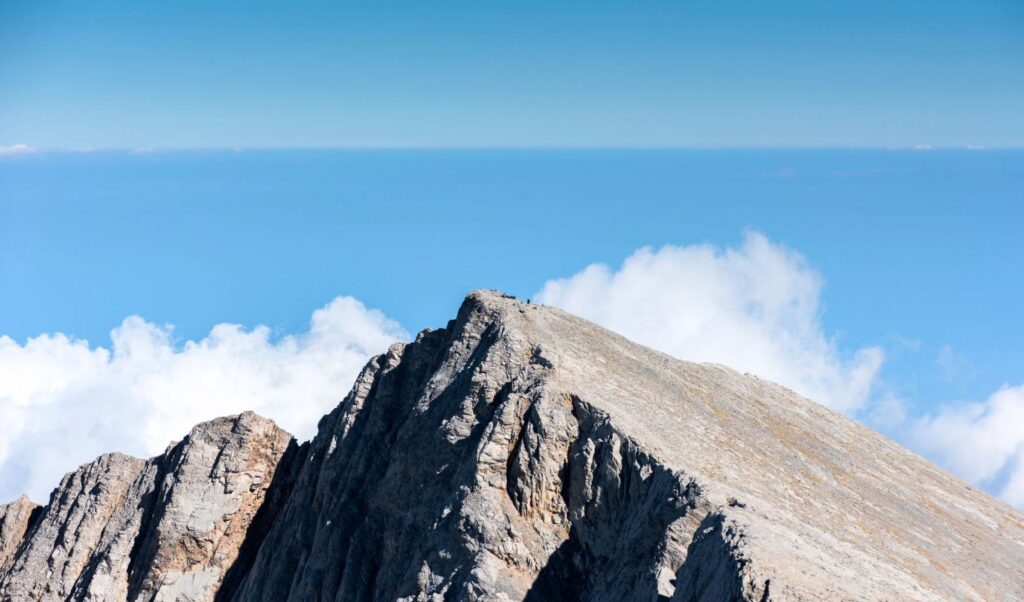
The international recognition awarded to Mount Olympus doesn’t simply close a chapter — it opens a demanding new era of works and stricter management. Following the inscription of the broader Olympus region on the UNESCO World Heritage List, Greece’s Ministry of Environment and Energy and the Natural Environment and Climate Change Agency (NECCA) are launching eight targeted interventions for the period 2026–2029, with a combined budget approaching €10.68 million. The plan addresses safe access, wildfire protection, and the preservation of sensitive ecosystems across a mountain range that already holds the status of National Park, Natura 2000 site, and UNESCO Biosphere Reserve. For the Pieria region — which receives nearly 500,000 visitors annually but has a tourist season of just 90 to 120 days — the challenge is twofold: extending the activity season without exceeding the mountain’s ecological carrying capacity. Seven of the thematic projects will proceed under a joint programming agreement between the Ministry of Environment and NECCA, while the road upgrade will also involve the Region of Central Macedonia.
A 12-year journey
The process began in 2014, when Olympus was added to the UNESCO Tentative List. In July 2021, a three-member committee was formed by the Ministry of Environment, the Ministry of Culture, and NECCA, and in October 2022 a preliminary nomination file was submitted with NECCA funding. The final dossier followed in January 2025, with on-site evaluations conducted by IUCN and ICOMOS in September and supplementary information submitted in February 2026. Although the June evaluation recommended that the file be referred back for clarifications, Greece submitted its response by 3 July, and the nomination was approved at the 48th Session of the World Heritage Committee, held in Busan, South Korea, from 19 to 29 July. The inscription was granted under criteria vi and x — recognising both the site’s mythological and cultural heritage and the biodiversity of a mountain that hosts, according to the nomination documentation, 25–28% of all Greek flora. The recognition comes with concrete obligations: the establishment of a coordinating committee to implement the Management Plan, approval of a Special Environmental Study and a Special Urban Plan for the coastal areas of Pieria, implementation of a visitor management system, and a memorandum of understanding with the Ministry of National Defence regarding the firing range and its protection zone.
Access and water infrastructure
The largest single intervention is the upgrade of the provincial road from Litochoro to Prionia — a 17.4-kilometre stretch that serves as the main artery to Prionia, the E4 trail, and the Enipeas Gorge. The budget is estimated at €5 million, pending a preliminary study by the Region of Central Macedonia. Works will include road surface maintenance, stormwater drainage, technical works, slope and vegetation clearance, new signage, and landslide protection. The second major axis, valued at approximately €2.1 million excluding VAT for the period 2027–2029, covers 14 primary and secondary mountaineering trails listed on the National Trail Registry, with a combined length exceeding 100 kilometres. Works will include clearing and levelling of the trail surface to a minimum width of 1.25 metres, installation of bridges, drainage channels and dry-stone retaining walls, full signage, stone steps, rest shelters, viewpoints, and infrastructure for people with disabilities. A further €2.2 million excluding VAT is allocated for eight new water tanks and the maintenance of one existing tank in 2028–2029. Constructed from reinforced concrete with capacities ranging from 50 to 1,000 cubic metres, the tanks will be sited at Stefani, Strangos, Kolokythies, Melitzani, Spilio Agapito, Livadaki, Bara, and Koromilia, fed by natural springs or snowmelt harvesting to support fire suppression and mountain refuge water supply.
Monitoring and wildfire protection
Six entry checkpoint posts are planned for 2028, at a budget of €484,000 excluding VAT. Two structures of 50 square metres each will be built at Myloi and Agia Triada, and four smaller 20-square-metre posts at Petra, Kokkinopilo, Agios Konstantinos, and Christakis. All will be built from stone and timber, powered by solar panels, and will function as registration, information, and supervision points, complete with full architectural, structural, electromechanical, and environmental studies. From 2027, a real-time visitor monitoring system valued at €484,000 excluding VAT will be installed at the checkpoint posts and other high-traffic locations. The passive mobile device detection technology will record numbers only, with no personal data collected. Each monitoring point will be equipped with solar panels, batteries with a minimum 72-hour autonomy, 4G connectivity via multiple network providers, and satellite internet — providing data to support wildfire management and extreme weather response, in full compliance with GDPR. The wildfire protection component also includes three two-storey fire lookout towers, budgeted at €138,000 excluding VAT, to be erected at Kriovrysi in Larissa, Palia Leptokarya, and Dion in Pieria. These towers will feature metal frames with timber cladding, heights of 3 to 9 metres, 360-degree observation cabins, and provisions for camera and antenna installation, with solar power supply, lightning protection, and earthing systems. Their placement has been determined based on altitude, smoke visibility, and fire service access routes.
Biodiversity
Two specialised projects round out the package. A budget of €180,000 excluding VAT will fund the creation in 2028 of two feeding stations and two observation hides of 12.25 square metres each — one at Megalakka at 1,420 metres elevation and one at Krevátia at 972 metres — dedicated to the golden eagle and other large raptors. The installations will include perimeter fencing of 290–325 metres, perching structures, and iron gates, supporting a species listed under Annex I of Directive 2009/147/EC that no longer breeds on Olympus and is threatened by illegal hunting, poisoned bait, and the decline of livestock farming. A forestry study will precede construction, followed by ongoing monitoring. A further €97,000 excluding VAT in 2028 will be directed toward water habitat restoration for the Macedonian newt (Triturus macedonicus), a species listed under Annex II of Directive 92/43/EEC within Special Areas of Conservation. At the Karoutia spring at 747 metres, a small pond will be created; at Agioi Apostoloi at 377 metres, vegetation will be cleared; and at Bara at 700 metres, a seasonal pond will be protected with timber fencing. Predatory fish will be removed to restore the species’ unique breeding sites on the mountain’s northern slopes.
Stavros Papastaurou, Minister of Environment and Energy: “Pride, but also greater responsibility”
Minister of Environment and Energy Stavros Papastaurou, welcoming the inscription of the mythical Mount Olympus on the UNESCO World Cultural and Natural Heritage List, made the following statement to Parapolitika: “The inscription of Olympus on the UNESCO World Cultural and Natural Heritage List is a major national achievement. It is an international recognition of the unique value of Olympus — a place that stands as a symbol of our country’s history, culture, and nature. This recognition fills us with pride, but at the same time it places upon us an even greater responsibility to protect and promote this unique national treasure. For this reason, we are moving immediately to implement works with a total budget of over €10 million, which will strengthen the protection of the natural environment, support the sustainable development of the region, and ensure that Olympus is handed down to future generations as it deserves: alive, protected, and truly one of a kind.”
Published in Parapolitika