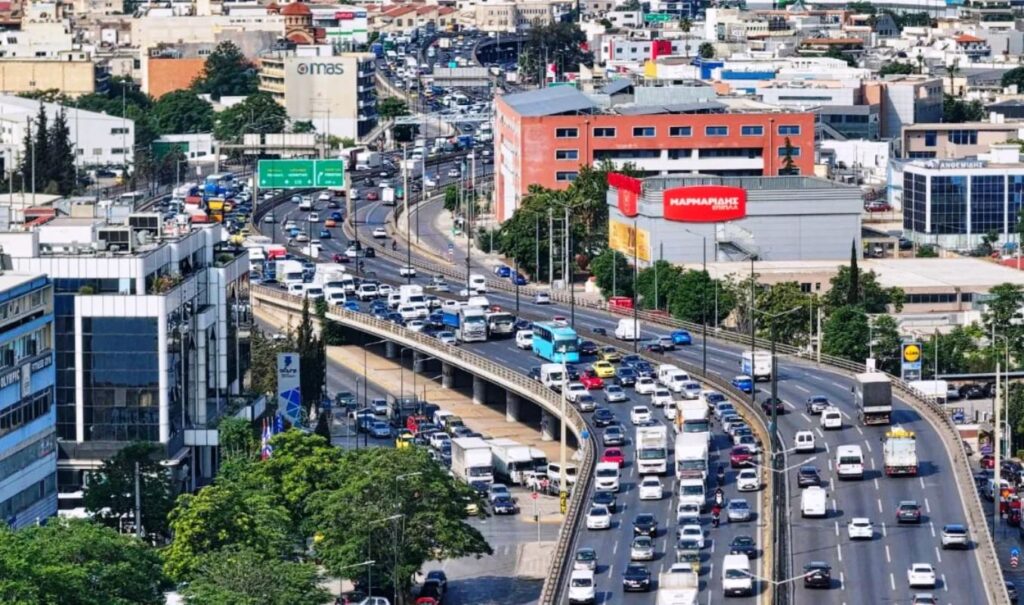
A new era in traffic management is on the horizon with Traffic Commander, the new integrated operational system developed by the Hellenic Police that is set to become fully operational in September. Using cameras, drones, sensors, geospatial data and artificial intelligence applications, the system will provide real-time traffic monitoring and enable immediate intervention at congestion points. According to Minister of Citizen Protection Michalis Chrysochoidis, the goal is to improve traffic flow in the Attica region by 25% to 30%, significantly reducing the daily ordeal faced by drivers.
Traffic Commander: The changes it will bring to road traffic
The key changes that Traffic Commander will introduce include, among others, the following:
– It will provide a unified real-time operational picture, traffic situation analysis and coordination support for available units.
– It will collect and consolidate information from dozens of sources, including traffic cameras, drones, traffic data, road incidents, roadworks, weather conditions, public transport and operational reports — creating a unified and continuously updated picture of the situation, correlating data across space and time to assess the severity, extent and development of identified problems.
– Traffic Commander will maintain a historical record and analyse road network behaviour in order to identify recurring congestion patterns, high-risk locations and areas requiring prioritised intervention.
– It will generate automated daily, weekly and monthly operational reports, complete with statistics, geographic analysis, trends and performance indicators — supporting operational planning, measure evaluation and better allocation of personnel and resources.
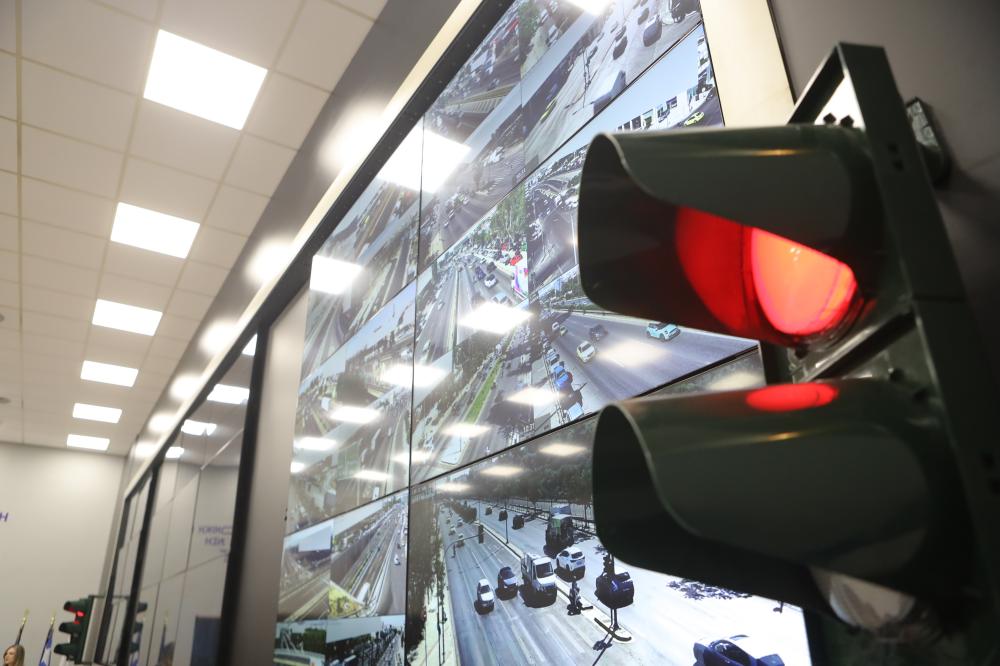
– The system has been designed to continuously integrate new capabilities, such as image analysis from cameras and drones, predictive traffic analysis, operational scenario simulation, decision-making support, resource deployment optimisation and AI applications that assist operators.
– The system will support operational decision-making by giving operators the ability to link each traffic problem to specific actions, monitor how an intervention unfolds and evaluate its outcome.
– Information is used operationally, not merely for informational purposes. Based on the picture the system generates, the Operations Centre can immediately decide which unit will respond, from which location and by which means, ensuring the fastest possible intervention.
Chrysochoidis: From September, a 25% to 30% improvement in traffic flow will be achievable
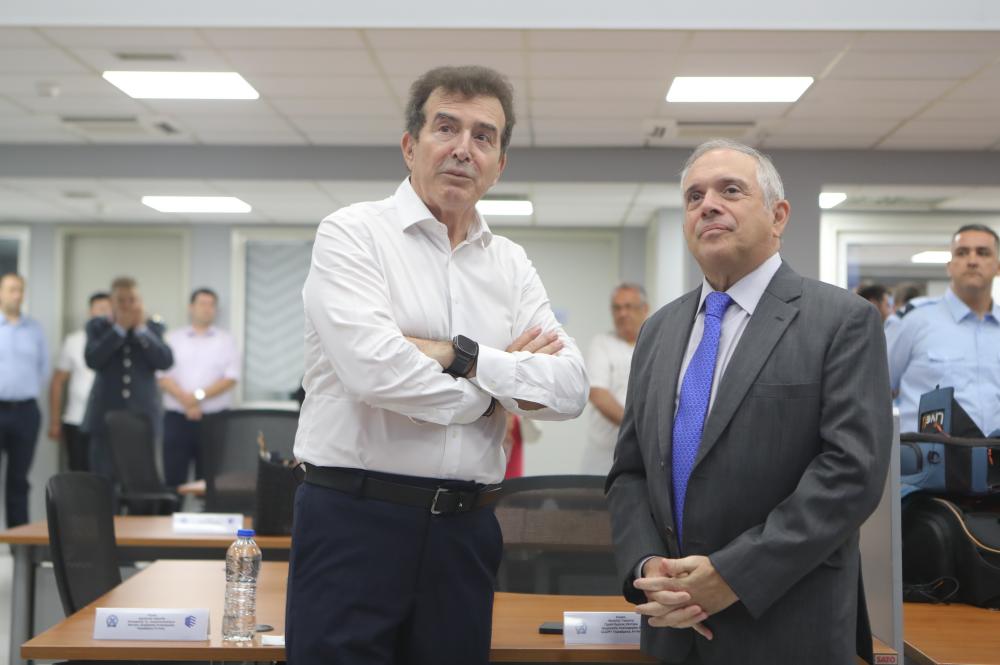
At the presentation of Traffic Commander, Minister of Citizen Protection Michalis Chrysochoidis stressed that the new system represents yet another substantive intervention by the Hellenic Police to improve citizens’ daily lives. He described it as “an operational effort with a strong social impact,” placing it within the broader philosophy of community policing, which has now emerged as a core priority for the Greek Police. The goal, he said, is for the Police to stand alongside citizens every day and intervene in problems that directly affect their lives — from tackling domestic violence and protecting victims to enhancing road safety.
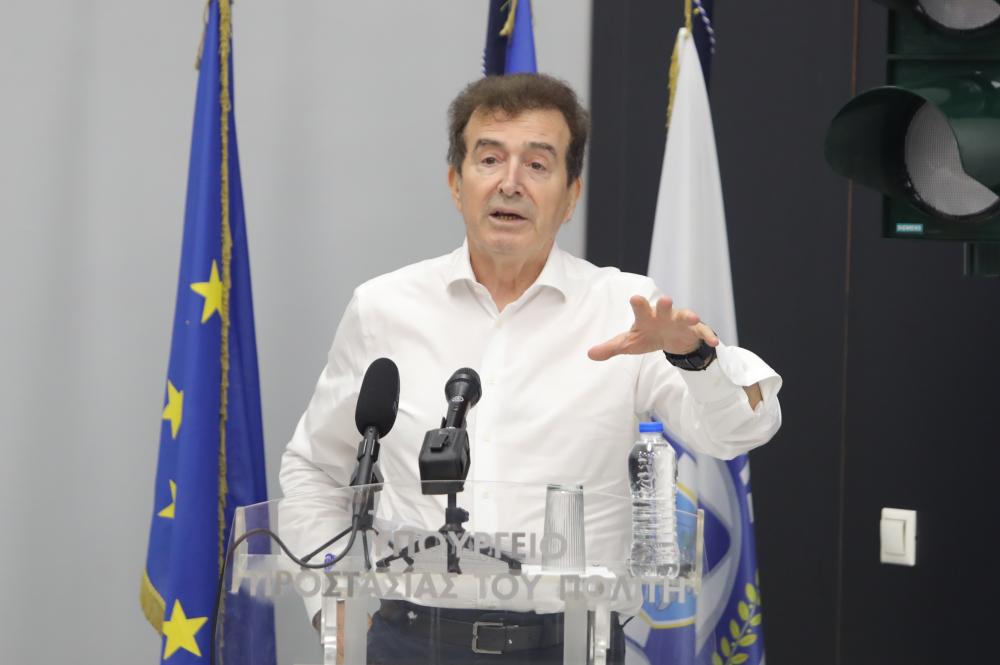
The Minister made particular reference to the results of intensive breathalyser checks. According to the figures he presented, a total of 1,572,000 checks were carried out nationwide during the first half of 2026, compared to approximately 750,000 during the same period in 2025. Of those checks, 13,613 drivers were found to have exceeded the legal alcohol limit, a rate of 0.86%. By contrast, in the first half of 2025, approximately 16,000 drivers had been found over the limit, representing a rate of 2.11%. Mr. Chrysochoidis linked this significant reduction to a change in driver behaviour and to the social impact of systematic policing.
“This is an achievement — it is a victory. And it is a victory for our society, for our citizens. It is a victory for public safety. That is why we have fewer accidents, fewer hospital transfers, and we are safer,” he stressed, noting that the improvement in driver behaviour is a prime example of how policing can have a direct and measurable social impact.
Referring specifically to Traffic Commander, the Minister explained that the new system combines ground-level policing — with patrol cars and motorcycles — aerial surveillance and the use of modern technological tools, so as to achieve more effective traffic management. He noted that the Hellenic Police now possesses state-of-the-art drones, acquired through a donation from the Union of Greek Shipowners. He thanked the Union for its contribution to enhancing the operational capabilities of the Greek Police, emphasising that the combination of ground forces, aerial assets and new technologies creates a comprehensive framework for active traffic management.
“The new element is that we can use technology for the benefit of society, for the benefit of our lives,” said Mr. Chrysochoidis, noting that the system is primarily preventive in nature and aims to make everyday life easier for citizens. He also underlined that traffic congestion is currently, after the cost-of-living crisis, the most significant problem facing the Attica basin, requiring the cooperation of all responsible authorities in order to achieve the best possible traffic management within the existing infrastructure.
The Minister estimated that, following the full deployment of Traffic Commander from September and with the return to normal daily rhythms in Attica, a 25% to 30% improvement in traffic flow will be achievable. Such a development, he noted, is expected to significantly reduce the hardship experienced by drivers and contribute to faster, more coordinated interventions at problem locations.
He also announced that the system will produce monthly evaluation reports, through which the effectiveness of interventions will be recorded and areas in need of improvement will be identified. “Where there is improvement, we push further; where there is no improvement, we correct course — so that we keep getting better,” he emphasised.
Mr. Chrysochoidis further noted that Traffic Commander draws on and utilises data from 24 different sources, which are set to be progressively expanded so as to continuously enhance the system’s operational effectiveness. In closing, he thanked the General Police Director of Attica and all the officers who participated in the design and implementation of the project, underlining that Traffic Commander was developed entirely by Hellenic Police personnel, with no external development contractors.
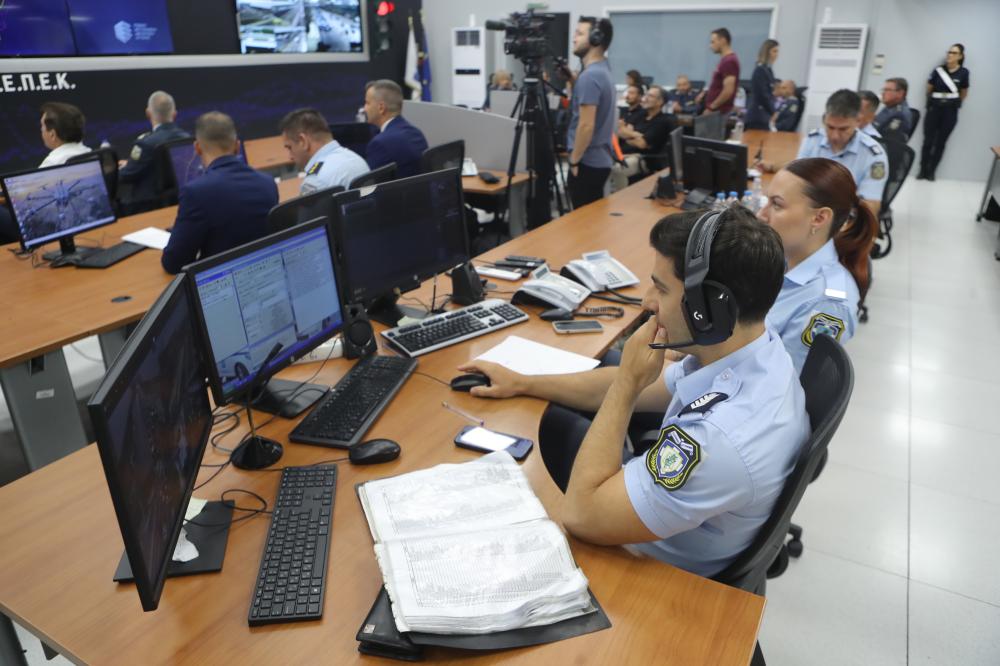
The Traffic Commander system
Traffic Commander is the Hellenic Police’s new integrated operational system for traffic management in Attica, providing a unified real-time operational picture, traffic situation analysis and coordination support for available units. The system was developed entirely by scientific personnel of the Hellenic Police, without external contractors and without any additional development cost, leveraging modern software technologies, geospatial analysis and operational management tools. It was specifically designed to support K.O.M.V.O.S. — the new operational team of the Attica Traffic Directorate — with the aim of transforming traffic management from passive monitoring into active and dynamic operational control.
How the new system works
Traffic Commander collects and consolidates information from dozens of sources, including traffic cameras, drones, traffic data, road incidents, roadworks, weather conditions, public transport and operational reports — creating a unified and continuously updated picture of the situation, correlating data across space and time to assess the severity, extent and development of identified problems. As part of the integration between the Operations Control Room (TH.EP.E.K.) and the Attica Region’s Traffic Management Centre, data from traffic sensors and cameras is utilised, while direct collaboration is enabled for dynamic signal timing adjustments (“green wave”), aimed at achieving faster decongestion of the road network.
The new system maintains a historical record and analyses road network behaviour in order to identify recurring congestion patterns, high-risk locations and areas requiring prioritised intervention. It generates automated daily, weekly and monthly operational reports, complete with statistics, geographic analysis, trends and performance indicators — supporting operational planning, measure evaluation and better allocation of personnel and resources.
Its architecture is scalable, allowing the gradual integration of new capabilities such as image analysis from cameras and drones, predictive traffic analysis, operational scenario simulation, decision-making support, resource deployment optimisation and AI applications that assist operators. The system supports operational decision-making by giving operators the ability to link each traffic problem to specific actions, monitor how an intervention unfolds and evaluate its outcome.
Information is used operationally, not merely for informational purposes. Based on the picture the system generates, the Operations Centre can immediately decide which unit will respond, from which location and by which means, ensuring the fastest possible intervention.
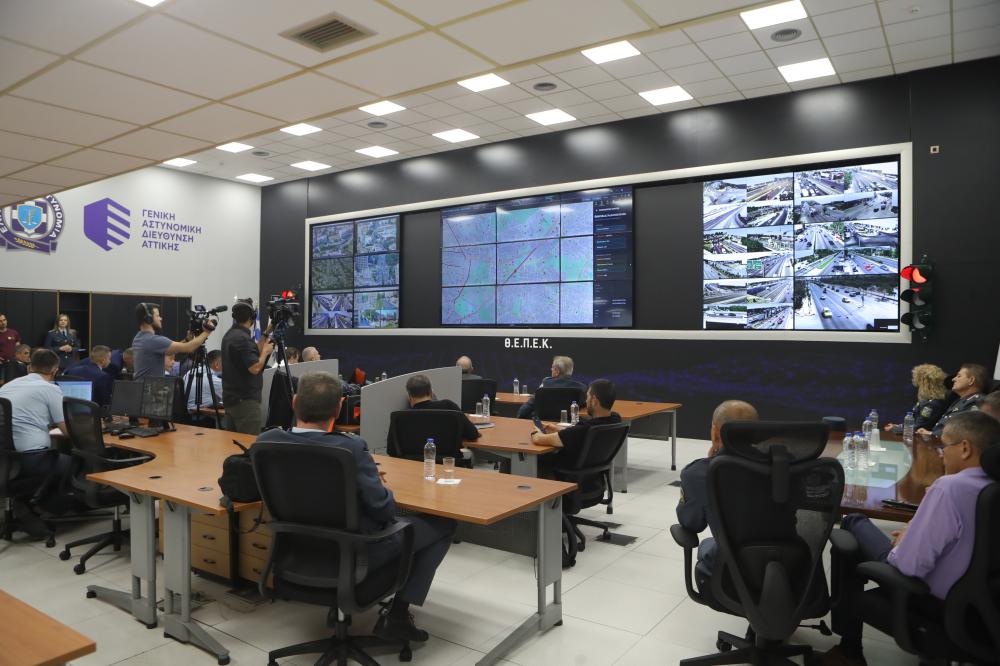
The cameras and drones
All operational management is carried out from the renovated TH.EP.E.K. (Operations Control Room), which serves as the central operations hub for K.O.M.V.O.S. It is equipped with a modern multi-screen video wall, advanced information systems and the necessary infrastructure for real-time monitoring, coordination and operational management.
K.O.M.V.O.S. is staffed by 135 Traffic Controllers and Field Incident Managers trained in “Active Traffic Management,” along with 15 certified drone operators, who combine on-site intervention with aerial surveillance to support the immediate and effective management of traffic incidents.
The cameras and drones act as the “eyes” of the system, providing live high-resolution footage and enabling the immediate identification of the actual cause of a congestion event, guiding units along the fastest approach routes. A total of 10 drones — donated by the Union of Greek Shipowners — are deployed by operators stationed at strategic locations, providing live footage to the head of the Traffic Commander team.
Available police units, motorcycles, patrol cars and operational vehicles are all visible within the system, allowing for immediate dynamic redeployment based on operational need, without being tied down to fixed positions.
The operational deployment of units is organised geographically, so that every area of Attica has immediately available response teams, with the aim of reaching incidents quickly and restoring traffic flow in the shortest possible time.
K.O.M.V.O.S. personnel are equipped with operational tablets, through which they gain direct access to critical information via the Hellenic Police’s information systems, and can digitally process traffic violations in the field — speeding up procedures, reducing the time officers spend on each case and enhancing the effectiveness and transparency of checks.
The ultimate goal is the transition from passive traffic monitoring to a modern model of active operational management — one that enables faster identification and resolution of problems, more effective use of personnel and technical resources, and ultimately an improvement in traffic flow, road safety and citizens’ daily lives.