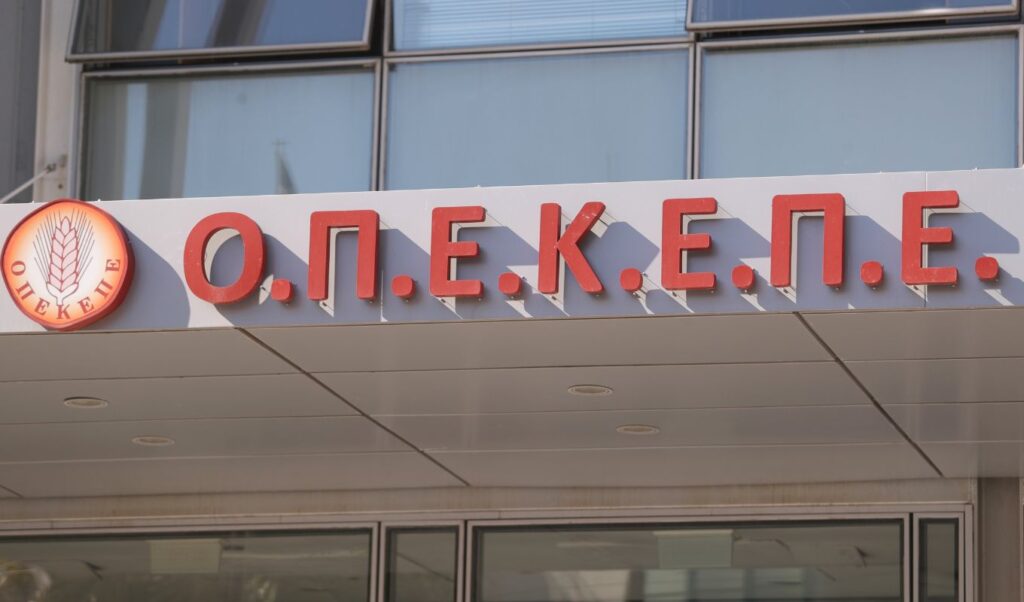
An anonymous tip that reached authorities in the summer of 2021 appears to have been the starting point for launching the investigation into the OPEKEPE scandal, according to evidence documented in the case file.
The first letter, sent in July 2021 to the Internal Affairs Service, was reportedly drafted by individuals with direct knowledge of the procedures. It described an “industry” of illegal subsidies, centered on declarations of land and rights that did not correspond to reality. According to the allegations, individuals appeared as beneficiaries of large estates or livestock activities that did not actually exist, resulting in significant amounts being siphoned off at the expense of real producers.
The letter contained specific names, methods of operation, and descriptions of an organized network that allegedly exploited “straw men,” false declarations, and weaknesses in the control system. Its content was considered serious enough to immediately mobilize the authorities.
Within a short timeframe, Internal Affairs proceeded with a preliminary investigation under orders from the supervising prosecutor, Charalampos Tzonis. Phone privacy was lifted for specific individuals and surveillance began aimed at confirming or refuting what was reported in the complaint. The surveillance started within 2021 and extended to a circle of at least 16 people who were allegedly connected to the case. Meanwhile, evidence was collected from services managing subsidy declarations and land registrations.
During the same period, according to case file evidence, conversations were recorded that became part of the evidence. These dialogues became a key element for continuing the investigation and expanding the list of monitored individuals.
Within 2022, however, a second anonymous letter was sent, which was also forwarded to authorities and incorporated into the preliminary investigation material, adding new evidence and references.
In the fall of 2022, the material was documented in a case file that was submitted to the Athens First Instance Prosecutor’s Office. Since it emerged that the subsidies came from European funds, the case was deemed to fall under the jurisdiction of the European Public Prosecutor’s Office, to which it was sent in early 2023. The part of the case file forwarded to the European Public Prosecutor’s Office, which undertook further investigation, reportedly included the two anonymous complaints sent to Internal Affairs, as well as part of the recorded phone conversations concerning five OPEKEPE employees. The same sources report that references to possible involvement of political figures were limited.
The completion of transcription was done in 2025 after a series of orders from the European Public Prosecutor’s Office to Internal Affairs and marked the next phase of the case, as the file made its way to Parliament.