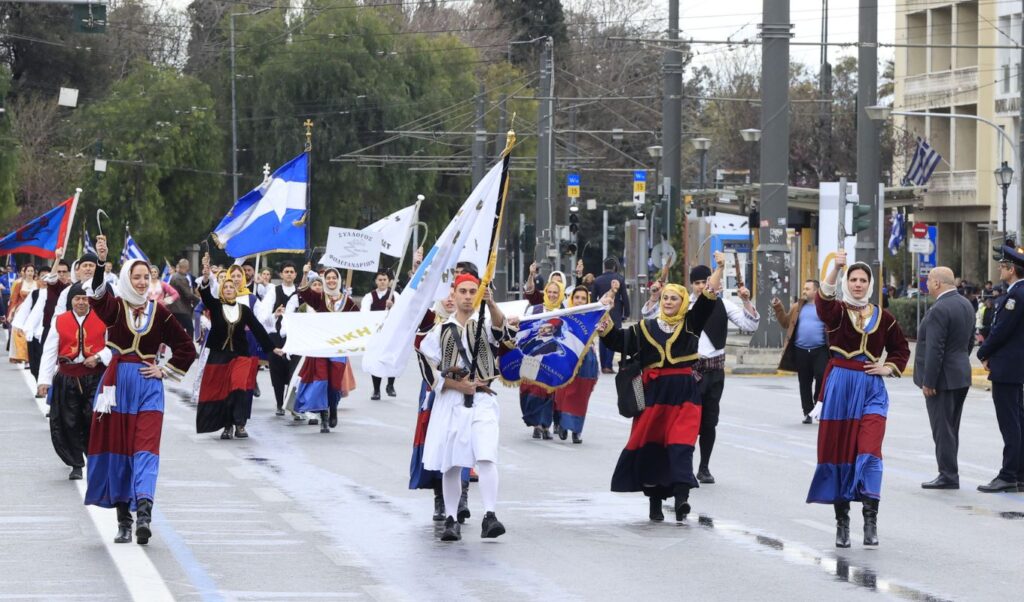
The institution of military parades in Greece has deep roots that reach back to antiquity, long before modern national anniversaries were established, such as that of March 25th. The evolution of this tradition reveals how ancient leaders used displays of military power for multiple purposes.
Read: Revolution 1821: What weather was like on March 25th – The research findings of Thodoris Kolydas
The origins of parades in ancient Greece
To understand when the first parade took place in Greece, we must travel thousands of years back in time. In antiquity, kings and generals organized reviews of their troops before or after significant battles. These displays were not merely ceremonial rituals, but functioned as a means of controlling discipline, equipment, and the readiness of fighters.
Ancient leaders understood the importance of visual displays of military strength. Through the formation of soldiers, they evaluated the condition of their army and boosted the morale of their fighters. This tactic was an integral part of military organization and command.
How parades became established as a tool of psychological warfare
The evolution of the parade institution includes the strategic dimension of psychological warfare. History records many examples where military displays were used to intimidate opponents. A characteristic incident occurred in 70 AD, when Roman Emperor Titus was besieging Jerusalem.
During that siege, Titus ordered his legions to form up in full equipment in front of the city walls. This display served a dual purpose: on one hand, the payment of wages to the soldiers, and on the other, a show of force aimed at undermining the morale of the defenders. This way of using parades demonstrates how military displays became established as psychological weapons.
From antiquity to modern Greece
The transformation of ancient military reviews into today’s national parades reflects the historical continuity of the Greek nation. Modern parades, such as that of October 28th, retain elements of ancient tradition while adding the dimension of national celebration and collective memory.
Today, thousands of citizens gather in Thessaloniki and other cities to watch the official ceremonies. The presence of political leadership underscores the importance of this institution for modern Greek society. The parade now functions as a symbol of national pride and historical memory, while maintaining its connection to ancient roots.