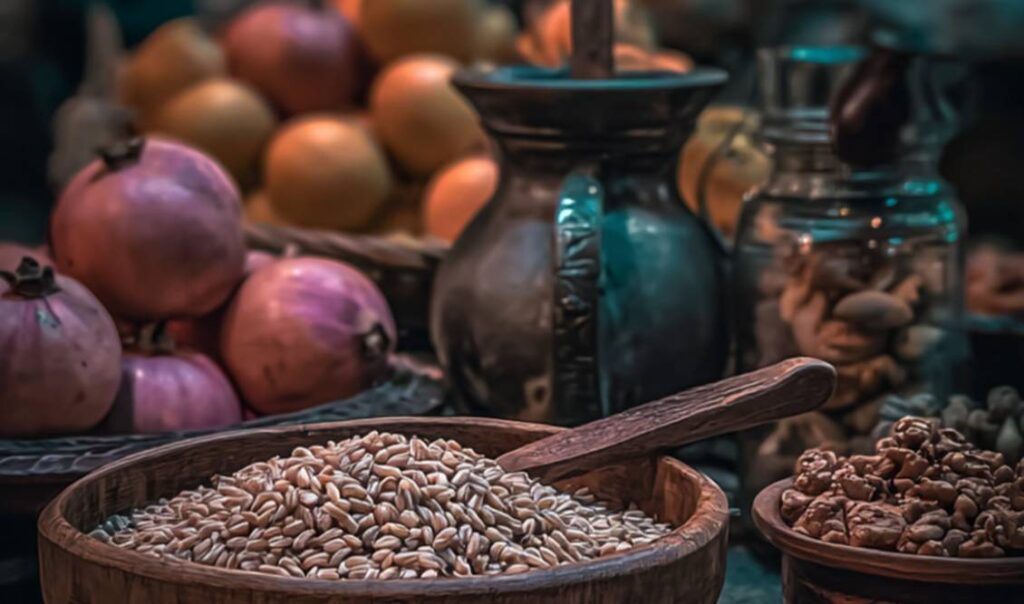
The first Saturday of Lent is inseparably linked to an ecclesiastical tradition that few people fully understand. The koliva offered on this day are not merely a custom, nor is it an ordinary memorial Saturday for the departed. It commemorates a genuine miracle that took place in the 4th century AD and preserved the faith of thousands of Christians from heretical defilement.
Julian the Apostate and the Diabolical Plan
During the 4th century, Emperor Julian the Apostate sought to harm Christians in a deceitful way. Knowing well that during the first week of Lent—the so-called Clean Week—the faithful observe strict fasting for the purification of soul and body, he decided to exploit their devotion. He secretly ordered that all the food in the markets of Constantinople be sprinkled with blood from pagan sacrifices. His aim was to defile the fasting Christians without their knowledge, thereby ruining their spiritual struggle.
The Miraculous Intervention of Saint Theodore the Recruit
Divine Providence, however, did not leave the faithful defenseless. Saint Theodore the Recruit, a martyr of the faith, appeared in a dream to Eudoxius, Archbishop of Constantinople, and revealed the emperor’s treacherous plan. His instruction was clear and saving: Christians were to avoid purchasing any food from the marketplace. Instead, they were advised to boil wheat and prepare koliva for their nourishment.
Why We Eat Koliva on the First Saturday of Lent
The Archbishop faithfully followed the supernatural warning and immediately informed the Christian people. The faithful prepared koliva from boiled wheat and remained undefiled by the intended profanation. Julian’s scheme failed completely, and on that Saturday God was glorified for His miraculous intervention. At the same time, the memory of Saint Theodore the Recruit, protector of the faithful, was honored.
The Deeper Meaning of Koliva During Lent
From that time until today, every first Saturday of Lent, the Orthodox Church commemorates this saving event. The koliva offered do not symbolize mourning, but rather the triumph of faith. They serve as a living reminder that when a person strives to preserve spiritual purity, divine grace intervenes and offers protection.
The season of Lent is not limited to abstaining from certain foods. It is a comprehensive spiritual struggle against anything that may distance us from God. The miracle of the koliva teaches us that faith and prayer are powerful shields of protection, and that Divine Providence always cares for the faithful who seek the truth with a sincere heart.