A Russian high-ranking former official could not accept his divorce and is accused of ordering an arson attack to pressure his ex-wife into paying him money or property. The case was uncovered by police in Chania following thorough investigations that led to the mastermind – a Russian citizen who has held government positions and municipal offices.
He ordered the burning of an office located next to his ex-wife’s store to “pressure” her into accepting his demands. Five people are involved in the case, three of whom have already been arrested, while charges have been filed against the Russian alleged mastermind.
Chania arson: revelations about the Russian ex-official’s demands
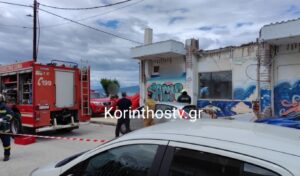
According to the case file findings, the attack occurred in the early hours of January 19th, with perpetrators using an incendiary device to set fire to an architectural office in Almyrida, Chania, which was completely destroyed with damages amounting to €150,000. The Russian couple decided to divorce in 2020 after 30 years together, resulting in the woman leaving Russia and settling in Chania. Her Russian ex-husband demanded through messages and calls that she transfer two apartments she owned in the Almyrida area to his name or pay him money equivalent to their value. Some of these messages were threatening. The ex-wife’s store is located right next to the architectural office that was torched. “The arson was a message that there would be more attacks,” stated a message sent on the morning of January 19th, just hours after the arson, in an attempt to convince the woman to satisfy her ex-husband’s financial demands.
The evidence that “betrayed” the perpetrators
The perpetrators’ mistakes were sufficient for authorities to identify them. The biggest was renting the vehicle they used to carry out the arson attack – a white Nissan Juke. Through this vehicle, police managed to map the perpetrators’ routes, their accommodation location, and where they purchased the flammable materials. One day before the attack, the three perpetrators conducted surveillance of their target, passing by the office three times at low speed. The third arrested individual, who did not participate in the attack, was the person who bought the plastic containers used in the operation.
Police handling the case managed to gather material showing the movements of the two perpetrators before, during, and after the arson attack. One of the arrested individuals was “betrayed” by his distinctive clothing – specifically a black tracksuit with characteristic markings on the sides. They walked approximately 130 meters carrying two containers until reaching their target, set it on fire, then fled using the same route, this time running. After the attack, the two perpetrators returned to their hotel in Chania to rest.
Police proceeded to lift telephone confidentiality, recording suspicious conversations between perpetrators and third parties. During checks of the arrested perpetrators’ mobile phones, they found photos of one holding military rifles, pistols, wearing bulletproof vests, and carrying bags of illegal tobacco products without proper tax stamps. They also discovered the suspects had been accessing local news websites searching for information police might have about the arson attack – checking whether any evidence had been found that could identify them. Additionally, one perpetrator’s phone contained photos he had taken of his hand, which suffered burns during the attack, which he sent to a third party.
Police uncovered a “rich” database of messages between perpetrators regarding both the arson attack and other past illegal activities, including theft of parts from parked motorcycles.
The evidence led to the Russian, who reportedly denies everything about the case. However, charges have been filed against him for criminal conspiracy and moral complicity in extortion, arson and property damage with intent for financial gain, as well as domestic violence.