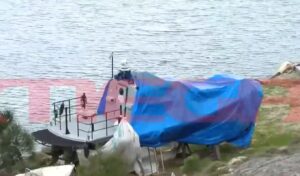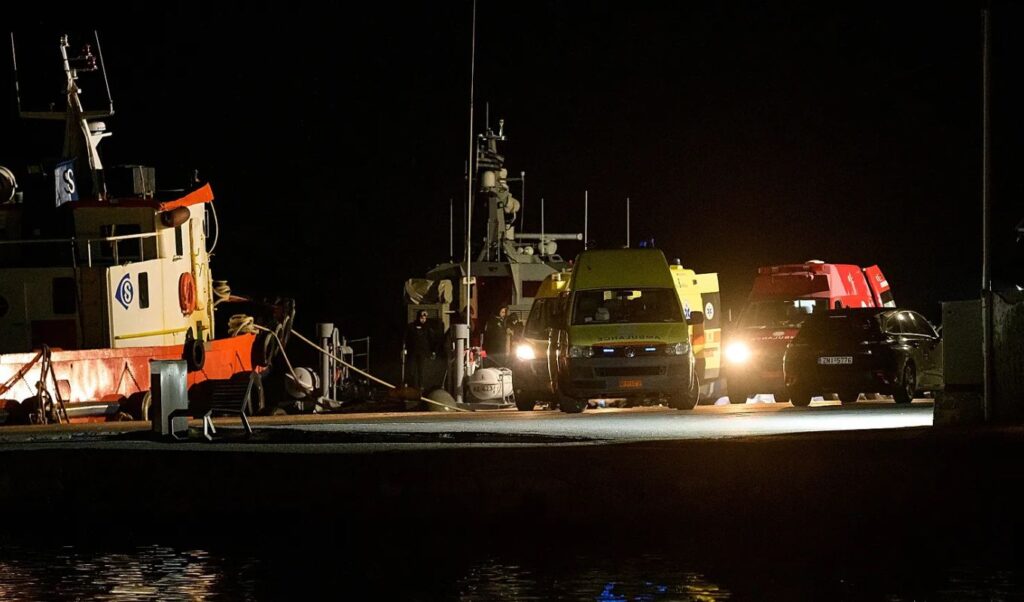
The tragedy off Chios, where 15 people lost their lives after a collision between a Coast Guard vessel and a migrant boat, has caused intense concern and reactions in public opinion, with citizens demanding thorough investigation of every aspect of the case. 29-year-old Christina, speaking to Orange Press Agency, expresses her accumulated indignation over border management, stating characteristically: “I’m tired of hearing about people dying in our seas, in the name of a supposed effort to keep us safe.”
She adds, using harsh language, that “I don’t feel safer when the Greek Coast Guard kills,” denouncing what she calls the devaluation of human life experienced by both residents and those trying to escape war conditions. According to her testimony, “it’s the state itself that drowns these people,” expressing the demand that responsibilities be assigned where they exist.
Chios tragedy: “Pushbacks are established practice”
For his part, Giorgos speaks of a premeditated incident, noting that “regarding what happened in Chios, the crime, it’s an established practice of the Coast Guard.” He points out that while previously there was denial about pushbacks, the government “has now moved to the stage of openly defending them.” He even recalls previous ministerial views, according to which “we cannot protect borders… without deaths,” and emphasizes that these are illegal acts where “series of crimes are committed” under the pretext of security.
“A democracy under question”
Another man, Giorgos, focuses on the gaps in official information, stating that “this generally terrifies me as a condition.” He particularly emphasizes the fact that “the Coast Guard’s camera somehow stopped working,” something that, as he argues, “by itself should have some criminal responsibility” since it doesn’t allow us to know “whether it’s a cover-up or not.” Concluding, he points out that “we cannot persecute the wounded souls of the world.”
Finally, a citizen connects the shipwreck to a broader crisis of values, noting that “it’s not just this incident” but “every incident where for the sake of security, human life is in danger.” She characterizes the followed policy as “a very wrong line” and expresses her intense concern for the fate of democracy, saying it “is somewhat under question” and now constitutes a “condition that has probably been lost.”