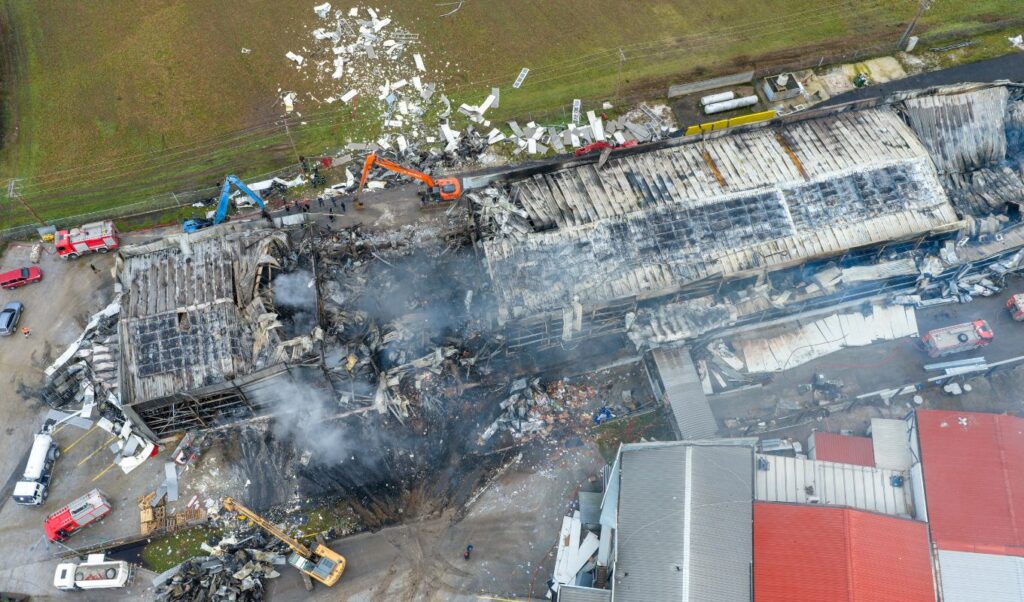
The tragedy of the fire at the Violanta factory in Trikala escalated with the discovery of the fifth body. What remains is to clarify the causes of the disaster. According to reports, a propane leak is considered the most likely scenario. From there, it will become clear whether there was a malfunction in the safety systems, mainly those concerning fire suppression and detection. There is a possibility that the operating mechanism failed. In any case, the Arson Crime Investigation Unit is called upon to clarify the causes of the tragedy with five fatalities and an equal number of injured.
The Fire Department personnel have been investigating the site since the morning of Monday, January 26, just a few hours after the fire. The identification of the bodies is a priority, while the factors behind the explosion need to be explained as quickly as possible.
Violanta fire: How the propane “survived”
If the most likely scenario is an explosion from a propane leak at the Violanta factory in Trikala, then it must be explained how this was not detected by the sensors. What needs to be answered, additionally, is how long the leak lasted and whether ignition occurred quickly. According to reports, if propane was leaking, then a percentage of 2 to 10% should have been released, while a spark would also be necessary. From the intensity and power of the explosion, it has also been concluded that the time between the cause and the fire was short.
Reports indicate that the four propane tanks, with a total volume of nine cubic meters, were intact. This adds a puzzling dimension to the case, as two of them were located outside but next to the building that was destroyed, as well as an equal number at various other points in the factory. This, therefore, through reductio ad absurdum, leaves only the propane pipelines under examination. Also being investigated is how these (the pipelines) connect to the ovens. A major question, which may determine liability, is whether the fire suppression systems had problems. If the propane, due to its density as a gas, remained just above the floor level, it was possible for the sensors to not “recognize” the threat. If, however, the fire suppression systems did not detect it, then there will be questions about the safety of the facility.
Study submitted to fire department
Ultimately, the cause may be complex. At first glance, and even at second glance, the qualitative elements of safety conditions do not appear to present issues. The same applies to compliance with regulations. However, the information about a study that the Violanta company had submitted to the Fire Department about four months ago, in September 2025, for strengthening safety measures is considered interesting. Such a move is now accompanied, after the tragedy, by the following question: what was happening that required upgrading the fire safety measures at the factory? Additionally, what was the time urgency? If there were gaps that needed to be covered quickly, investigators are called upon to bring them to light.