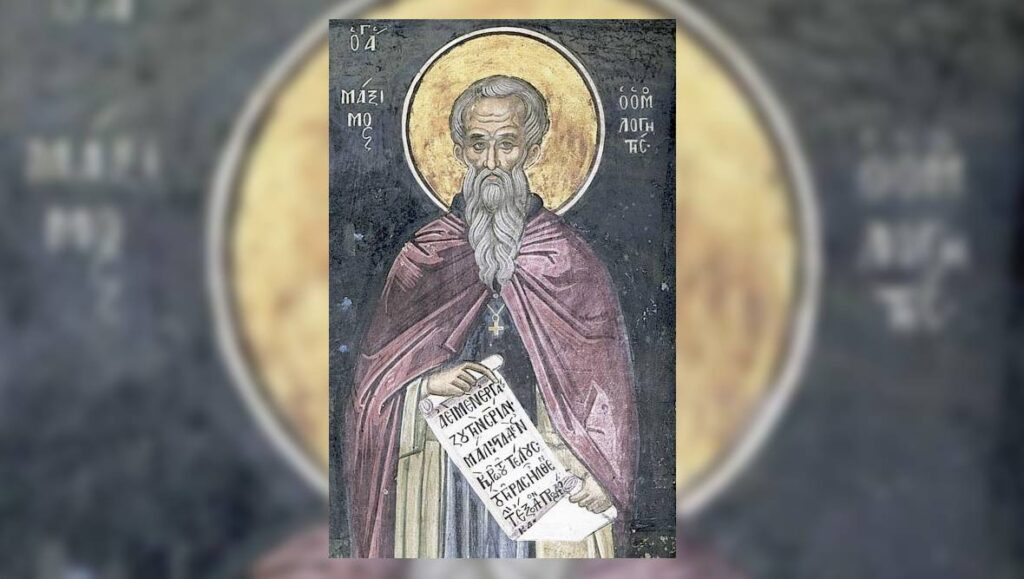
The voice and message of Maximus the Confessor — one of the most significant figures in Byzantine theology and a symbol of unwavering faith and moral conscience — remain timeless and are brought vividly back to life through a new video created using artificial intelligence.
In the video, Maximus the Confessor “narrates” his life, from sixth-century Constantinople to the exile and severe sufferings he endured in defense of Orthodox Christian doctrine. Born in 580 AD into a prosperous and well-educated family, he grew up in an environment that offered access to learning, social advancement, and the promise of a distinguished career. His abilities quickly set him apart, eventually leading him to serve alongside Emperor Heraclius as chief secretary.
His stance came at a heavy cost. He was summoned before false councils, accused, exiled, and tortured. When his persecutors realized they could not silence him, they mutilated his tongue and his right hand so that he could neither speak nor write. Even so, he remained unshaken in spirit, living for three more years in exile — physically broken, yet spiritually free.
Maximus the Confessor died far from his homeland, having preserved his conscience intact. The message conveyed through this modern digital portrayal remains deeply relevant: truth and faith are not abstract concepts, but personal choices that often carry a price. True courage lies not in agreeing with the crowd, but in standing firm when pressure demands compromise.