Determined to see their fight through to the end, farmers and livestock breeders are gradually strengthening their blockades across the country until their demands are met. Meanwhile, the government maintains that roads must remain open. Farmers are demanding solutions for increased production costs, low sales prices, and timely payment of subsidies, declaring their determination not to leave without convincing answers.
Read: Roads closed across the country due to farmer blockades – Alternative routes and survival guide
Where farmers have set up their blockades
Farmers remain at the blockades they have established at the Nikaia junction in Larissa, at Malgara in Thessaloniki, at the Evzones customs checkpoint, and on the E-65 highway in Karditsa.
As Leonidas Vasileou, spokesman for the Union of Agricultural Associations of Larissa, stated on SKAI from the Nikaia blockade, the National Highway will remain closed and will not open for any reason, “unless Maximos Mansion comes here and gives us the necessary answers.” He added that they no longer go to ministries. “Whatever we had to do in Athens, we’ve done. Now we’re waiting for the minister to come here to provide answers, and then we’ll open the roads. We’re waiting for the Prime Minister himself.”
Additionally, farmers have mobilized in Imathia, Nea Chalkidona in Thessaloniki, and at the borders in Doirani.
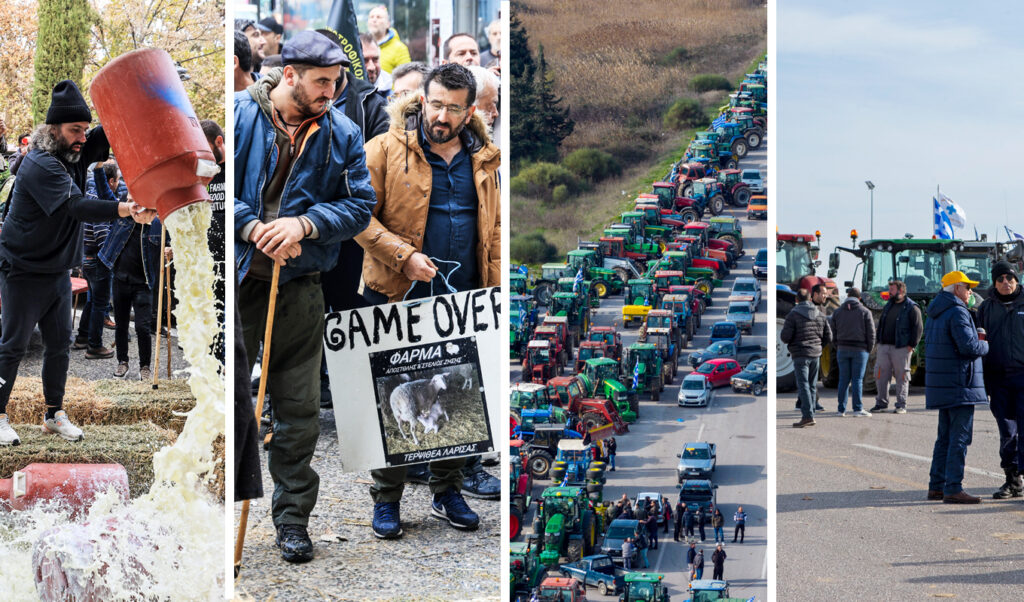
At the most central blockade, that of Nikaia in Larissa, the Athens-Thessaloniki National Highway remains closed in both directions, with traffic diverted through the Platykampos junction. As seen in drone footage, the Athens-Thessaloniki National Highway has been transformed into a vast tractor “parking lot,” with queues of agricultural machinery extending for kilometers.
At Malgara, farmers initially closed both traffic streams and after coordination with authorities, left open the stream entering Thessaloniki. The Athens-bound stream remains closed.
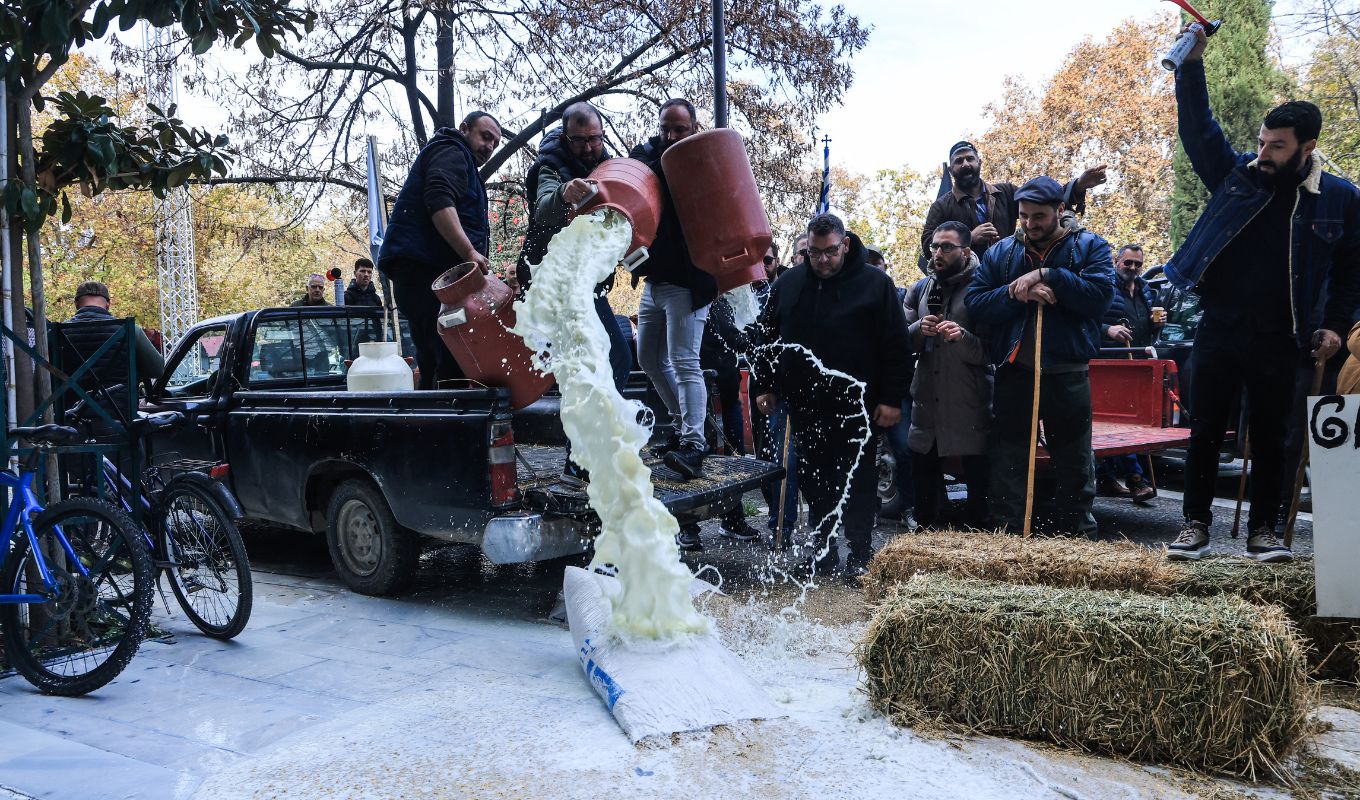
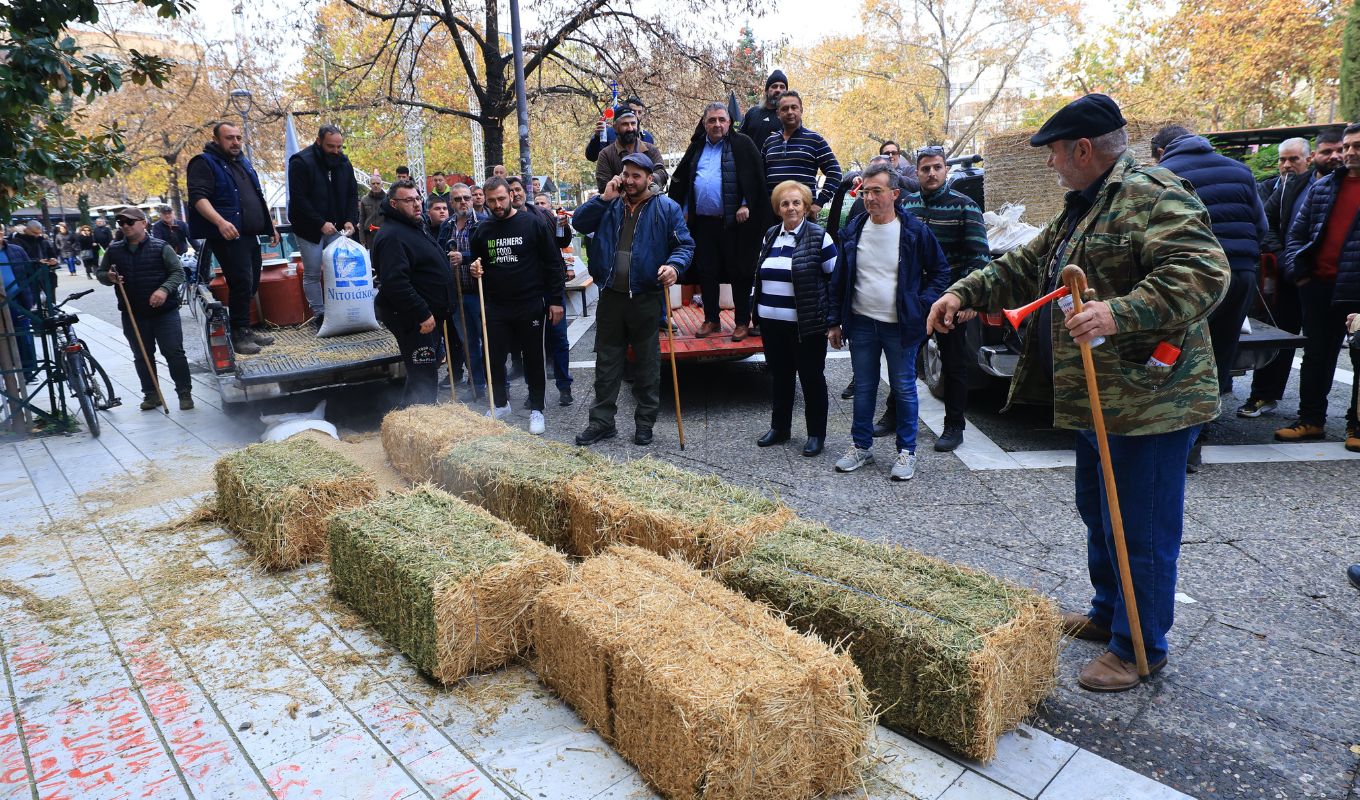
Farmer blockades: Milk poured and hay thrown in Larissa
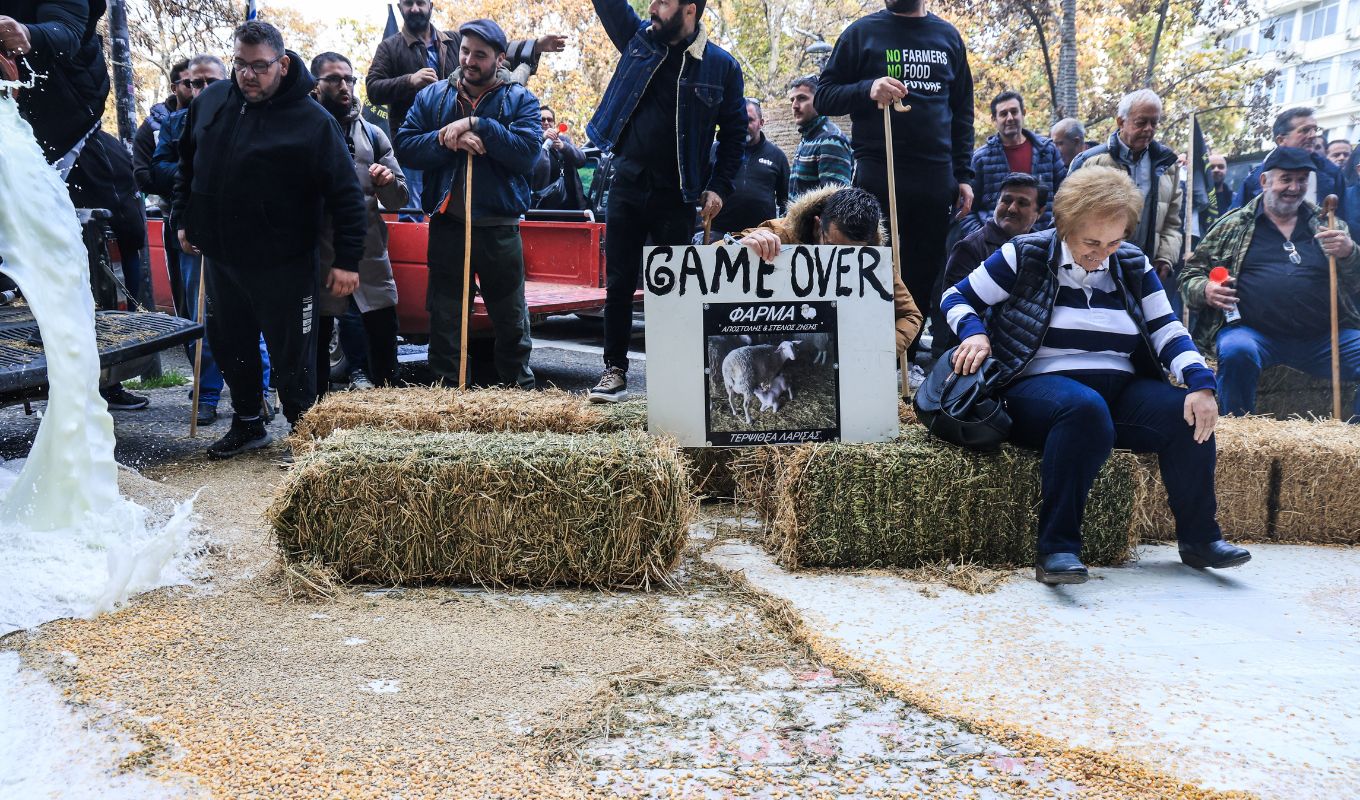
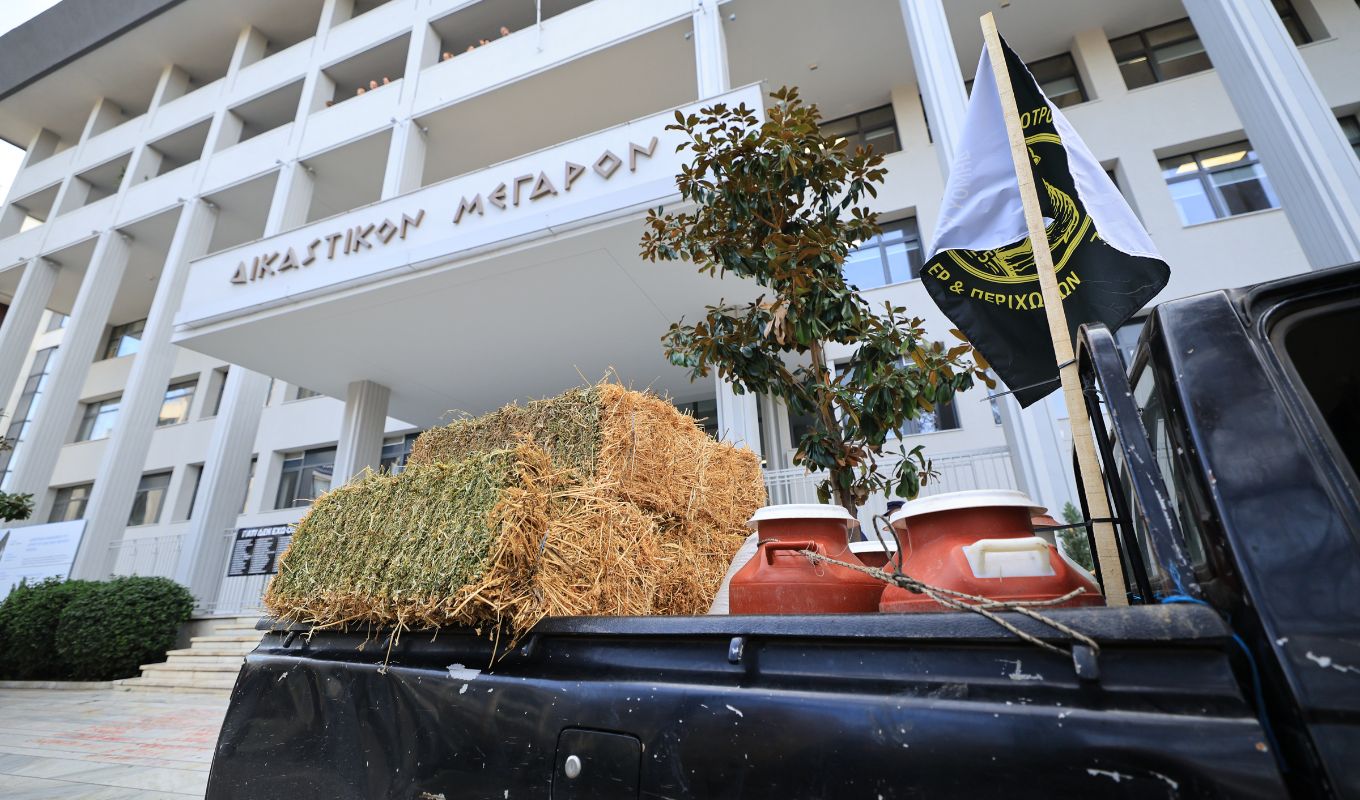
Simultaneously, hundreds of farmers and livestock breeders have moved to the center of Larissa, pouring milk and throwing hay in the city center, specifically in front of the police headquarters.
Evzones customs checkpoint closed
At the Evzones customs checkpoint, farmers from the municipality of Paionia and the wider region once again proceeded to block both the entry stream to Greece and the exit stream to North Macedonia at 12:00 noon today. Yesterday at 18:00, they initially blocked only truck entry into Greece before proceeding to a complete blockade, which they lifted at midnight.
More than 150 tractors and agricultural vehicles have gathered at the site, with the agricultural blockade continuously strengthening. The Kipi customs checkpoint is also expected to close this afternoon.
At the Nikaia blockade, there are over 1,000 tractors, and they will be reinforced today by Thessalian livestock breeders who earlier held a protest rally in central Larissa square, as well as taxi drivers who begin mobilizations today.
Kostas Tzellas: We have nothing to say to the government, closure of ports, airports and borders is coming
President of the Unifying Federation of Agricultural Associations of Karditsa Kostas Tzellas spoke about the blockades of farmers and livestock breeders on Parapolitika 90.1 and the show “Opposite Microphones” with Sotiris Xenakis, noting that “tractors on the roads are increasing and multiplying, just like our problems” and announcing the closure of airports, ports and borders in the coming days.
“The government would do well to provide substantial solutions, not communication-type solutions,” he said, noting that “it knows we cannot survive and we are being led to extinction.” He emphasized that they will no longer go to ministries for dialogue, stating that the government knows their problems and the magnitude of them. “We don’t go for another dialogue, we’ve already been many times. If the government wants to provide solutions, what does it need dialogue for?” Tzellas clarified.
“We are on the E65 and we are not closing the roads. There is a police blockade ahead that prevents the passage of cars,” he explained, emphasizing that “at this moment there is an accumulation of problems and we are indebted everywhere.”
“There needs to be a generous income replacement for us to survive this year, but continuity is also needed, such as a reduction in production costs,” he added, accusing the government of telling many lies. “It talks about millions and billions, but the money doesn’t reach us. For example, no project has been done in Thessaly,” he stressed.
He then argued that there is an organized plan behind the policy the government is following. “They want large agricultural and livestock enterprises to be created. We are fighting not to return to feudalism,” he concluded.
Sokratis Aleiftiras: We don’t return to our villages and fields without substantial solutions
“Only Kyriakos Mitsotakis can solve the problems of farmers through intervention,” declared spokesman for the Agricultural Federation of Larissa Sokratis Aleiftiras on Parapolitika 90.1 and the show “First Morning” with Alexandros Klossa. He emphasized that answers without timetables for their demands will only consolidate blockades rather than de-escalate the situation, while farmers will not return to their villages and fields without substantial solutions to institutional demands that have concerned them for many years.
“The blockades are being strengthened, both the E65 blockade in Karditsa and the one in Nikaia with farmers and livestock breeders from Larissa and Magnesia. There are about 1,000 tractors and we expect another 200-250 to come today. This shows the anger and indignation of people about existing problems and the government’s lack of planning to solve them,” said Aleiftiras.
He criticized recent government statements, particularly those of Minister Marinakis about roads belonging to everyone, saying such statements unite rather than disperse farmers.
“We don’t come out exclusively for payment issues and the money that remains minimal in our pockets. We come out for the enormous production cost, for a host of institutional issues concerning the primary sector. I cannot produce paying 15-16 cents per kilowatt hour and be competitive compared to other colleagues in the rest of Europe. I cannot produce with such fuel prices,” he clarified.
According to Aleiftiras, their goal is not to create traffic strangulation, and while they have closed the national highway, the bypass at Nikaia is very small – only 5 km longer. He emphasized that everything depends on the government’s and Mitsotakis’ willingness to solve their demands.
“Farmers will not return to their villages and fields if they don’t get substantial solutions to the institutional demands that have concerned them for many years,” he concluded.