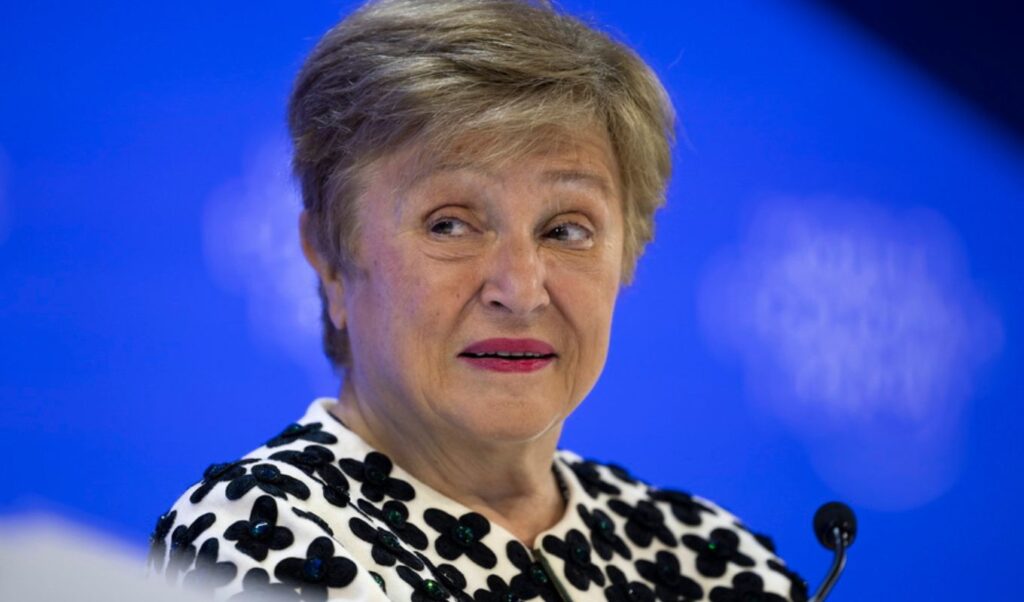
A “warning bell” has sounded for the global economy from statements by IMF Managing Director Kristalina Georgieva, who noted that the global food crisis is rapidly deteriorating, while the effects of the war in the Middle East, despite the ceasefire in Iran, continue to pressure the international economy.
IMF: An additional 45 million people have fallen into food insecurity
According to statements by Kristalina Georgieva, an additional 45 million people have fallen into food insecurity, bringing the total number of those struggling with hunger to over 360 million. She called on countries to reject export restrictions and price controls, emphasizing that such measures “can further destabilize global conditions”.
Meanwhile, she added that central banks must be ready to raise interest rates if inflation goes off target, creating risk of an inflationary crisis. She also warned that the use of fiscal packages would further burden monetary policy. Georgieva mentioned that the war’s effects will continue to impact the economy internationally, with refinery closures, product shortages, and price pressures. As she said, short-term inflationary expectations have already increased, while long-term ones remain stable.
Before the war, the IMF projected a small upward revision of its forecasts for global growth, to 3.3% in 2026 and 3.2% in 2027, according to Georgieva. However, these expectations have now been overturned, as the conflict with Iran has caused shockwaves in the global economy, which do not appear to be subsiding soon, even if the war is resolved quickly.