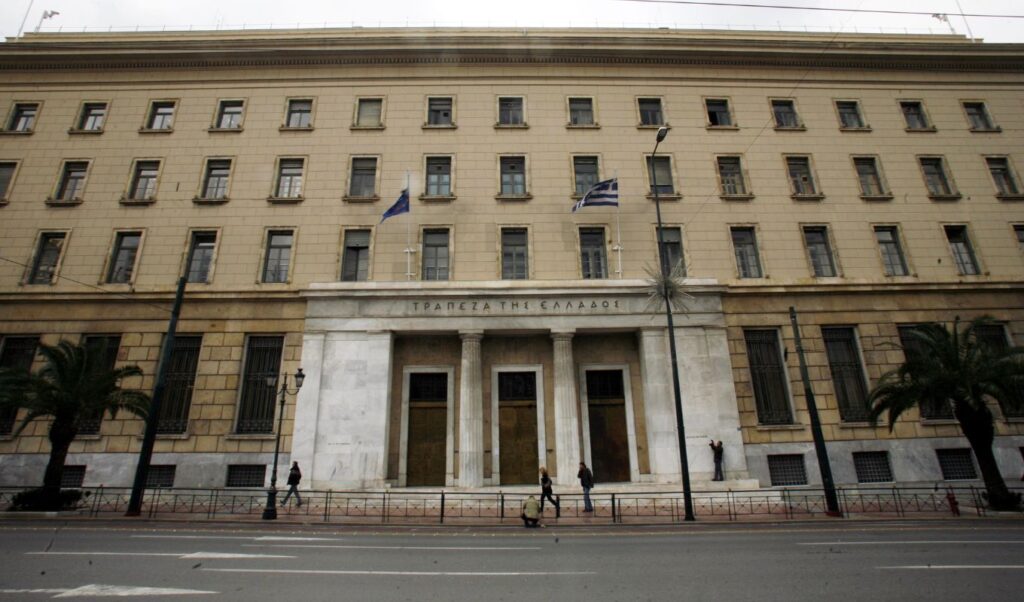
The Bank of Greece has revised down its GDP growth forecasts for 2026 to 1.9%. The impacts of war, high energy prices and international uncertainty are clearly the reasons behind this projection. The Bank of Greece is revising downward the GDP growth rate for 2026 to 1.9%, from 2.1%, and for 2027 to 2% from 2.1%, while maintaining its unchanged forecast of 2% for 2028. The previous estimate had been published in the Interim Report on Monetary Policy 2025. The governor of the Bank of Greece, Yannis Stournaras, had stated that growth in 2026 could remain at 2025 levels (2.1%) provided the Middle East crisis is short-lived.
Read: Greek economy prospects remain positive unless prolonged geopolitical crisis hits the EU
Bank of Greece: depends on duration
The Greek economy continues to show higher growth rates compared to the Eurozone, mainly due to private consumption and investment, while net exports remain marginally negative. Inflation is forecast at 3.1% for 2026, reflecting high energy, food and services prices, with gradual decline in subsequent years based on the European Central Bank’s targets.
The main downside risks associated with the downward trajectory concern the potential escalation of war in the Middle East, increased trade barriers, persistent inflation and the climate crisis, with extreme weather events such as floods, droughts, and water shortages. The Bank of Greece emphasizes that the Greek economy has shown remarkable resilience, outperforming compared to the eurozone, and expects to maintain a steady growth trajectory in the coming years.