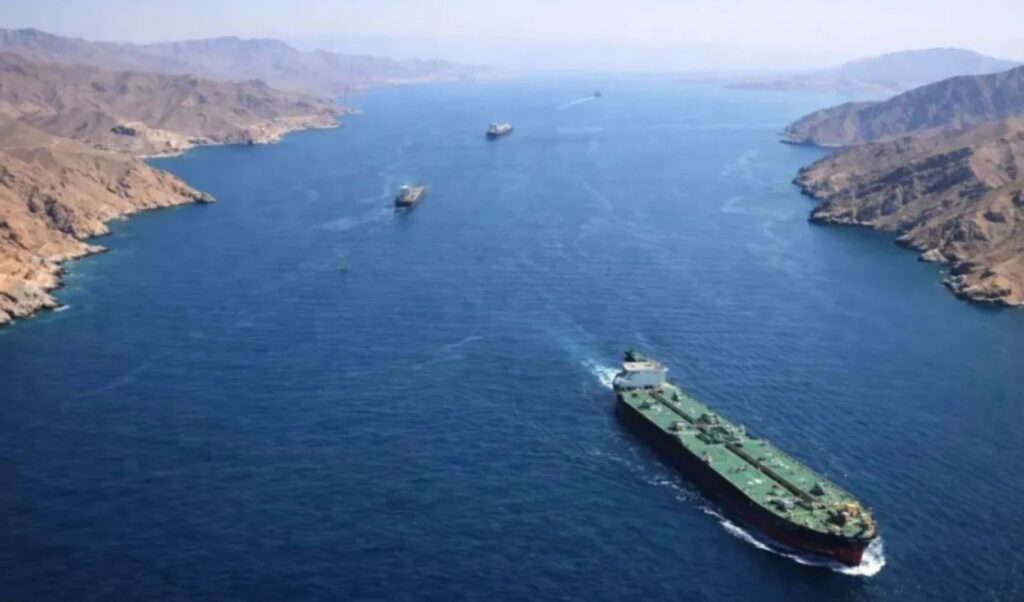
The Strait of Hormuz is at the epicenter of the war. This narrow waterway holds the breath of the global economy as it is one of the world’s most critical maritime navigation points, carrying a significant share of global oil shipments, liquefied natural gas, and fertilizers. The prolonged duration of the war brings incalculable consequences to global markets, with rising energy costs, agricultural production expenses, and ultimately food prices reaching astronomical heights.
The worst-case war scenario is evolving into an energy world nightmare.
Professor of Energy Policy and Senior Fellow at the Atlantic Council, Charles Ellinas, explains to parapolitika.gr how the situation is developing today, in the third week of war in the energy landscape. As he clarifies, only small quantities of mainly Iranian oil are now being transported through the Strait of Hormuz, while the transport of liquefied LNG from Qatar has stopped because its facilities have been hit by drones.
For Charles Ellinas, the possibility that American military ships can manage to open the Strait is very small because, as he argues, “for ship owners to agree to pass through, America must be able to stop the danger, which is highly unlikely. But even then, most would not take on this risk. Additionally, for owners, war insurance for their ships is not only extremely expensive, but some insurance companies no longer provide it.”
Can the Strait of Hormuz be opened by military means?
In any case, President Trump’s announcement to open the passage by military means does not seem to be finding implementation, especially since the countries he asked to participate are refusing to respond. For this to happen, according to the professor, America would need to send enough ships and clear the mines. As he says, “there is certainly a concern that he might try to capture Kharg Island because he has sent troops to the area, about 2,500 specialized soldiers – commandos. But Iran, on the other hand, has tunnels, not only on the island’s coast but also in other places we don’t know about, where there are small boats with drones intended for strikes on ships.”
According to analysts’ calculations, approximately 20 million barrels of oil per day are currently being lost. Iran has blocked somewhere between 14-15 million barrels per day from leaving the Persian Gulf. According to Mr. Ellinas, “if Trump’s efforts have some small success, only a small percentage of the 15 barrels could pass through the Strait, which does not solve the problem. These oil quantities cannot be replaced, not even by Russian oil from which he lifted sanctions, while countries that produce more oil, such as Brazil, Canada and others, do not have additional reserves to increase production, especially in a short time frame. The only countries that have additional reserves are the Persian Gulf countries. Saudi Arabia can increase production by one to two million barrels per day, but has no way to export it. So whatever we do, the market will not be covered, this shortage will exist and prices will certainly rise high.”
Oil is not the only thing exported from the Persian Gulf. Other types of trade used in fertilizers also pass through the Strait of Hormuz, increasing agricultural production costs that in turn affect food prices. For example, 30% – 40% of global ammonia exports pass through the Strait of Hormuz, about 40% of sulfur, 25% of helium, 25% of methanol.
According to many energy analysts, including Charles Ellinas, if the situation does not change, oil prices are expected to rise well above $100 per barrel. If the war lasts until the end of the month, prices will shoot even higher. And that’s not all. As calculated, once the war ends, it will take up to three months to normalize the energy production chain and begin normal market supply.