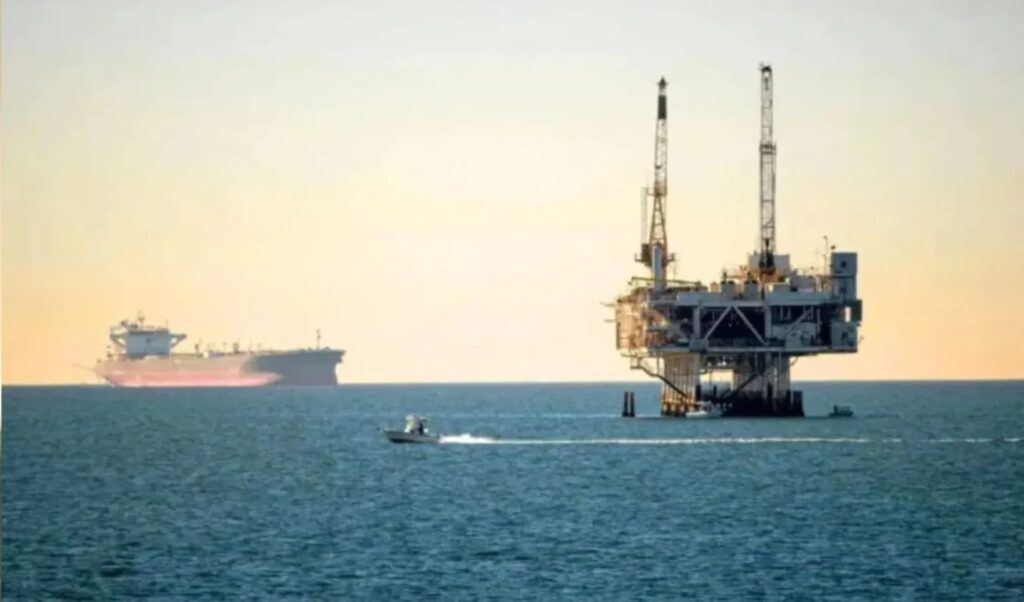
The unprecedented rally in oil prices brought by the energy crisis is testing the markets and has overturned forecasts from international firms that are readjusting their strategies based on scenarios for the duration of the war in the Middle East. The outbreak of military conflicts in the Middle East has once again caused pressure on stock markets, while bond yields increased. Investors are now incorporating an additional geopolitical risk premium into valuations, while simultaneously reassessing inflation risks and the economy.
Meanwhile, in recent years, “Black Swans” have appeared in markets almost every March, with significant events manifesting in this particular month. In 2020 it was the pandemic, in 2022 Russia’s invasion of Ukraine, and in 2023 the banking crisis with the collapse of SVB and Credit Suisse.
Goldman Sachs is examining an “adverse scenario” where energy flows through the Strait of Hormuz are disrupted for 30 days (pushing oil prices to a peak of $130 per barrel) and a “very adverse” scenario with a 60-day disruption (where oil prices reach $150 per barrel).
The war doesn’t appear to be ending soon, and as long as it continues, it “burns” the basic scenario for a short conflict, intensifying uncertainty in markets.
Markets on uncertainty track due to war: Assessments from international rating agencies
Deutsche Bank estimates that a repeat of the historic sell-off in stocks and bonds that we saw in 2022 during the global energy crisis escalation is likely. However, as it notes, markets are not yet pricing in a 2022-type outcome, when Brent was above $100/barrel for about 5 months. Also, unlike the oil shocks of both 2022 and the 1970s, inflation is generally around target levels.
At least for now, we’re not yet reaching the historical thresholds that have coincided with significant risk-off moves in previous oil crises. We haven’t yet seen an aggressive pivot from central banks. And given how early it is, we haven’t yet seen clear signs of deteriorating economic data.
For its part, Morgan Stanley expresses the view that investors should prepare “shopping lists,” awaiting the resumption of the bull market later this year.
It estimates that in six months, things will likely have calmed down after this initial surge, just as happened after Russia’s invasion of Ukraine. It’s important to note that the sharp increase in oil prices is the result of a logistical deadlock in the Strait of Hormuz and not a supply shortage. According to Morgan Stanley, stocks typically hit their lows a few days after oil prices peak.
BlackRock focuses on the risk of a stagflationary shock, but it’s not guaranteed, as market pricing suggests. Often, “stock markets climb a wall of worry,” a classic market saying that has been confirmed several times in the past and may be confirmed again during this period.
Market history shows that markets tend to discount uncertainty before the event and recover before conflicts end.
Greek economy remains resilient
Within this climate, international firms in their reports estimate that the Greek economy appears resilient despite geopolitical pressures. International rating agency Fitch reports that the Middle East conflict is expected to last less than a month, with the Greek economy showing stronger defenses compared to the Eurozone. Greek banks are estimated to withstand any short-term impacts thanks to their strong balance sheets. Fitch “sees” a Greek economy growth rate of 2.1% in 2026-2027.
Moody’s “sees” stable prospects for Greek banks despite geopolitical pressures, as favorable economic conditions and strong credit expansion are expected to support key financial metrics in the 2026-2027 period. Additionally, the rating agency estimates that Greek banks will avoid immediate credit deterioration due to the Middle East conflict.
The Greek economy is resilient and armored against an energy shock, notes Goldman Sachs. Growth dynamics in Greece remain strong, and the experience of the 2022 energy crisis suggests that the Greek economy is relatively less exposed to energy price crises than most eurozone countries, it emphasizes.
Furthermore, given the current prudent fiscal stance, the Greek government has fiscal space to finance measures that could offset part of the economic impact of the shock.